


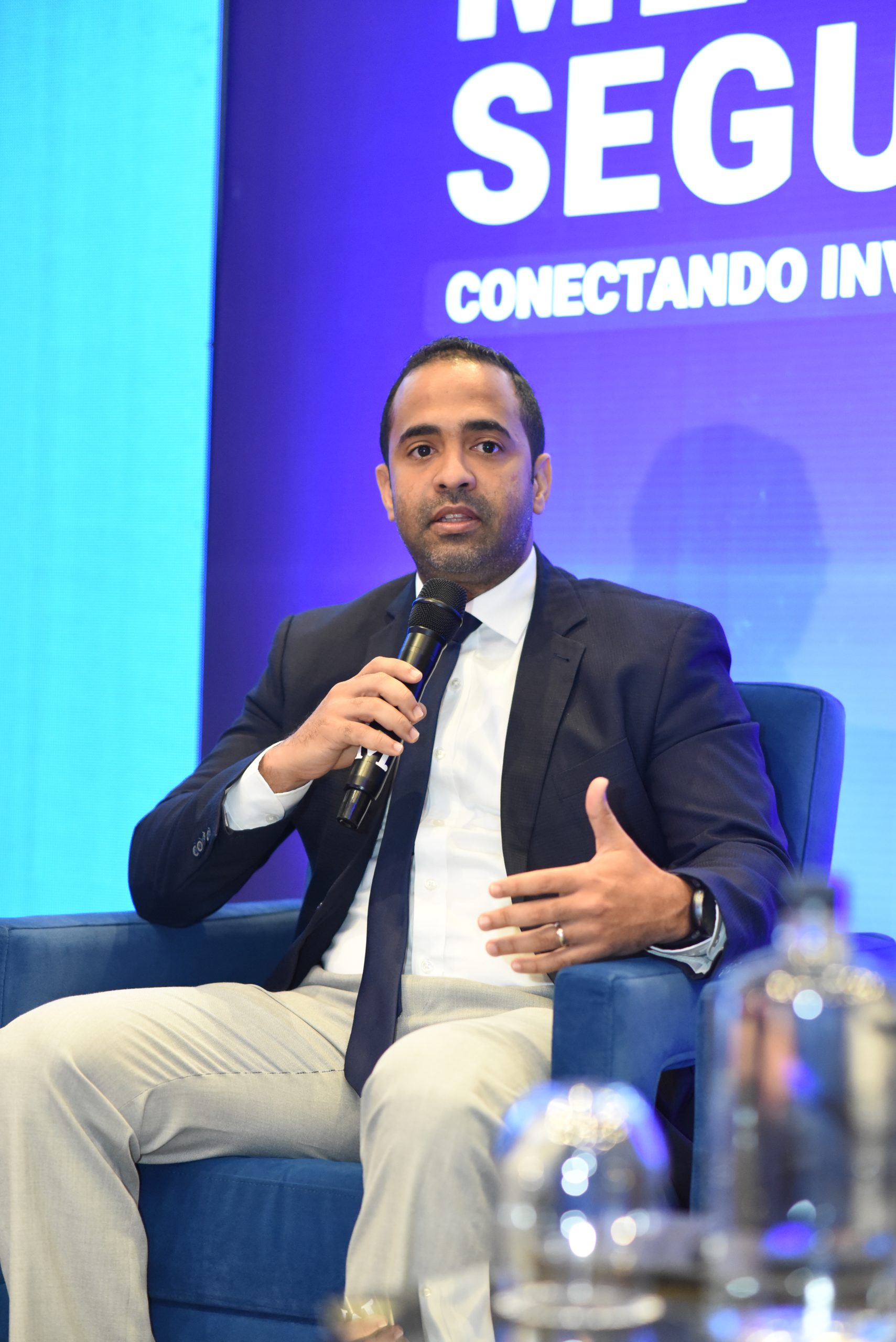
The professor from UASD said that the country's capital expenditure is below what is required and that formalizing employment and connecting the university with the productive sector is part of the strategy to sustain growth
SANTO DOMINGO– Economist and professor at the Autonomous University of Santo Domingo (UASD), Francisco Tavárez, stated at the Safe Metro 2026 Forum that public-private partnerships are a mechanism to attract and maintain national and foreign investment in a country where, he said, capital spending is below what is required.
He explained that these alliances serve to encourage investment and for private capital to participate in real estate or infrastructure initiatives, and in this scheme the government has to be transparent.
To maintain the level of growth, he indicated, it is necessary to increase the productivity of capital and labor, improve living conditions and expand the consumption capacity of Dominicans, while recalling that the country has set the goal of doubling the size of the economy by 2036.
Tavárez also mentioned a proposed public-private partnership law that aims to reduce transaction costs, shorten timelines, and streamline the regulatory framework. In his view, bureaucracy significantly hinders foreign investment, so this aspect needs to be simplified to make the mechanism more effective and attractive to investors.
In the same panel “Development and profitability of new capital investments in the DR” of the Safe Metro Forum, organized by the El InmobiliarioMedia Group, the economist addressed the Dominican labor market, which he described as having a large presence of informality and a still precarious formality.
He pointed out that consumption represents more than 60% of GDP, which demands an increasingly technical workforce, and argued that universities, research centers and training centers must adapt to a strategy of formalizing employment.
According to Tavárez, micro and small businesses, the most affected by informality, need a path to formalization with access to credit and other facilities, which would allow these workers and companies to be incorporated into the social security system, which in turn would impact the system's investment portfolio and expand access to credit and financing alternatives.
The economist cited that opinion polls consistently show that business owners, along with electricity and public services, consider finding suitable human capital to be a major challenge.
That is why he proposed that academia be connected with the productive sector and that the country join, through the training of human capital, the economic disruption brought about by artificial intelligence and new technological tools, as a way to take advantage of the opportunities, with an articulated strategy between the public sector and the productive sectors.
Tavárez's remarks were made at the Metro Seguro 2026 Forum, Connecting Investments, held on September 29 at the Catalonia Santo Domingo Hotel, which also included panels on real estate credibility and the difference between fraud and default. Tavárez participated alongside Haivanjoe Ng Cortiñas, former Superintendent of Banks, and Hernando Gómez, PMO Manager of Cruise On Land.
Recommended readings:





