
The Dominican leader spoke about the country's efforts toward sustainability. Source: Pixabay.
President Luis Abinader reiterated his call to world leaders on Monday for the United Nations General Assembly to recognize and address, as a matter of urgency, the proliferation of sargassum in the Caribbean , describing it as an environmental, economic and health crisis that requires a global and coordinated response
During the United Nations Ocean Conference (UNOC3), President Abinader noted that Caribbean island nations are being severely impacted by the effects of climate change, and warned that the sargassum phenomenon has ceased to be seasonal and has become a structural threat.
“We need this threat to be recognized for what it is: a regional emergency. We must act as the community we are, with shared responsibility and active solidarity. The sea that unites us as a region also calls us to a collective response. Therefore, we reiterate our call for the United Nations General Assembly to urgently address this situation and activate a global and coordinated response,” stated the Dominican president.
Up to one million metric tons of sargassum
According to estimates cited by President Abinader himself, between 0.62 and 0.93 million metric tons of sargassum could reach Dominican shores this year. “In an extreme scenario, this figure could exceed one million tons, depending on environmental conditions and ocean currents,” he warned.
President Abinader noted that this proliferation directly impacts biodiversity, public health , and strategic sectors such as tourism and fishing, fundamental pillars of island economies.
Dominican leadership in ocean protection
In his speech, the Dominican leader also outlined to world leaders his country's efforts to advance towards sustainable management of maritime space.
Among the main actions, he highlighted that the Dominican Republic has already protected 30% of its marine territory, achieving a key goal of the Kunming-Montreal Global Framework for Biological Diversity.
In addition, he announced that the country is developing a National Maritime Strategy, a comprehensive tool that will guide the protection and sustainable use of its waters, and promoting a National Oceanographic Data Platform, with free access, which is already used by fishermen, researchers, state agencies and tour operators.
The Dominican head of state also emphasized the importance of coastal communities as key players in ocean governance. “Caring for those who care for the sea is a direct path toward fairer and more responsible management of our resources,” he stated.
In that regard, he mentioned as examples the promotion of sustainable aquaculture, the development of aquaponic systems for the reproduction of macroalgae, the promotion of responsible fishing under international standards, and nautical tourism.
He also reported that the Dominican Republic is working on a National Manual for the construction of resilient maritime infrastructure , which will reduce the impact of coastal works on marine ecosystems.
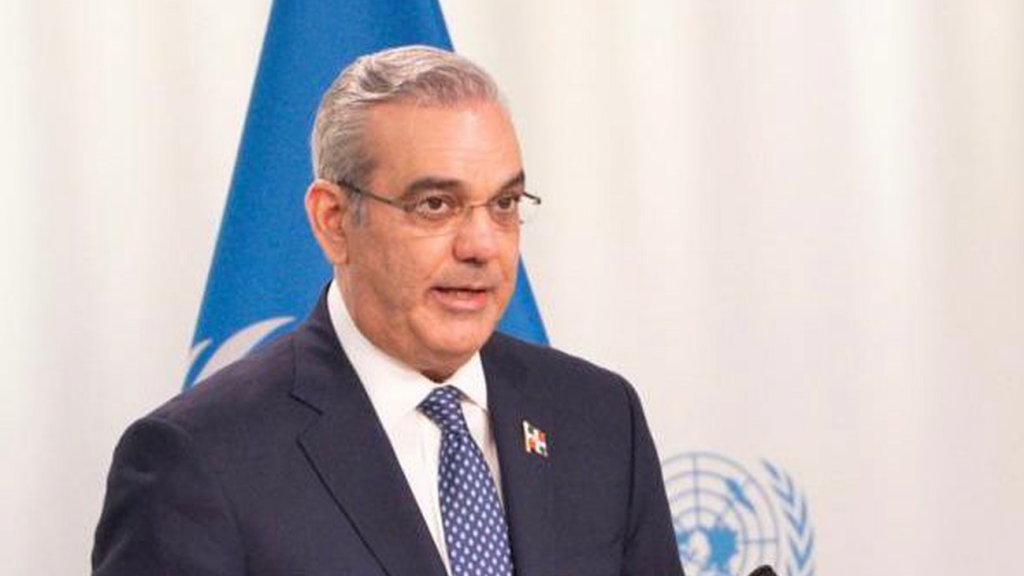
President Luis Abinader, during his speech before the UN. External source.
Climate change, plastics and ocean justice
During his speech, President Abinader warned that the situation of the oceans is at a critical point: “Climate change, loss of biodiversity and pollution threaten to transform our oceans, going from being sources of life to epicenters of devastation.”
He also referred to the negotiation of the global plastics treaty, warning that it must be "ambitious but also fair," recognizing the differentiated capabilities of developing countries.
Regarding the Agreement on Biodiversity in Areas Beyond National Jurisdiction (BBNJ), President Abinader called for its prompt implementation, along with an international financial architecture that facilitates equitable access to technology and resources.
“Developing countries cannot provide protection if they lack the means to monitor. Technology transfer, scientific development, and innovation are not favors: they are shared rights that must be implemented as soon as possible,” he emphasized.
A call to global action
At the conclusion of his presentation, President Abinader reaffirmed the Dominican Republic's commitment to Sustainable Development Goal 14 (Life Below Water) and the 2030 Agenda.
“The ocean unites us. It unites us in its fragility. But also in the beauty of its waters, in the strength of its currents, in the memory of its journeys. Let us make history by being the generation that ensures this healthy relationship with the ocean never ends. The time to act is now,” he emphasized.