



FORBES CENTRAL AMERICA
The world events that the year 2022 brought were shocking, even more so because of the context of a pandemic that is not yet over.
Climate change in Europe has broken records with high temperatures that have led to droughts and wildfires. Since January, hectares of forest have been lost to fire, and the Alps are also experiencing a record-breaking mass loss of vegetation.
Like Honduras, 37 fires were recorded in January, affecting 490.6 hectares of the Central American country, according to Sandra Canales, head of forest protection at the Forest Conservation Institute (ICF). China also broke heat records in August, and drought threatens famine in the Horn of Africa.
Honduras recorded 37 fires in January of this year that affected 490.6 hectares of the Central American country, said Sandra Canales, head of forest protection at the Forest Conservation Institute (ICF).

On February 24, Russia launched its war against Ukraine, marking its largest military attack to date, targeting not only infrastructure but also civilians. At that time, Ukrainian President Volodymyr Zelensky intended and believed it necessary to speak of an "end to this invasion" and a "ceasefire.".

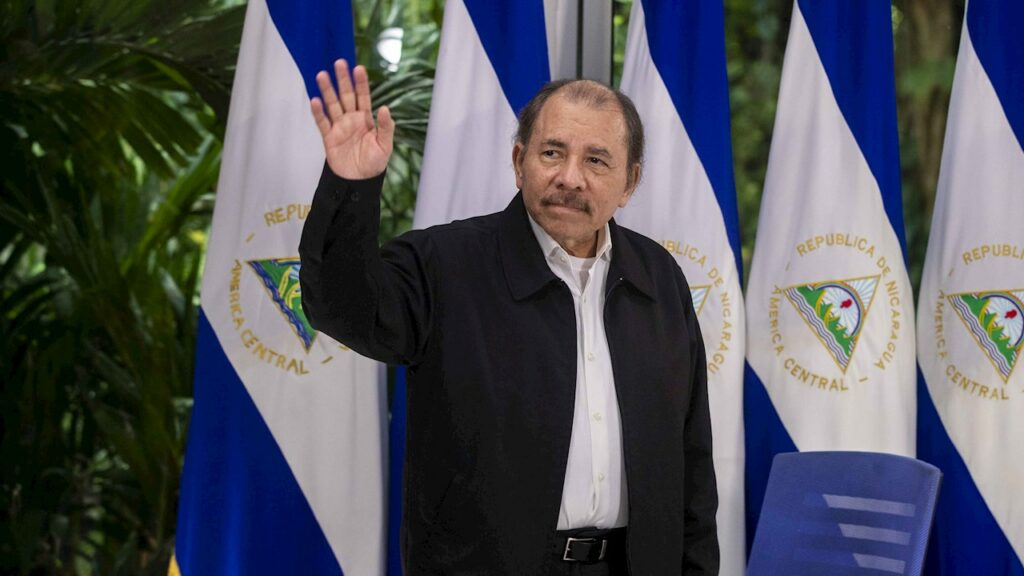
The closure of several NGOs in Nicaragua in March included associations of journalists, environmentalists, women's rights advocates, indigenous rights groups, and human rights organizations. The Ministry of the Interior also canceled the registrations and permanent business numbers of six US and six European NGOs.
Nicaragua has been experiencing a political and social crisis since April 2018, which has intensified after the controversial general elections of November 7, in which Daniel Ortega was re-elected for a fifth term, his fourth consecutive term and second term with his wife, Rosario Murillo, as vice president, with his main opponents in prison.
China's factory activity contracted at a steeper pace in April 2022, as widespread COVID-19 lockdowns reduced output and disrupted supply chains, an official survey showed.
The official manufacturing Purchasing Managers' Index (PMI) fell to 47.4 in April from 49.5 in March, marking a second consecutive month of contraction, the National Bureau of Statistics (NBS) said. The 50-point mark separates contraction from growth on a monthly basis.

The Federal Reserve released the minutes from its last monetary policy meeting on May 4, indicating that the agency is moving toward further tightening measures to combat inflation. It is possible that by the end of 2022, interest rates in the United States will be between 2.5% and 2.75%. However, the possibility of rates reaching 3% is now being considered, should the Fed decide to take even more restrictive action.

Toyota Motor Corp. said on June 16 that it planned a further suspension of its domestic production in June and July due to a semiconductor shortage and a Covid-19 outbreak at one of its suppliers. This is the third time the world's largest automaker by sales has adjusted its June production plans, which are 12% below its original target.

Nicaragua and China signed the so-called "Early Harvest Agreement" on July 14 as a preliminary step to the Free Trade Agreement (FTA) that they hope to sign no later than 2023, reported the Nicaraguan Minister of Development, Industry and Commerce (Mific), Jesús Bermúdez.
That agreement involves identifying the export products of both countries that will receive preferential tariffs under a free trade agreement, the official told Nicaraguan state media.
“This (early harvest) agreement will practically replace what we had with Taiwan,” by 90% of what Nicaragua sold to Taipei, he indicated.

Eurozone inflation in August hit a new record high in 2022, exceeding expectations and strengthening the case for further interest rate hikes by the European Central Bank, even before prices peak at the end of the year.
Consumer price growth in the 19 countries that share the euro rose to 9.1% in August, from 8.9% the previous month, exceeding expectations of 9% and remaining well below the ECB's 2% target, data from Eurostat, the European Union's statistical agency, showed on Wednesday.

The death of Queen Elizabeth II on September 8th, at the age of 96, after a 70-year reign, shook the world. Major newspapers around the globe featured her passing on their front pages. The monarchy is the oldest secular institution in the United Kingdom; Queen Elizabeth's official title was "Her Royal Highness Elizabeth II, by the Grace of God of the United Kingdom of Great Britain and Northern Ireland and of its other territories Queen, Head of the Commonwealth, Defender of the Faith."
After the death of Isabella II, her eldest son became king under the name of Charles III.

On October 30, after years in power, Brazil's far-right president, Jair Bolsonaro, was narrowly defeated by leftist Luiz Inácio Lula da Silva in the second round of the presidential election.
Lula will return to power in Brazil on January 1, 2023, and will be a major boost for the Latin American left, which in 2022 saw the historic victory of former guerrilla fighter Gustavo Petro in Colombia.

The much-criticized World Cup in Qatar in November was historic for everything surrounding it, and especially for the technology used. Its internet penetration, with the world's first 5G network, has boosted the development of its main media outlets and companies and is clearing the way for the country's economic future.
The beIN Group, with nearly 3,700 employees and a presence in 43 countries, currently boasts state-of-the-art facilities in Doha that enable it to manage and produce content for 60 channels and offer 7,500 hours of live sports per month. It is also the official broadcaster of the 2022 Qatar World Cup, a significant undertaking for the group.

On December 7, Peruvian President Pedro Castillo was impeached and imprisoned after dissolving Congress in a day of political chaos. Dina Boluarte became president, with the support of U.S. Secretary of State Antony Blinken, who, according to a statement issued by the Peruvian Foreign Ministry, expressed his support for the president during the political crisis gripping the Andean nation.
“Dina Boluarte, accompanied by Foreign Minister Ana Cecilia Gervasi, held a telephone conversation with Secretary of State Antony Blinken, who reiterated the U.S. support for Peru and its willingness to continue strengthening the rich bilateral relationship,” the institution stated on its Twitter profile.








