


Users will be able to pay in cash, by credit card or using the mobility card
Tomorrow, May 1st, 2024, the Santiago cable car will begin commercial operations, where passengers will pay the integrated transport fare of RD$35.00, which includes the entire route of the system.
Using this integrated fare will allow citizens to save up to 35% of the resources they dedicate each day to transportation, a figure that is equivalent to 20% of the family basket.
Additionally, the Office of Special Projects for Urban and Interurban Mobility, the entity responsible for the operations of Line I of the Santiago Cable Car, reported that users of the system will have various forms of payment to facilitate their access to this means of transport.
Users can pay in cash by going directly to the ticket office, using the mobility card of the Integrated Transportation System of Santiago (SIT Stgo.), which can be purchased and recharged at the cable car stations.
Citizens will also be able to pay with all VISA and MasterCard debit and credit cards, as well as other electronic payment platforms approved by the country's banking entities.
The SIT Santiago card will be available at the ticket office of each cable car station for 100 pesos. This includes a one-time card purchase fee of RD$60.00 and a balance of RD$40.00 for use on the system. This payment method can be recharged at various points both inside and outside the cable car system.
To facilitate access to the card, FITRAM held a presale of SIT Stgo. cards from Saturday, April 27th to Tuesday, April 30th at the ticket offices of each station of the cable car system.
This card does not expire and is only valid for the Santiago Integrated Transportation System (SIT Santiago): the Cable Car, Monorail, and future corridors implemented in the system. The various payment methods offered by the Santiago Cable Car will allow for a much more pleasant experience when accessing stations, resulting in faster, more efficient, safer, and more comfortable entry, saving citizens long lines, the need to handle cash, and time.
From the start of the system's operations until last Saturday, April 27, 240,000 citizens boarded the cable car cabins, experiencing it and incorporating its use into their daily lives, benefiting from the positive impact this service provides, which affects the quality of life of its users, according to a press release from the Urban Mobility Project.
Passengers
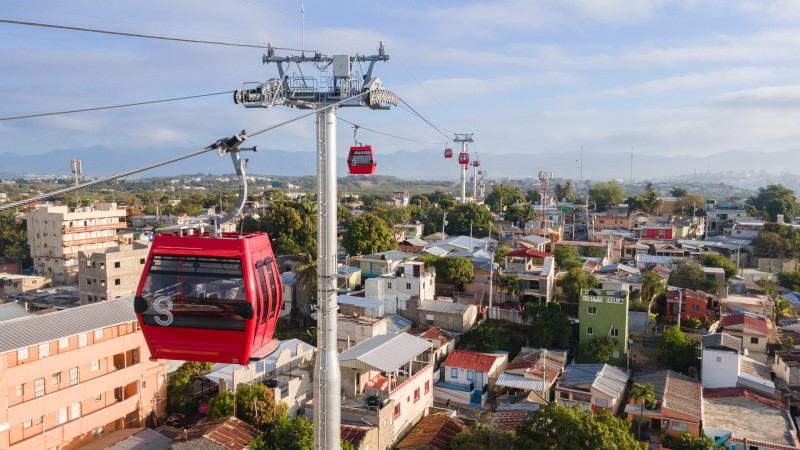
The Santiago Cable Car is a cable transport system with detachable gripper cabins, capable of carrying 4,000 passengers per hour in each direction, and transporting more than 64,000 passengers daily. The first section of the system, spanning 4 kilometers, runs from the La Yagüita del Pastor sector to the Las Carreras Central Terminal in Pueblo Nuevo and includes four stations.







