


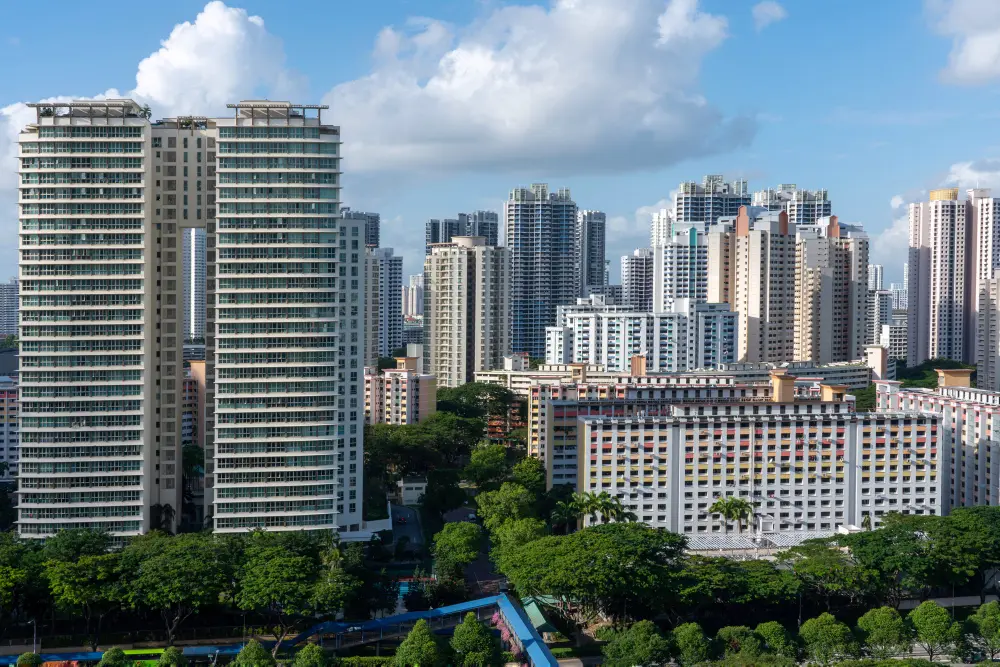
The real estate sector in the Dominican Republic has experienced remarkable growth over the past two decades. The Dominican Republic's Export and Investment Center (ProDominicana) reports that the construction of residential and non-residential buildings, civil engineering projects, and specialized support services for the industry have solidified this sector as one of the most significant drivers of the local economy.
This sector of the economy is also driven by private initiatives in the development of medium- and low-cost real estate projects, commercial establishments, the expansion of hotel capacity, and investments in diversifying the electricity generation mix. However, this industry faces new challenges, most notably climate change.
A study by Virtus Real Estate details the direct and permanent effects of atmospheric phenomena on individual properties: this includes sea level rises and other destructive changes that fundamentally alter the market.
These are the types of scenarios many investors first consider when thinking about climate change, but they are also distant and unclear in the timeframe. However, the Dominican Republic has technology that aims to provide a precise overview of how weather events could impact infrastructure nationwide.
This is Blue Spot, a technology initially developed to strengthen the resilience of transportation to natural disasters, but which is expected to be used in other sectors such as construction. This was explained to Forbes by Katharina Falkner-Olmedo, representative of the Inter-American Development Bank (IDB) in the Dominican Republic.
The methodology arose in response to the urgent need to prepare for the effects of climate change on Dominican infrastructure and the population. The technology, developed jointly by experts from the international organization and local experts, as well as climate change specialists, allows for the planning and prioritization of interventions to mitigate the negative impacts of climate change on the country's infrastructure projects.
This is achieved through a detailed analysis of the potential impacts of atmospheric phenomena on public constructions, such as bridges and roads, and the identification of those structures that would be more vulnerable or have a greater negative impact on the population.
Using the tool
Blue Spot technology offers great potential to transform how road and real estate projects are planned and built in the Dominican Republic. By enabling a better understanding and anticipation of climate risks, it could help real estate developers make more informed and strategic decisions, reducing the vulnerability of investments to extreme weather events.
In other words, it highlights the importance of adopting a proactive mindset towards adaptation; decision-making focuses on protecting investments and promoting long-term sustainability, thus contributing to a more resilient and secure urban development, taking into account that in the country, real estate and housing demand revolves around various centers of the national geography, both in urban and tourist areas.
Blue Spot is unique not only in the country, but also regionally. Its success has attracted the attention of other destinations, with six nations expressing interest in adopting this methodology to strengthen their resilience to climate change, Falkner-Olmedo revealed.
Usefulness of technology
Blue Spot is a methodology that contributes to decision-making based on spatial and economic analysis to identify the most critical and vulnerable assets, as well as the best investment options to increase performance and resilience, facing uncertainty about future natural and climate threats.
The IDB points out that it is designed to prioritize investments and has allowed addressing an urgent need of the Ministry of Public Works and Communications (MOPC): the estimation of damages and losses caused by natural phenomena, particularly hurricanes, tropical disturbances and troughs that affect the country.
This estimate is made through field data collection by ministry technicians and the integration of key information on reconstruction and repair costs based on the extent of the damage. In this way, the methodology has become an even more relevant tool for the Ministry of Public Works and Communications (MOPC), providing information that allows for quantifying the economic impact of natural disasters on infrastructure.
Regulation: another relevant factor
Falkner-Olmedo points out that land-use planning is becoming a fundamental tool for ensuring sustainability and resilience to climate change in the Dominican Republic. The recent approval of a land-use planning law reflects this shift in approach, which now considers environmental aspects such as climate change adaptation in the planning of different economic sectors, including real estate, tourism, agriculture, and free trade zones.
The IDB representative emphasized that adapting to climate events is essential to ensuring the long-term viability of real estate projects, especially those located in vulnerable coastal areas. She explained that urban planning must consider the potential impacts of sea-level rise, coastal erosion, and other extreme weather events when designing and constructing buildings along the waterfront, for example.
The Dominican Republic has had a national climate change adaptation plan for the period 2015-2030 for almost a decade, which details its strategic axes, highlighting infrastructure and techniques with an environmental sustainability approach, taking into account climate change and variability.
This objective seeks to protect tourist works and ecosystems, as well as the removal of hotel constructions, docks or breakwaters that impede the natural dynamics of the beach and the reconstruction or reinforcement of infrastructure that is more vulnerable to climate change in tourist areas.
Source: Forbes.
Cover photo: Forbes.







