


He emphasized that companies can adopt remote work schemes and citizens can optimize fuel use and, as a society, act with awareness and efficiency.
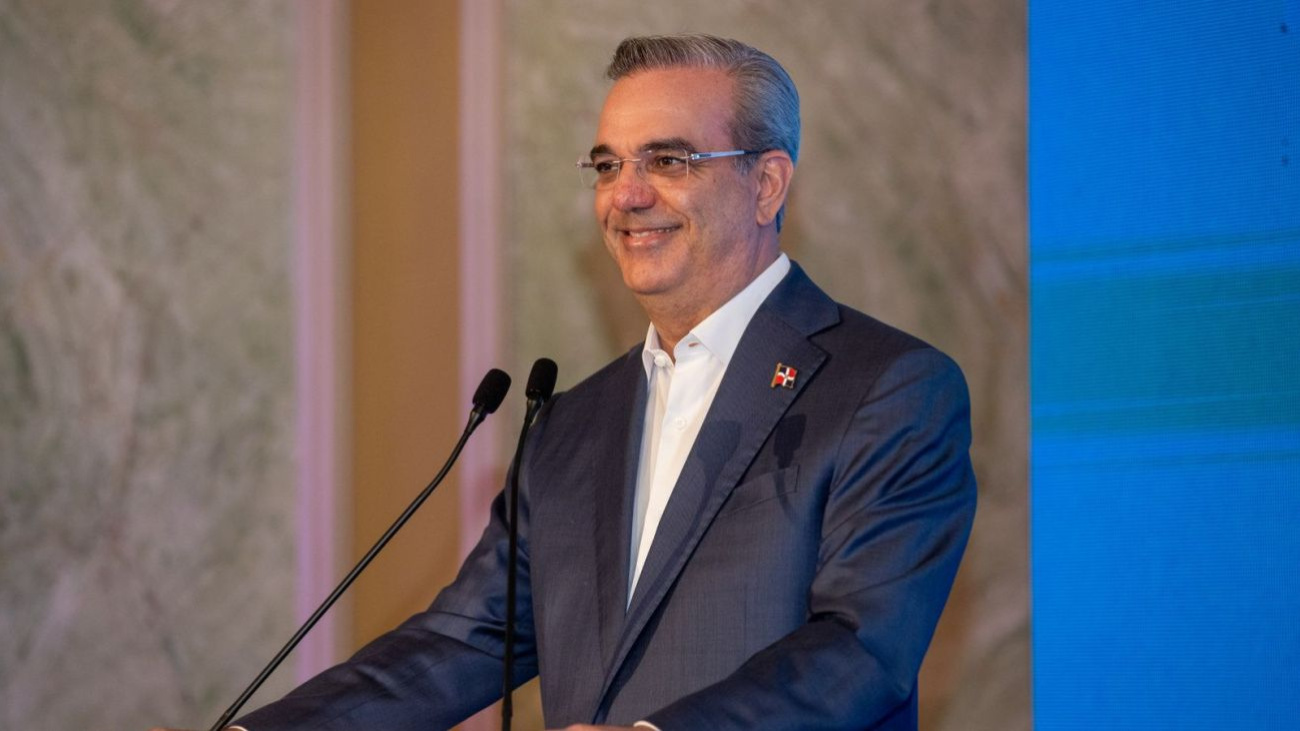
SANTO DOMINGO.- In a message addressed to the Dominican people, President Luis Abinader explained yesterday, Sunday, the economic implications of the war in Iran, a topic that is currently worrying the entire world.
“Let me speak to you frankly, but also calmly. Without drama, but without evasions. How do you speak when a country needs to clearly understand the moment it is living through?” said the head of state.
After outlining a series of measures his government has implemented to mitigate the effects of the war, the president clarified: “But we must be clear, and I want to be honest with you: given this situation, it will be necessary to make certain sacrifices. Not disproportionate, not indiscriminate, but unavoidable. There will be pressure on electricity rates, transportation costs , and, to some extent, food prices. Not because our economy has weaknesses, but because we are facing a major external shock,” Abinader stated.
He stated that the Government will assume most of the effort, while calling for shared responsibility, noting that companies can adopt remote work and citizens can optimize fuel use and, as a society, act with awareness and efficiency.
Economic strength and stability
The president put the situation into perspective, emphasizing that the Dominican Republic continues to be one of the most dynamic economies in the region, with growth, stability, and confidence. “We are not facing a crisis generated from within, but rather an external shock. And that difference is fundamental.”.
From a fiscal and financial perspective, he emphasized that the country has a solid position, with robust liquidity, access to international financing, and reserves exceeding US$16 billion. “Added to this are proactive measures that strengthen our response capacity, as well as additional revenues from mining and improved tax collection, the result of our growth and tax efficiency.”.
Energy sector and strategic response
He explained that, in the electricity sector, historically vulnerable to these shocks, the country now has better conditions, noting that the diversification of the energy matrix, the greater weight of renewables and strategic decisions such as the fixing of the price of coal in Punta Catalina and natural gas contracts already secured for a year will significantly cushion the impact.
“Our goal with all of this is clear: to ensure that any international turbulence has the least possible impact on the daily lives of Dominicans,” he emphasized.
He also stated that this situation offers an important lesson on the need to reduce dependence on fossil fuels, accelerate the transition to renewable energy , and build a more resilient and diversified economy.
International context and global effects
The president explained that the Dominican Republic is a very open economy, integrated into the world , and that when international conflicts of this magnitude occur, tensions arise in global markets that can translate into increased costs for transportation, energy, and raw materials. He added that this is a reality that no country, and especially not one like the Dominican Republic, can ignore.
He indicated that one of the key points to understand the situation is the Strait of Hormuz, in the Persian Gulf, through which about 20% of the world's oil and natural gas , a flow that has been severely affected, causing one of the biggest supply disruptions in the global oil market in recent times.
The president explained that this situation has created a tense market, with significant increases in the price of crude oil and in products with a high impact on daily life, such as diesel, aviation fuel and liquefied petroleum gas used in homes.
Trust, resilience and a call to unity
In that context, he emphasized that the Dominican Republic imports all of the fuel it consumes, so it does not set those prices, but receives them from the international market, inevitably passing on their impact to the national economy.
“But I also want to say something with certainty and firmness: our country is prepared to face these kinds of situations. It wouldn't be the first time Dominicans have faced a complex international scenario. We have faced global inflationary shocks caused by the pandemic, the global logistics crisis, and the war in Europe. And in each of those difficult moments, the Dominican Republic persevered, protected its people, and maintained economic stability,” he stated.
The president reiterated that in times of global uncertainty it is essential to act with composure, responsibility and a national vision, assuring that the Government will continue to make decisions to protect economic stability and the purchasing power of families and ensure that the Dominican Republic continues to move forward with a firm step.
“We have demonstrated that we know how to face crises without losing our way. We did it in the recent past and we will do it again now, with planning, with resolve, and always putting our people first. I want every Dominican to be certain that this government will be vigilant, acting when necessary and using all the tools of the State to protect families and maintain our course as a country,” he reaffirmed.
He emphasized that the greatest risk is not making responsible adjustments now, but postponing decisions and facing much higher costs in the future, adding that Dominicans “have demonstrated, on multiple occasions, our capacity for adaptation and resilience. This will be no exception.”.
“Yes, this moment demands awareness. It demands responsibility. And it demands a shared sacrifice. But it also demands trust. Trust that decisions are being made to protect the country's stability. Trust that this is a transitional period. And trust that, if we act correctly, we will emerge stronger and with the fewest possible consequences,” he said.
He stated that the economic history of the Dominican Republic is, to a large extent, the history of its ability to overcome challenges, and that this is precisely one of those moments.
“Let us move forward, with clarity, balance, and determination. Because this country does not stop. This country adjusts, adapts, and continues to advance. Have no doubt that your government and your president will work on this 24 hours a day,” President Abinader concluded.
Recommended readings:







