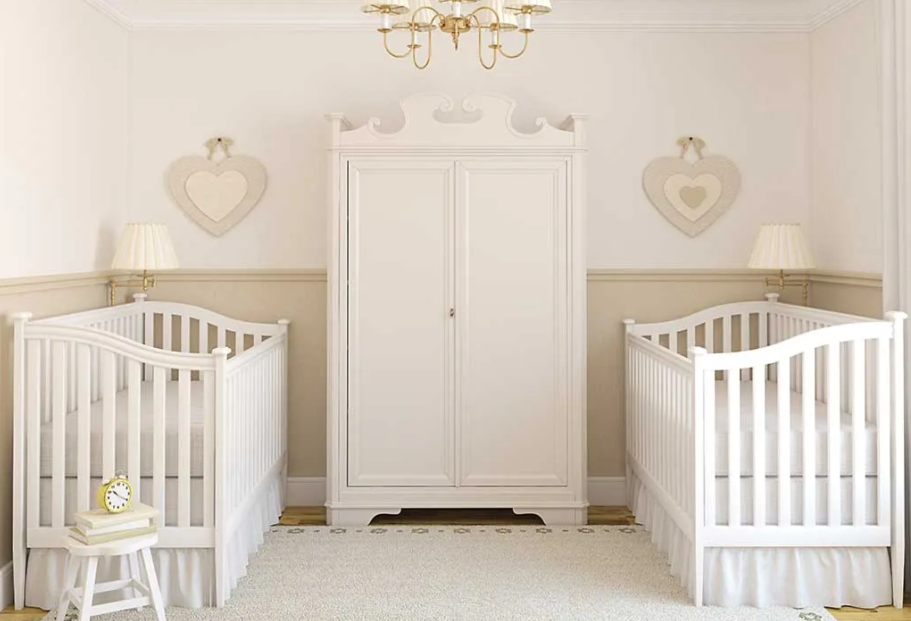
The arrival of two babies presents new challenges within the home, especially when it comes to organizing and decorating their bedroom. Kasas Decoración and Guiainfantil.com offer recommendations for creating a functional, safe space adapted to the needs of both little ones.
The arrival of twins means planning a bedroom for two, but without forgetting that each baby requires their own space and belongings. In this scenario, layout, storage, and functionality become fundamental aspects for making the most of every available square meter.
According to the blog Kasas Decoración, planning this type of room requires finding a balance between elements that can be shared and those that should be individual. Guiainfantil.com presents a similar perspective in an article written by children's room decorator Yolanda Corbillón Bello.
Color helps define the bedroom
One of the first things parents need to decide is the color palette. Kasas Decoración suggests using neutral tones when creating a shared space for both babies, while complementary colors can be used to differentiate the areas designated for each child.
According to Guiainfantil.com, light and relaxing tones are a suitable alternative for this type of space, as they contribute to creating a calm atmosphere that promotes rest for babies.
When it comes to a boy and a girl, both sources consider the possibility of maintaining a neutral color base and adding different details for each child.
The layout of the cribs is key
Unlike other furniture, cribs should be individual, although their location can contribute to improving the functionality of the bedroom.
According to Guiainfantil.com, placing cribs parallel to each other or side-by-side in a line makes it easier for parents to access both babies. Kasas Decoración agrees with this recommendation and points out that the arrangement will depend on the room's dimensions and characteristics.
Another alternative is double cribs, which allow you to maintain separate spaces for each baby within the same piece of furniture.
More space to store clothes and accessories
With two babies, the amount of clothing, diapers, hygiene products, and other items that need to be kept organized also increases. Therefore, storage becomes especially important in the bedroom.
Kasas Decoración recommends having wardrobes and dressers or changing tables with enough space for both children's belongings. Meanwhile, Guiainfantil.com highlights the practicality of changing tables that include a bathtub, especially for making bathing easier.
Choosing furniture with storage capacity allows you to keep circulation areas clear and make better use of the available space.
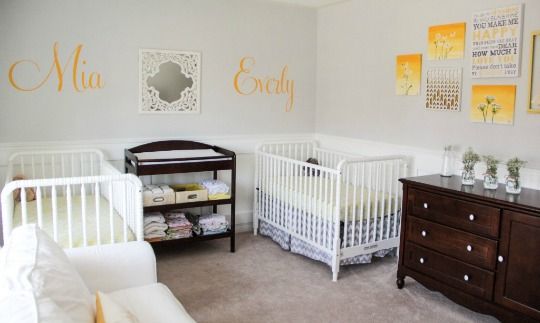
Armchairs, shelves and rugs are among the accessories
Basic furniture can be complemented with pieces designed to facilitate daily routines. Guiainfantil.com recommends adding a nursing chair, as well as shelves or storage containers where toys and books can be organized.
It also suggests adding a rug to create a space for early floor play. Kasas Decoración agrees on the usefulness of these elements and adds play and storage areas as resources that can continue to be used as children grow.
The lighting should be adapted to the needs of babies
Lighting is another important element in the planning of these bedrooms. Kasas Decoración advises taking advantage of natural light and avoiding having furniture or accessories block it.
To complement this lighting, it proposes using lamps intended for specific tasks and, especially, intensity regulators that allow you to modify the amount of light according to the time and the activity being carried out.
Details that differentiate the spaces
Even if they share a room, the decor can still be used to give each space its own identity. Guiainfantil.com recommends using pictures, silhouettes, photographs, and other decorative accessories.
Personalizing each area with each child's name or with some distinctive element can add character to the bedroom without breaking the harmony of the whole.
Design with growth in mind
The nursery should respond not only to the needs of the first few months, but also to the changes that children will experience over time.
Recommended readings: