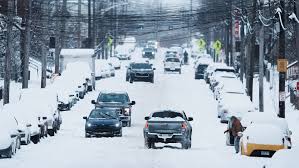
WASHINGTON, D.C. — A powerful, multi-day winter storm began sweeping across large swaths of the United States on Friday, putting more than 170 million people—nearly half the country's population—on alert. The system, described by the National Weather Service (NWS) as one of the most dangerous of the season, combines heavy snow, freezing rain, sleet, and an arctic air mass that could keep temperatures extreme throughout next week.
The phenomenon not only represents a climate challenge, but also a structural risk. Experts warn that the weight of the ice accumulated on power lines, trees, and buildings can cause damage comparable to that of a hurricane, leading to prolonged blackouts, disruptions to basic services, and impacts on urban mobility.
A system that moves from south to north
Texas and Oklahoma were among the first states hit by the storm, with roads covered in ice and snow that hampered travel and forced authorities to deploy emergency operations. The NWS anticipates that the system will move from the Southern Rockies to New England, affecting a corridor that includes major urban centers such as Chicago, Washington, New York, and Boston.
After the main storm passes, an arctic air mass will advance from the Southern Plains to the Northeast, prolonging the extreme cold and maintaining the risk of freezing of infrastructure, roads and electrical systems.
In states like Minnesota and North Dakota, the wind chill could drop to -46 degrees Celsius, levels that pose an immediate danger to human life if the necessary precautions are not taken.
Immediate impact on air transport
The first major visible impact was on air travel. More than 800 flights were canceled or delayed on Friday at key airports such as Dallas, Atlanta, and Oklahoma, according to data from the FlightAware platform. That number could rise as the storm moves eastward.
For the airline and logistics industries, these types of extreme weather events not only imply operational losses, but also additional pressure on airports, supply chains, and contingency plans. The accumulation of cancellations generates a domino effect that impacts domestic and international traffic for several days.
Cities in emergency mode
Local authorities activated special protocols. In Oklahoma, the Department of Transportation applied brine to the roads, and the State Patrol canceled officers' days off to bolster assistance to stranded motorists. In Houston, electric companies announced the availability of more than 3,300 employees to respond to potential power outages.
“We hope for the best, but we are prepared for the worst,” Houston Mayor John Whitmire said, confirming that the city is on high alert for potential power outages.
The governors of Georgia and Mississippi declared states of emergency, while in Alabama the demand for generators skyrocketed. Supermarkets in areas like Dallas reported empty shelves of basic goods, reflecting public anxiety about potential prolonged power outages.
Schools closed and cities semi-paralyzed
The system also forced the closure of schools in several cities. In Oklahoma City, classes and school activities were completely suspended. In Houston, the public school system shifted to online learning, while in Dallas all extracurricular activities were canceled.
In the northern part of the country, the extreme cold led to academic suspensions in Chicago and Des Moines, due to the risk of frostbite in less than ten minutes of exposure to the outdoors.
Even southern states like Florida could experience sub-zero temperatures, an unusual phenomenon that increases the vulnerability of infrastructure not designed for extreme weather.