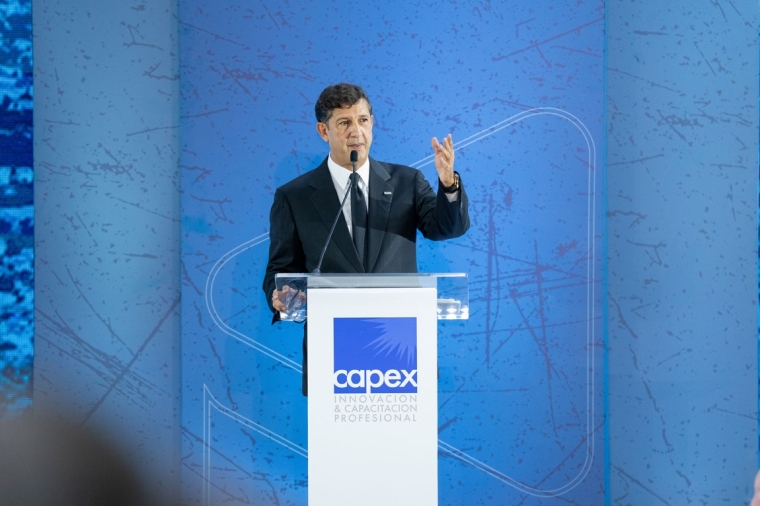
SANTO DOMINGO– Amid the debate over why the Dominican economy has slowed its growth rate, businessman Manuel Estrella focused on an issue rarely discussed outside the private sector: permitting. According to his analysis, the accumulation of paperwork, authorizations, and bureaucratic processes for developing construction projects has become one of the main obstacles to investment and productive activity, with a direct impact on the country's economic performance.
The businessman stated that the Dominican economy has gone from growing at a rate of nearly 5% annually to barely 2%, a change he attributed, in part, to the lack of timely measures and the burden of government permits. His remarks were made during his appearance on the radio program " El Sol de la Mañana."
Estrella explained that developing a construction project requires a complex permitting process involving multiple institutions, such as the Ministry of the Environment, the Ministry of Housing, city councils, and other public entities. "The permitting process is one of the culprits," she noted, referring to the delays caused by the accumulation of paperwork and approvals.
As part of the government's Meta 2036 plan, it was reported that a survey revealed 131 different permits, distributed across 16 institutions. Following analysis, this number was reduced to 39 in an effort to simplify and streamline the process.
Estrella highlighted that this working group is promoting two key changes. The first is the principle of administrative silence: if an institution does not respond within 30 days, the project can proceed. The second is the certification of companies or the use of sworn statements to expedite project approvals, based on the principle that any irregularities will result in criminal penalties.
According to the businessman, these measures aim to accelerate investment, reduce bureaucracy, and revitalize sectors such as construction, which have a direct impact on the country's economic growth.