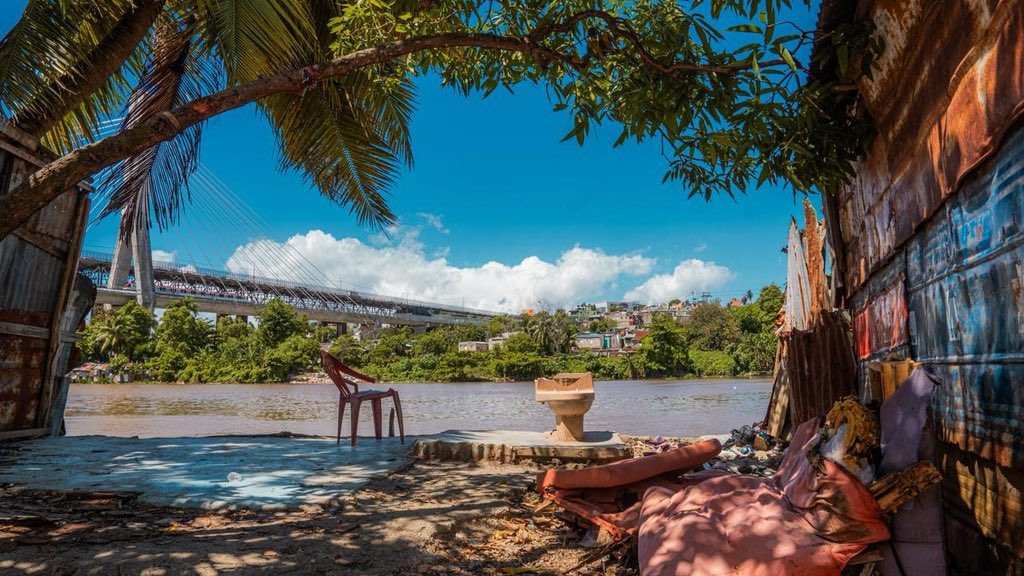
SANTO DOMINGO.- The Ozama River, one of the most important tributaries in the Dominican Republic, covering 2,686 square kilometers and running 148 kilometers, is being addressed by the Government, with the purpose of improving its urban infrastructure, recovering and cleaning up its environment, a proposal that according to official data will impact around 400 families residing in the area.
Yesterday, Tuesday, the Minister of the Presidency, José Ignacio Paliza, conducted a supervisory tour of the Las Lilas sector, in Los Tres Brazos, Santo Domingo East, to verify the progress of the project “Recovery of the eastern bank of the Ozama River”, a comprehensive intervention that is being carried out by the Executive Unit for the Readaptation of Neighborhoods and Environments (URBE).
According to a press release from the Presidency, the project will involve an investment of RD$409.5 million, aimed at recovering and cleaning up the riverbank, improving urban infrastructure and the living conditions of families residing in the surrounding area.
The official highlighted that this project is part of the Government's comprehensive policy to transform vulnerable communities into safe, organized spaces with real opportunities for human development, through projects that combine infrastructure, environmental sustainability and social inclusion.
“We are committed to a profound transformation of urban planning and the environmental recovery of the Ozama River, but above all, one that prioritizes families by restoring their dignity and hope, because no one deserves to live in uncertainty,” said Paliza.
URBE's general coordinator, Rocío Vidal, assured that the work is progressing according to schedule, prioritizing the quality of the work and social supportfor the affected families.
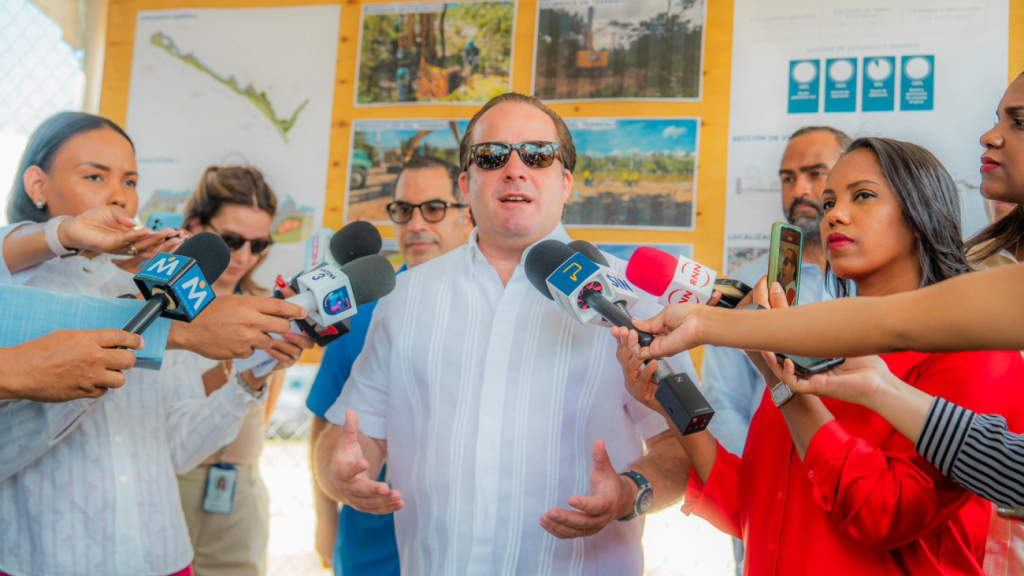
The Minister of the Presidency, José Ignacio Paliza, gives a statement to the press during his inspection visit to the site. (External source).
“We are developing a comprehensive intervention that combines infrastructure, the environment, and a social component. Our commitment is to ensure that every family receives fair treatment and that the end result is a dignified, functional, and sustainable space for the entire community,” the executive stated.
The support for the initiative
The project, supported by Decree 521-25, envisions the creation of an environmental and social corridor that will integrate safe public spaces, green areas, road infrastructure, community and sports facilities, as well as renovated and newly constructed essential services, according to the statement from the Government House, which also assures that the intervention will impact 62,815 inhabitants of the area.
It specifies that the first phase, covering approximately 16,000 square meters of urban intervention, is currently underway. The work is being carried out in coordination with the Ministry of Environment and Natural Resources, the National Environmental Protection Service (SENPA), and the Santo Domingo East City Council, as part of the Ozama-Isabela Cabinet's efforts—an initiative created by the Presidency to direct and ensure transparency in the rescue, cleanup, and comprehensive recovery of these watersheds.
The complete intervention, explains the press document, includes 800 linear meters on the riverbank, of which the first phase includes the construction of a 350 linear meter road on the riverbank, with soil stabilization and protection of margins.
It also includes the renovation of key community infrastructure such as the medical dispensary, the police station and sports fields, along with the improvement of the residential environment and the strengthening of basic services.
The project also includes 5,800 square meters of green areas and landscaping, as well as new community facilities such as a children's baseball field, a community center, and recreational parks.
To date, 198 structures, including homes and commercial premises, have been demolished, with 98 remaining. It is estimated that the process will impact a total of 365 families, who will be relocated and compensated according to the technical assessments.
The second phase will be awarded in July
Official information indicates that the awarding of the second stage of the project is planned for July 2026, focusing on consolidating the system of stabilization of edges and soils, as well as strengthening the green corridor through vegetation and spaces that guarantee environmental sustainability and collective well-being.
The many failed proposals to rescue the Ozama
In 1992, then-President Joaquín Balaguer launched the Ozama River rescue project, called the Social, Urban and Ecological Rescue Program (Resure), with subsequent announcements, but none have provided a solution to the prevailing pollution in the fourth most important river in the Dominican Republic.
According to Acento in a 2012 publication, the Resure project was revived in 1996 by Leonel Fernández and envisioned the relocation of 12,000 families to the San Luis sector, where several housing projects and an ecological avenue would be built, but it all remained on paper.
In 2005, during Leonel Fernández's second term, the Resure project was revived and a series of measures to rescue the Ozama River were announced.
In August 2008, according to the newspaper Acento, the mayors of the National District and Santo Domingo East, Roberto Salcedo and Juan de los Santos, met with the then-head of the Navy, Julio César Ventura Bayonet, to seek solutions to the serious pollution problem of the Ozama and Isabela rivers, agreeing to initiate a series of investigations to determine the severity of the situation. But it all remained just announcements and paperwork.
Recommended readings: