


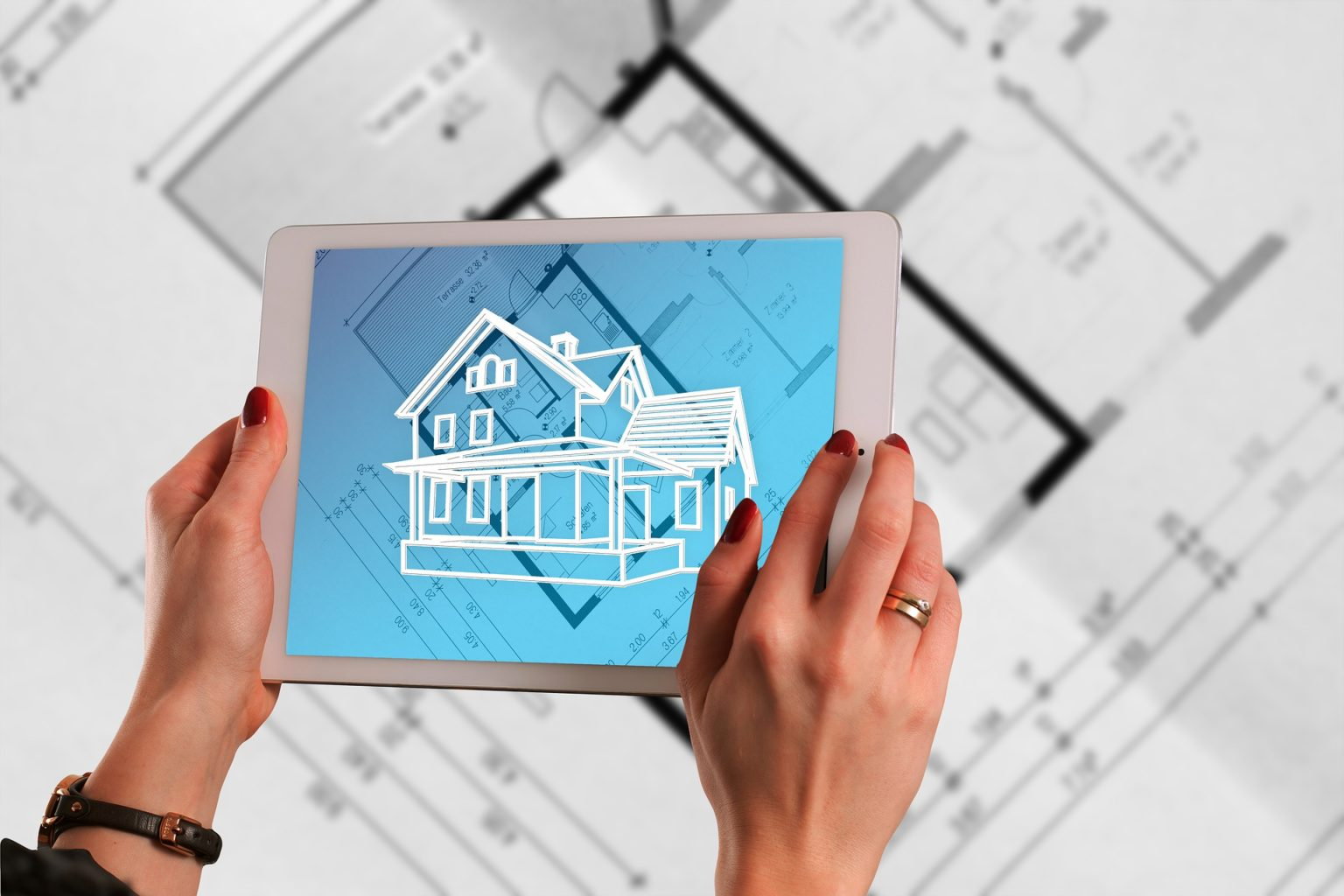
The construction industry is often criticized for being overly conservative, for its standardization, and for the excessive bureaucracy of its documentation. However, implementing the latest technologies in construction is not always so easy. Due to requirements such as regulatory compliance, each technology must have a regulatory basis and be cost-effective in itself. The final cost of its development must be reasonable, and the efficiency in reducing those costs in the future must be significant and sustainable over time. Any technology requires proper design and a wide range of work from the project team, quality control, and staff training. However, once implemented, they offer significant improvements in the work process.
The growth of cities and populations, new forms of communication in the Big Data era, economic growth, and improved well-being have driven the construction industry to more dynamically integrate new technological solutions. As a result, new construction technologies are being actively promoted and used worldwide.
The speed of technological development is driving the large-scale digitalization of the construction industry. The application of information technologies is a matter of competitiveness; innovations in construction improve projects, increase profits, and help win bids, resulting in greater competitiveness for companies that choose to incorporate them into their daily operations.
The most popular new technologies on the market
BIM
BIM ) is the leading technology in modern design. It involves not only the virtual modeling of a building, but also a comprehensive digital representation of an asset's physical and functional characteristics. BIM covers the entire building lifecycle, taking into account construction, outfitting, functions, asset management, and future repair or demolition work. All relevant design components and nuances are considered and integrated into a single project. If any element is removed, replaced, or added, the entire model is recalculated to reflect this change.
Thanks to BIM, the virtual building model allows specialists to:
- View all problems and inconsistencies
- Approve the observed improvements to the facility
- Improved communication among all participants
- Make adjustments
- Calculate measurements
- Control the work process
- Anticipate the risks of future construction
- Calculate the necessary resources
BIM technology is reducing:
- Material expenses
- Errors in the projects
- Delivery times
Furthermore, thanks to PlanRadar, users can access the construction status and all relevant building data from any mobile device, enabling much more precise and effective monitoring at every stage. This solution greatly simplifies the management and control of construction processes, optimizing the outcome.
At a global level
In Spain, BIM has been mandatory for infrastructure projects since 2019. In Russia, for example, only 5-7% of companies use BIM (mainly in megacities and large corporations), and other new technologies in construction are even less common there. In the US, approximately 72% of construction companies use BIM to save money on projects. In the UK, since 2016, all budgeted construction projects have been required to use BIM Level 2. In France, since 2017, the national government has used BIM in the housing sector for half a million homes. Germany has implemented the use of BIM in all infrastructure projects since 2020.
Cloud services and mobile technologies
Working with the BIM model involves using cloud services for real-time data and information exchange. Cloud platforms can contain a wide variety of segmented information and tools, ranging from those for architects to project management systems, which are available to any project participant at any time from a mobile device, thus enhancing collaboration.
What benefits do cloud services offer to construction companies?
- Information accessible from any device with an internet connection.
- Unlimited data storage.
- Scaling according to the needs of the construction project: it flexibly adjusts to the needs, avoiding unnecessary elements, productivity does not decrease.
- An affordable service. Building your own IT infrastructure is much more expensive than using a cloud service provider.
- Instant access to information for all project participants.
- Simplifying communication and real-time collaboration.
- Ability to manage multiple projects while maintaining quality control; the cloud helps with synchronization.
- Ability to reduce expenses in large offices by using third-party servers without the need to maintain your own.
- Maximum data protection.
Artificial intelligence
Artificial Intelligence (AI) is the "behavior" of a machine, a type of technology that mimics human cognitive functions: task and problem-solving, image recognition, and learning. There is a special field of AI: machine learning, which is based on the collection and analysis of statistical data, from which decisions can be made.
New construction technologies cannot do without machine learning and AI. In fact, it's an invisible assistant that analyzes terabytes of data, identifying problems. Routines can be created to filter out unnecessary information or search for specific data. Programs that use the AI engine are used for:
- Predictive analytics:
- Predict security threats based on past data.
- Recognize important attributes and elements in the work.
- Site control, number of people on site, compliance with PPE.
- Project design and planning
- The collected and modeled data helps to avoid cost overruns.
- Risk monitoring and mitigation, establishing priorities.
- Robotic mechanisms, process automation.
- Performing routine, simple but time-consuming operations on the construction site, replacing human labor;
- Optimization of jobs where high productivity is required.
Internet of Things
This technology is closely related to cloud systems and AI, because the IoT (Internet of Things) is not very effective without analytics and a data collection algorithm. In construction, IoT is a great help in solving a range of problems. With a variety of sensors on the construction site, project management becomes more efficient, and the construction process becomes safer and more streamlined.
Experts predict that by 2024 the market share of IoT in construction will reach $16.8 billion.
Benefits of the Internet of Things in construction:
- Increased productivity
Companies often manage multiple projects across different locations, making it crucial to monitor the lifecycles of each and meet deadlines. Sensors collect data on-site, which is then processed by software, providing the contractor with a comprehensive overview of the work's progress. This technology helps manage large-scale projects, reducing both the time and cost of completing tasks.
- Safety and risk prevention
IoT can significantly reduce risks and prevent injuries on construction sites.
Sensors in construction workers' clothing, on-site, and in materials track the movement of people, airborne hazardous substances, unauthorized storage areas, emergency conditions, and much more. Sensors in materials can also prevent theft.
- Resource management
The IoT also optimizes the cost of facility maintenance and supplies. Smart sensors help track electricity, water, and fuel consumption, allowing for optimized spending. Data is collected automatically and can be accessed to determine, for example, when refueling, preventative maintenance, replacements, or repair history are needed.
A recent study by the McKinsey Global Institute , assessing the impact of the Internet of Things (IoT) on the construction and mining industries, found that companies could save over $160 billion by implementing IoT. The full potential of the IoT is likely to be unlocked in construction in the coming years; the global digitalization of the industry is just around the corner.
Virtual and augmented reality
Among the new technologies for architecture and construction, virtual reality (VR) stands out. It creates a "real" world within a digital environment, using photographs, renderings, and 360° videos. The technology's capabilities allow navigation within a realistic digital environment, where it is also possible to interact with objects in real time. Augmented reality combines separate and superimposed digital elements with the real-world environment, completing the future model.
Virtual reality adds even greater depth to a virtual building, where digital information "comes to life" when combined with physical information. Virtual reality operates on a much larger scale, enhancing the multidimensional models created. It's a unique, first-person experience that incorporates professional solutions and expert judgment, transforming how infrastructure is built in general.
Benefits of virtual reality in construction:
- Option to test viable new designs
- Improvements in work tracking
- Identify problems in the early stages of construction
- It simplifies the exploration of complex structures
Robotics and exoskeletons
Despite the obvious reliance on labor-intensive work with high turnover in a sector like construction, manual labor still prevails and is sometimes the only viable option. Unfortunately, construction sites are highly mobile and constantly changing environments where robots, without sophisticated AI, cannot compete by operating with a programmed algorithm. But the construction industry is gradually adopting smart solutions, particularly the use of drones. And this technology has far more real estate and commercial applications than simply aerial photography of buildings.
Benefits of drones in construction:
- Safety control: monitoring of the construction site with cameras and identification of hazardous areas. There's no need to go on-site to verify the work in person; workers can be dispatched immediately to resolve any issues.
- Delivery of materials via drones, reducing the number of vehicles.
- They increase the speed and quality of routine work.
- Drones for demolishing construction elements at the end of a project. Although slower, it is undoubtedly a more economical and safer solution.
- Security drones. Unfortunately, theft in construction is ubiquitous, so robots can be used to reduce losses.
Robotic exoskeletons will accelerate work and productivity on construction sites, because the strength of a person in the "suit" is often increased, and the work is also much safer.
3D Modeling
This technology has long served the construction industry, but only in recent years has its widespread use become more common.
The 3D concrete printing market in the construction industry is projected to grow by about $58 million by 2024.
This is driven by the increased demand for this type of printing in construction, due to its high productivity and ease of creating diverse and complex structures. Obtaining finished building elements (walls, slabs) or other components directly on-site reduces not only production costs but also logistical and personnel costs. Thanks to extrusion technology in 3D modeling, it is possible to create elements from different materials: concrete, geopolymer, cement, plaster, and clay.
Advantages of 3D modeling:
- Higher speed
- Greater accuracy (minimal errors)
- More variety of designs
- High performance
- Option to save on additional transportation and personnel costs.
- More environmentally sustainable.
A bright future is envisioned for 3D printing in concrete. Sustainable and scalable solutions for 3D modeling in multi-component concrete are already available (BAM, the 3D printing center for structural concrete elements in the Netherlands). In Russia, the Irkutsk-based company Apis Cor. developed a special 3D printer in 2017 and used it to build an entire house. The advantage of the Russian 3D printer is its ability to print the house in a unique way, without the need for rails like other 3D printers. It doesn't require flat surfaces for precise work and even prepares the material mix itself.
Big Data

Along with other advanced technologies, it can play a significant role in optimizing construction processes. It can structure and analyze enormous datasets and scattered information, resulting in the detection of certain patterns and facts that can be applied to a range of tasks that will reduce costs, anticipate risks, and predict the effectiveness of certain projects. BigData, and information obtained not only from people but also from a wide variety of sensors, systems, and programs, and together with AI (artificial intelligence), ML (machine learning), and IoT (Internet of Things), this data becomes an important management tool. It is possible to identify patterns of weather or climatic conditions (and other conditions) at the proposed construction site to calculate the best time to start construction and predict the project's success. Furthermore, analyzing the dataset yields important predictive conclusions about the feasibility of certain projects, potentially reducing costs by optimizing or modifying the initial assumptions.
Digital twins

Exact virtual copies of physical objects: buildings, cities. This technology goes hand in hand with BIM; both contain elements. However, the main difference between them is that the digital twin aims to simulate a person's interaction with the environment and an element. A virtual twin of a physical object provides information about the current state of created ecosystems, infrastructure, and how they affect users.
The computer model integrates information into a single environment accessible to everyone. The BIM model is generally static, while the digital twin is dynamic, changing over time. Digital twins offer the opportunity to test different scenarios and threats, such as the impact of natural disasters, various emergencies, fires, or the collapse of a component, through simulation. Based on the BIM model, the digital twin can "experiment" with this information by integrating different data blocks, making its predictive function one of its main strengths. Understanding potential problems, for example, whether the asset can withstand the expected loads, allows builders to avoid excessive costs, optimize processes, and make adjustments in the initial stages.
Blockchain Technology
In this construction, blockchain is implemented in the form of smart contracts, acting as an "administrator" for all parties involved in the contract. The smart contract's digital protocol is implemented on the blockchain network.
Blockchain technology was originally designed for cryptocurrency transactions, but its security and transparency can be effectively used in multi-party processes such as those in construction. Its advantage lies in the fact that it doesn't involve intermediaries like standard databases; information is exchanged directly between end users (peer-to-peer systems act as servers and are connected via the internet), without a central computer.
Blockchain is digital information stored in a public transactional database (block) that is controlled by peer-to-peer computer systems or verified by a network of computers (chain-to-chain).
Each device in the chain contains different types of information, such as proof of a bank transaction, a contract, a title deed, or an authentication. Blockchain data security is controlled by each participant, who is responsible for protecting their portion of the information with a digital signature. This ensures fast and secure information exchange, avoiding the involvement of third parties, such as a bank. The decentralization of operations, where responsibility and guarantees are assigned to the chain's participants, is the main advantage of blockchain.
A smart contract is a type of digital protocol implemented on a blockchain network to fulfill contractual terms. Although various parties are involved in construction (different companies, contractors, and suppliers), all project data is stored in a centralized location, facilitating project monitoring and management. With the help of blockchain technology, project data can be tracked and processed more efficiently in real time, without third-party involvement. Blockchain technology provides transparency throughout the construction process, making it open and streamlining workflows. Furthermore, it facilitates collaboration and necessary decision-making, minimizing risks and preventing disputes.
How can blockchain benefit the construction industry?
- Payments
- Transaction execution
- Building/facility inspection
- Transparency and security in the processes
- Conflict resolution
Blockchain generally reduces process fragmentation, helps track each stage of a project, and allocates resources more effectively. In fact, it's a technology that can directly compete with current cloud-based SaaS solutions.
It seems clear that large-scale digitization and the implementation of BIM technologies in the construction industry will advance due to market demand, where efficiency and the reduction of time and costs are becoming a priority. Construction is becoming smarter not only in computer-aided design but also in construction processes, utilizing robots, 3D printing, sensors, and smart materials and technologies. Undoubtedly, these new technologies will affect the profitability of the construction sector, as they are aimed at optimizing all stages of a project, from preliminary studies to asset operation.
Source: https://www.planradar.com/es/







