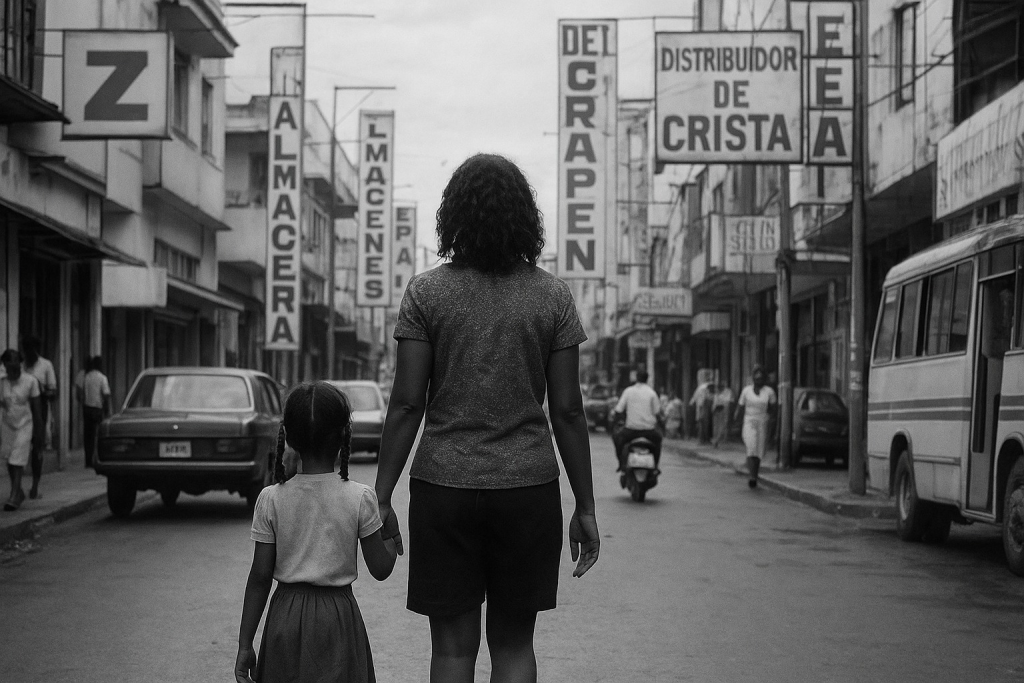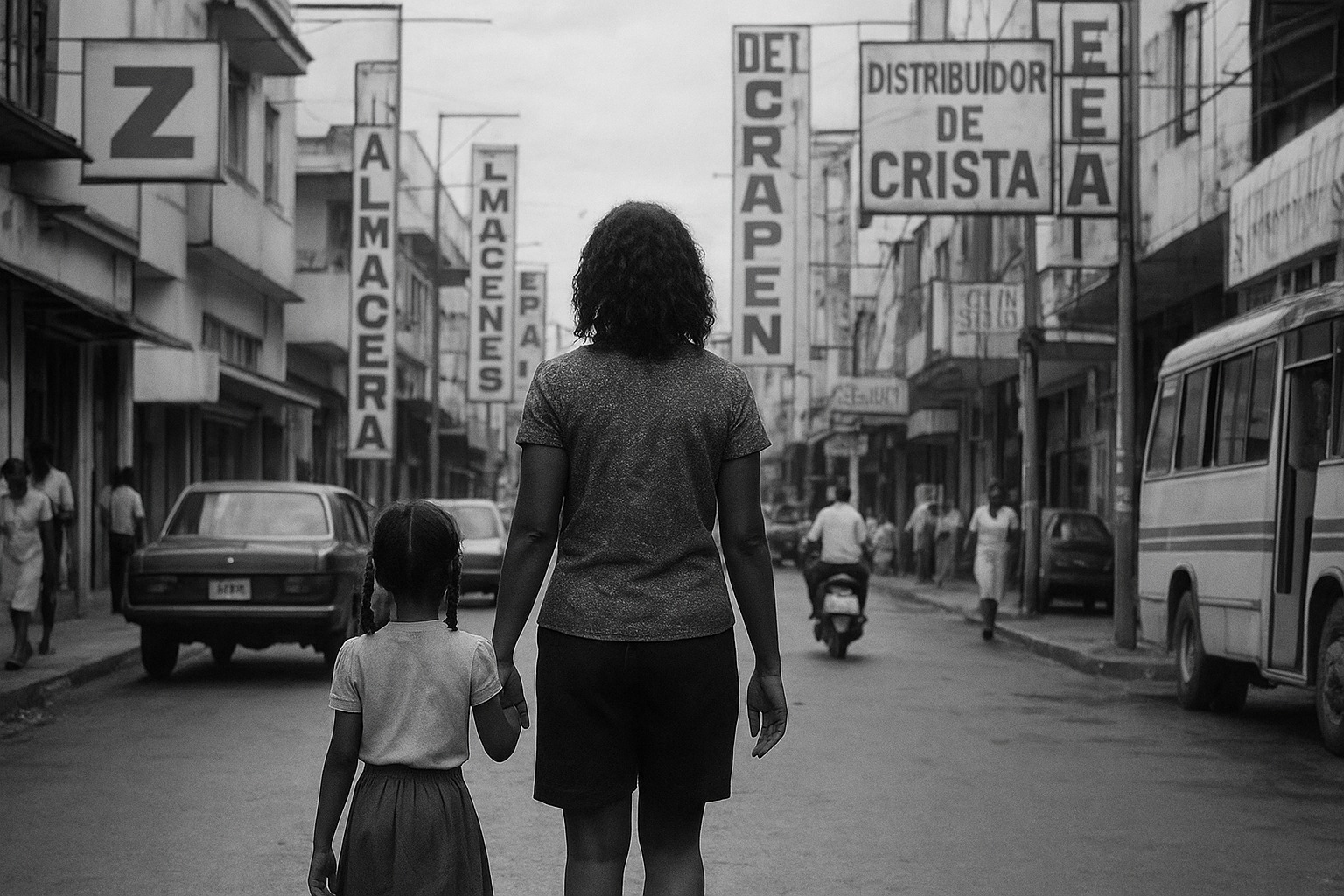
Amid Christmas lights, street cries, and shop windows full of dreams, Mella Avenue was, for more than five decades, the stage where childhood magic and the commercial heartbeat of Santo Domingo converged.
SANTO DOMINGO. – Mella Avenue was the commercial heart of the city, amidst haberdasheries, hardware stores, cinemas, and grocery stores, pulsating with a river of street cries and transforming into a spectacle of lights and garlands every December, awaiting the Three Kings parade, which departed from the Fire Department.
One afternoon, my mom practically dragged me to buy new clothes for Christmas Day, New Year's Day, and Three Kings' Day. I grumbled because I wanted to stay home and play, and besides, I didn't want a dress, and I knew that's what they would buy me. Three, to be exact.
It was 1973. We got off the public car, a white-roofed Austin, at the corner of Duarte Street, and as we turned the corner, the first thing that impressed me was the intricate decorations covered in bright, colorful garlands and filled with light bulbs that stretched across the street, hanging from the lampposts. I didn't understand what they were until later.
The buildings had nothing to do with the little houses in my neighborhood; later I learned they were Art Deco, a style used in the first two decades of the 20th century. Other buildings displayed eclectic, modern, and republican styles, with balconies featuring metal balustrades or prefabricated balusters, cornices on the roofs, and decorated parapets.
Since I had learned to read three years ago, I spent my time killing boredom by reading the signs of the businesses, which were many and varied, on that street which, from my height, seemed as wide as the sea and full of people who were going nowhere without hurry, stopping at each shop window.
I don't remember the exact order, but I do remember the names: La Siragusa haberdashery (What could a haberdashery be? I wondered); Pica Pica department store, La Norma, La Artística hardware store, La Fuentecita, Regia y Mella furniture store, Troya department store, Pajarito mirrors. What lovely names, I thought to myself.
Huellemont Laboratory (I couldn't pronounce that), Landestoy Pharmacy, Supercolmado Nacional (Now I know it's the precursor to Supermercados Nacional), Mercedita Line, La Reyna Mattress Store, San Ramón Mirrors, the American Hardware Store, the Corripio, Lido cinema and Apolo cinema.
The signs seemed magical to me, each one a different color, shape, and size, but there was something about them that shared a common spirit. As if each business were speaking to me in a low voice. Mercado Modelo...I loved that staircase, and it was hard to read the sign, placed at the very top of the building, leaning against the sky, which at that time of day was gray.
The crowd kept moving. The cries of the street vendors mingled with mine, confusing me. I tried to pull away from the hand that gripped mine when I saw a stall selling and trading comic books. I begged, and they let me approach. I had spotted a treasure: the issue titled "When Fantomas Became a Child," that comic strip that fascinated me with the mystery surrounding the character. I won; they bought it from me.
The wooden tables, like little tents, seemed to multiply like tomato plants in the courtyards, with red apples and pears hanging from strings, interspersed with bunches of red grapes, and on the table, piles of lerenes and fruit bread. The aroma was hypnotic and cloying at the same time.
We also found vendors of tin kitchen sets, miniature cast iron braziers and cauldrons, skinny dolls that covered a bald head with a lock of very blond hair that came out from the whole edge of the forehead and ended in a tail with a beautiful bow at the neck.
There were also light-up yo-yos, ping-pong tables, and lots of balls: striped ones that inflated, and rigid ones that exploded with a loud bang. And it wasn't just toys: the street was also ablaze with festive fireworks. Fireworks: sparklers that burned our hands, torpedoes we threw at each other's feet, Roman candles that were supposed to be ten but only three went off, and firecrackers that woke up the whole neighborhood.
The favorites and most fun were the firecrackers, which broke up groups, and the volcanoes which, when they lit up, illuminated the street with their lava of little stars.
The toy stalls displayed toy guns and water pistols, Jack games, Chinese parcheesi, and that chess set I learned to play at 14 in high school, forced by an interscholastic championship in which I drew and won a trophy without ever having played in my life.
There were also the peanut vendors, with their little tin cans from which hung a brazier that kept the merchandise warm, wrapped in small packets of "roasted peanuts," as the children's cries proclaimed. And the shoeshine boys, offering to clean even sneakers just to bring bread home.
Mella Avenue was a river of voices, cries, and laughter. The shopkeepers greeted everyone as if they knew them. We walked along, going in and out of shops. I left Calzados París happy with my black patent leather "Jacqueline" shoes. We went into La Siragusa, and there they bought me stockings with two tassels on each side and ribbons to tie bows.
The famous dresses were missing, and it was getting dark. We went into Pica Pica, and there my mom fell in love with a light blue dress made of onion-skin fabric with a flowy princess skirt. She made me try it on, and it gave me a terrible itch. I practically crawled on the floor, and she thought it was because I didn't want the dress. When she saw my arms and neck covered in welts, she was convinced.
We crossed over to the Landestoy pharmacy, where they gave me allergy syrup, warning me that it would make me sleepy. Within minutes I was walking around half-asleep, and night fell. The decorations I'd seen earlier came on, and the magic happened. I still remember it like a dream. So many little lights, some of them colored.
I stared, as if hypnotized, as far as my eyes could see, trying to align the luminous arabesques, and after that I only remember waking up very late, in my bed and with my whole body covered in Caladril.
We didn't buy my dresses, but I visited the largest shopping arcade of the 70s and they promised to take me to the Three Kings Day parade on that same street if I wore a dress at Christmas.
I didn't go to the Three Kings Parade because I didn't wear a dress. That's how stubborn I was at eight years old, and that's how I learned that Mella Avenue wasn't just made of lights and street vendors' cries, but also of that little battle that marked me forever. I never went to the parade again until I was 16.
They no longer put up the arabesque lights in December, the buildings are in ruins, and most of the shops are closed. And although the Three Kings' Day parade still takes place, La Mella is but a shadow of its former self, though in the memories of those of us who experienced it, it still shines like ancient filigree work.