


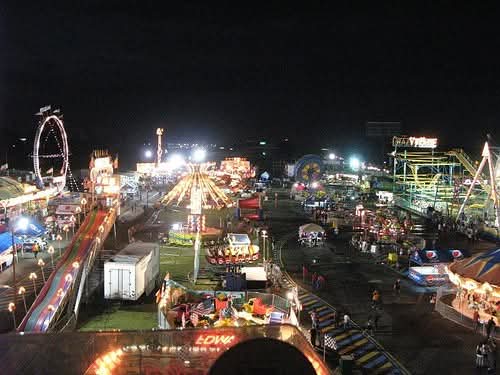
To the rhythm of Madonna or Michael Jackson, the gondolas sped dizzily down the metal structure, and for a moment the "riders" thought they saw stars. It was the Enterprise, in Quisqueya Park
SANTO DOMINGO. – There is a slide that remains in the memory of a couple of generations, surviving oblivion and thirty years of urban history in Santo Domingo.
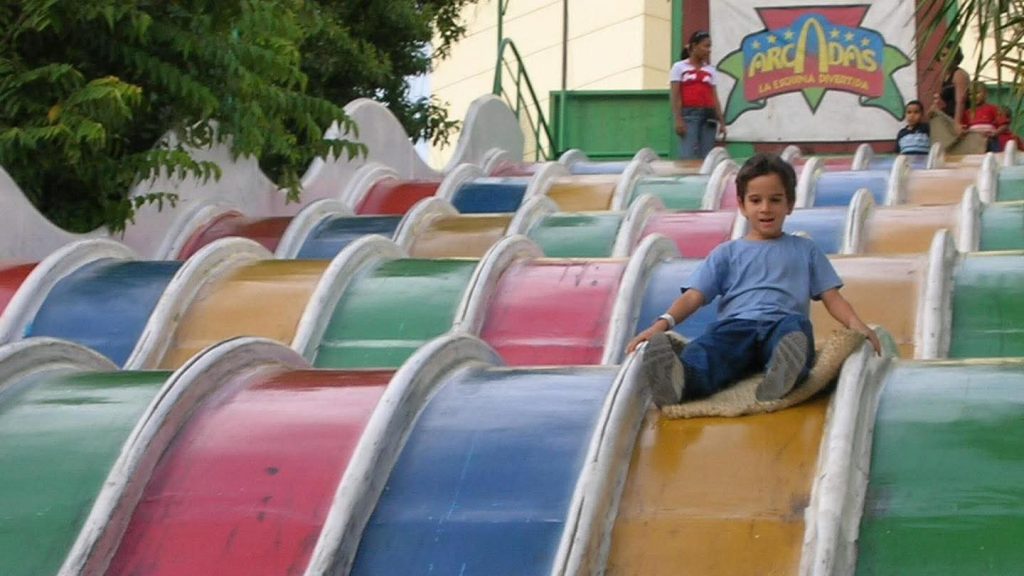
It was the magic carpet, and there are those who glided down it in Quisqueya Park in the eighties and felt the same punch in the stomach again, years later, in Arcadas.
That object sums up better than any statistic the way the city has played, grown, and reinvented itself.
Quisqueya Park was one of the few permanent amusement parks in the capital, active from the eighties until 1991-1992, in the place where the National Conservatory of Music now stands, between César Nicolás Penson, Bolívar and Alma Mater streets.
There coexisted the Himalaya, the Little Boats, the Star, the Super Eight, a modest but feared roller coaster for several generations, the Magic Carpet, the Mechanical Bull, two bumper car tracks, the House of Terror, the Ford-Ts that surrounded the Cave of Santa Ana.
The party ended abruptly after a fatal accident on the Enterprise attraction, an incident that, added to the deterioration of the machines and the lack of maintenance, accelerated the loss of popularity of the park and its closure around 1992.
The land did not remain vacant for long: the State built the National Conservatory of Music there in 1994-95, and later the building that houses the National School of Dance, the National School of Dramatic Art and the Elila Mena Elementary School of Music, in addition to the Nuryn Sanlley Amphitheater.
The children's entertainment site unintentionally became one of the cultural hubs with the highest density of performance spaces in the country.
Four years later, in 1996, another generation of children from the capital found their own park: Arcadas, located on the corner of Winston Churchill and Gustavo Mejía-Ricart avenues, a plot of land that the residents themselves soon christened "the fun corner".
Its founding was a family affair: four Pérez brothers, raised among the leafy trees of that same land, turned the space into their own park, with the octopus, the pirate ship and, as if collecting an inheritance, the same magic carpet that had made the previous generation laugh in Quisqueya Park.
Fermín Pérez, one of the brothers, said at the time that the idea had germinated more than thirteen years before opening its doors, and that at first they estimated that the business would not last more than six years.
It lasted almost twice as long: eleven years filled with amusement rides, clowns, raffles, and the popcorn that any resident of the capital from that generation remembers by heart. The closure also came by the owners' decision, not by accident or decree: the Pérez brothers sold the lot, a coveted corner, for the construction of a shopping center.
Arcadas closed its doors for good on February 28, 2007. The park's manager, Bartolomé Caparros, personally oversaw the dismantling of the attractions and even showed a sketch of a venue they planned to open in another location, a project that, unlike the collective memory of the park, never came to fruition in the same way.
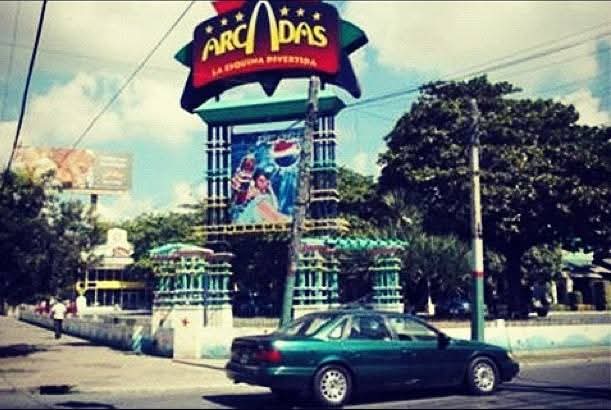
Instead, an eighteen-story commercial building was erected: today that site is occupied by the Blue Mall shopping center.
The third park in this story doesn't compete in exactly the same category, and that's what makes it interesting. Iguana Park wasn't born as a permanent park but as a seasonal fair, a different business model that the Suriel family began to set up in 2005 on the grounds of the old Herrera Airport, on Luperón Avenue.
Jorge Suriel, head of the company Iguana Park Dominicana, repeated the same promise of "unlimited fun" in a family environment at each season opening, with dozens of attractions: the Hammer, the Glass House, the Wave Swinger, the Bungee Jump among the most daring.
They were installed, operated for a little over fifty days around December and January, and were dismantled until the following season.
This traveling fair logic, with capital investment, staff hired from abroad to operate the most complex attractions, and safety and height controls for each ride, made a fundamental difference with the Arcadas playground business and with the Quisqueya Park state park.
Iguana Park grew season after season for almost two decades; by its sixth edition, it already offered more than 35 attractions, and demonstrated that in Santo Domingo, children's entertainment could also function as a seasonal industry, almost like a Christmas fair that the city looked forward to year after year.
Three parks, three models, and the impetus of a city that has always needed, in some corner, a place where children can scream on a modest roller coaster or climb on a painted rocking horse.
Quisqueya Park was born and died with the State in the background; Arcadas was a family business that ended up giving in to the real estate value of its own corner; Iguana Park understood that it didn't need to be permanent to settle in the memory of several generations.
Between the National Conservatory of Music, the Blue Mall and the old Herrera airport, the city holds, without indicating it with any plaque, the secret cartography of its collective childhood.
Recommended readings:







