


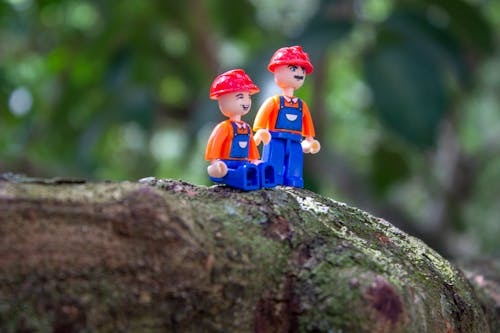
Safety is no longer just about harnesses and helmets; now we need to talk about manuals and protocols, which is an added value for companies that implement them.
SANTO DOMINGO – These days, safety on construction sites is not just about avoiding and preventing accidents. There is a growing trend in business management that understands it as part of a culture of well-being, of building work environments where mutual care and trust are as important as steel or cement.
“Risk prevention not only reduces accidents, it also improves workers’ perception of the value the company places on them,” says Diana Gicela Villota Ortega, a Colombian expert, who along with other researchers published a review on occupational safety and health in the construction sector in 2022 (Dialnet).
This approach opens the door to a broader discussion: how to transform security into a cornerstone of structural well-being?
An article from HSE Tools in August 2023 reinforces this idea, noting that “safety culture is strengthened when managers lead by example, communicate openly, and recognize good practices.” In other words, leadership not only dictates rules but also shapes teams' perceptions of their own value within the organization.
In Latin America, Cubans Ciro Martínez Oropesa and Ricardo Montero Martínez spiced up discussions on the topic in a study published in Workers' Health in December 2015, in which they emphasize that the safety culture in a construction company should be evaluated as a living system, where the perception of the workers is as important as the accident metrics.
This vision connects security with trust, motivation, and internal cohesion.
As an example, we bring up the use of color coding on helmets, which does not come from any rigid international standard, but from a practice that became popular in the United States in the 1930s, when the Hoover Dam and the Golden Gate Bridge were being built.
There, engineers, laborers, and supervisors began to be differentiated by using colors, which facilitated quick identification on projects with thousands of workers. Over time, this practice spread and became a de facto standard in the industry, although each country and company adapts it according to its needs and resources.
Color code under construction
- White: engineers, architects, supervisors and site managers.
- Yellow: general laborers, construction personnel and machine operators.
- Blue: electricians, technicians and maintenance personnel.
- Green: safety inspectors, occupational health personnel, or first aid brigades.
- Red: firefighters or personnel in charge of fire prevention.
- Orange: heavy machinery operators or personnel in high-risk areas.
- Gray or brown: visitors or temporary staff.
- Black: construction supervisors in some countries (although less common).
In the Dominican Republic, some construction companies apply part of this code in their occupational safety practices, which helps maintain order and clarity in projects, as well as reinforcing the culture of prevention.
It's also common to see workers, engineers, and visitors without proper protective gear on many construction sites. It's well known that workers claim hard hats make them hot, so they don't wear them or only wear them when a supervisor is present.
In the country, Regulation 522-06 on Occupational Safety and Health mandates the use of helmets (“safety helmets”) for construction work, mining, and other sectors, and even distinguishes helmet types according to the risk: general use, electrical, mining, firefighter, etc. However, it does not establish a color code for them, which means that it does not require assigning specific colors according to the worker's role.
The question is not whether security can be a cornerstone of structural well-being, but when we will decide to embrace it as such.
Safety in construction is being redefined as a cornerstone of structural well-being. It's not just about preventing accidents, but about building organizational cultures where mutual care, trust, and human sustainability are as central as cement and steel.
Because in every well-fitted helmet, in every clear protocol, and in every gesture of care between colleagues, something more than a work is being built: a culture is being built where every life has value.
And that, perhaps, is the true foundation of the future and the prestige that the company wants to build.







