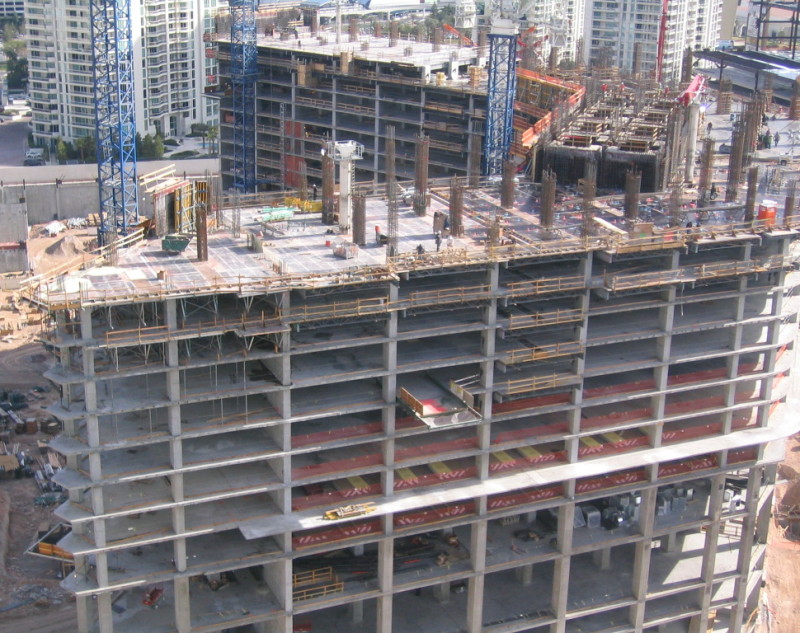
SANTO DOMINGO – Undertaking any project in the Dominican Republic, from a single-family home to an apartment tower, necessarily begins with the same starting point: the Building Permit. Without this document, any construction project—no matter how well-designed or financed—is, by law, considered an irregular construction, subject to work stoppages, fines, and even demolition. What until a few years ago was a process scattered among different offices is now largely concentrated in a single institution: the Ministry of Housing, Habitat, and Buildings (MIVHED), created by Law 160-21, which absorbed the functions previously performed by the Ministry of Public Works and Communications (MOPC) regarding the processing of plans and permits.
The process has also recently changed significantly: on April 10, 2026, the new Dominican Republic Construction Code (CCRD) came into effect through Resolution 007-2026. This technical document now governs plans, structural calculations, geotechnical studies, and virtually every technical aspect of construction. Anyone about to start a project—or who started one under the previous regulations—needs to understand what this new framework requires.
This guide explains, in practical language, who grants the license, what documents it requires, how much it costs, how long it takes, and what mistakes to avoid, using as a reference only the information published by MIVHED itself and the Single Window for Construction (VUC), the digital portal through which the entire process is handled today.
1. What is a Building Permit and who issues it?
The Building Permit is the official authorization by which the Dominican State certifies that a project complies with current laws, regulations, and technical, legal, architectural, sanitary, and electrical standards, and that construction can therefore begin. It is issued by the Ministry of Housing, Urban Development and Housing (MIVHED) through its Directorate of Processing, Appraisal, and Licensing, and the entire process is managed through the Single Window for Construction (VUC), the digital platform that integrates all the institutions that must issue a statement on a project—municipalities, the Ministry of the Environment, the Fire Department, electric companies, among others—into a single electronic file.
- Who it is aimed at: real estate promoters and developers, land or property owners, construction companies, professionals in the sector (registered engineers, architects and surveyors) and public or private entities that develop infrastructure or building projects.
- Who can process it: the applicant directly, or an Urban Manager, a professional authorized by the MIVHED to act as a technical representative in the process. This role is optional: it does not affect access to the service, and their fees are agreed directly between the manager and the applicant.
- Main legal basis: Law 160-21 (which creates the MIVHED), Law 675-44 on Urbanization, Public Beautification and Construction, Law 687-82 on technical regulation of engineering projects, Law 6200 on the practice of engineering and architecture, Law 368-22 on Territorial Planning, and the aforementioned Resolution 007-2026 which establishes the current Construction Code.
2. General requirements for any type of construction
Regardless of the type of project, the MIVHED requires a set of documents common to all Building Permit applications:
- Current Commercial Registry, issued by the corresponding Chamber of Commerce and Production (applies only to legal entities).
- Definitive title(s) of ownership of the land.
- Cadastral survey plan(s) demarcated, endorsed by the title deed; if there are several surveys, a sketch of the merged lots is required, signed by a registered surveyor.
- Land Use and Building Setback Certificate, issued by the corresponding city council.
- Certificate of No Objection to the Project, also issued by the city council.
- Environmental certification or authorization from the Ministry of Environment and Natural Resources (Mimarena).
- A set of architectural and technical plans (electrical, sanitary and structural), in 24″ x 36″ format, prepared in accordance with the current Building Code, in black and white and sealed by the corresponding city council.
- Project description, including its scope, materials, and technical specifications.
- Copy of the current CODIA (College of Engineers, Architects and Surveyors) card or certification of the responsible professional.
- Structural calculation report, signed by the responsible structural engineer, with the digital file of the calculation model included.
- Geotechnical study, prepared only by professionals or companies qualified by the MIVHED.
- Hydraulic calculation report, required only if the commercial project exceeds 20 sanitary fixtures, the residential project exceeds 100, or if it includes swimming pools directly connected to the cistern.
- Photographs of the plot that show the current conditions of the land.
- Approval of the corresponding aqueduct, if the housing project exceeds 10,000 m².
- Approval of electricity supply from the corresponding EDE, if the project exceeds 10,000 m², has more than 22 building blocks or more than 200 apartments.
3. Additional requirements depending on the type of project
Beyond the general package, each project category adds specific requirements, designed for the particular risk or sensitivity of that activity:
- Industrial projects: require Proindustria's No Objection, environmental authorization from Mimarena (mandatory in cases such as land larger than 10,000 m², buildings of more than eight levels, hospitals, fuel stations or industries with hazardous substances) and industrial electrical plans signed by a certified professional.
- Tourism projects: require a No Objection to Land Use from the Ministry of Tourism (MITUR), plans approved and sealed by that same institution, an environmental license from Mimarena and, if the project is on the maritime strip or borders main roads, authorization for use of the maritime strip or right of way from the MOPC.
- Fuel stations: require authorization from the Ministry of Industry, Commerce and MSMEs (MICM), certification of appraisal and cadastral registration, no objection from the Fire Department, no objection from Civil Defense and a letter of commercial linkage with the fuel distributor.
- Health infrastructure projects: require a health authorization license from the Ministry of Public Health and an environmental certificate from Mimarena.
- Projects in heritage areas: require the non-objection of the National Directorate of Monumental Heritage.
4. The step-by-step process at the Single Window for Construction
The entire process is managed online, through the VUC portal, and follows a well-defined sequence:
- Registration and creation of the procedure: the applicant registers or logs into the VUC, indicates whether he/she is a natural or legal person, selects the Construction License service and starts the procedure.
- Upload the file: complete the online form and attach each required document in PDF format (the structural calculation computational model must be uploaded compressed in .ZIP or .RAR).
- Document review: MIVHED checks that the documentation is complete; if there are any issues, it notifies the applicant through the portal so that they can correct them.
- Initial payment and technical evaluation: once the file is validated, the corresponding payment is made and it is passed on to the technical areas of architecture, sanitary, electrical, structural, geotechnical, appraisal and, when applicable, road design and right of way.
- Project appraisal: Once the technical review is completed, the appraisal area determines the value of the construction and calculates the corresponding fees.
- Site inspection: Before issuing the license, the Construction Status Verification Department inspects the land to confirm its current condition; if it finds undeclared constructions, the file is returned for structural evaluation.
- Final payment and issuance: Once the inspection is validated, the appraisal payment is completed and, once this is confirmed, the MIVHED notifies the applicant by email for the collection of the Building License and the sealed plans.
5. Costs and fees associated with the procedure
| Concept | Amount |
|---|---|
| Application for a Building Permit | RD$6,000 |
| Application for a license for a gas station or gas bottling plant | RD$56,500 |
| Municipal tax rate | 2.5% of the construction value |
| CODIA fee rate | 2% of the construction value |
| MIVHED service fee | 0.1% of the appraised value of the project, only if it exceeds RD$6,000,000 |
| Right-of-way (when applicable) | RD$8,500 |
Payments to the municipality and CODIA are made directly to those institutions, and the receipts are then uploaded to the VUC. The MIVHED service fee is paid by transfer or deposit to the National Treasury account at Banco de Reservas. Authorizations for preliminary works and partial commencement of work, however, are free of charge.
6. How long does the process take depending on the complexity of the project?
Response time depends on whether the project is classified as non-complex or complex:
- Non-complex projects (up to 60 working days): residential or commercial use, buildings up to six levels, land smaller than 10,000 m² and that do not require the approval of more than five entities.
- Complex projects (up to 120 working days): mixed use, tourism or health projects, low-cost housing, fuel stations, buildings of more than six levels, land larger than 10,000 m², water parks, wind or photovoltaic parks, urbanizations, or projects in coastal or environmentally sensitive areas.
These deadlines apply only when the applicant submits all the requirements correctly from the beginning; any outstanding issues extend the actual waiting time.
7. Complementary services: preliminary works and partial start
While the final license is still being processed, the MIVHED offers two intermediate authorizations that allow progress without waiting for the final resolution, provided that there is already a Building License application in progress:
- Conditional Authorization for Preliminary Works: This permits the commencement of foundation excavations, the installation of construction equipment, or the erection of a temporary materials shed. A geotechnical study is required for excavations; it is not required for temporary installations. The response time is 5 business days for temporary installations and 10 business days when excavations are involved.
- Authorization for Partial Commencement of Work: This allows specific work to be carried out before the final license is issued, provided that the MIVHED technical departments do not object to the requested scope. The response time for non-complex projects is 5 business days.
Neither of these two services has a cost, and both require, at some point in the process, a verification visit from MIVHED to the site to validate the physical conditions of the land before authorizing the start of the work.
What changed in 2026?
The most relevant change of the year is the entry into force of the Dominican Republic Construction Code (CCRD), through Resolution 007-2026 of April 10, 2026. This code is now the mandatory technical reference document for the preparation of plans, structural calculation reports, geotechnical studies and hydraulic calculation reports: any file that does not conform to its guidelines and scales may be reviewed or rejected by the MIVHED.
This regulatory change is complemented by the institutional consolidation represented by the MIVHED itself, created by Law 160-21 to centralize functions previously distributed among the MOPC and other agencies within a single entity. The Single Window for Construction, reactivated by Decree 806-21, is now the mandatory entry point for virtually the entire process, and its stated objective is to reduce processing times by integrating all the institutions that previously required separate visits into a single digital file.
8. The most common mistakes when processing a building permit
Most of the cases that are delayed at MIVHED share a handful of avoidable causes:
- Submitting plans that do not conform to the 2026 Building Code. Formats, scales, or color presentations that do not comply with current regulations are an automatic reason for observation.
- Omitting the geotechnical study or commissioning it to a professional not qualified by MIVHED is prohibited. Only studies from the official list of qualified professionals are accepted.
- Underestimating the specific requirements of the project type. A tourism or industrial development that only presents the general requirements is automatically incomplete.
- Starting excavations without the corresponding Conditional Authorization. Any preliminary work without this permit exposes the project to a halt, even if the final license is being processed.
- Failure to verify the actual status of the property before applying for the permit. If the Ministry of Housing, Urban Development and Housing (MIVHED) finds undeclared construction during the inspection, the file is returned for structural evaluation, wasting valuable time.
- Miscalculating the cost of the procedure. The municipal and CODIA fees, calculated on the appraised value of the work, are usually much higher than the fixed application fee, and it's advisable to budget for them from the beginning.
- Delegating the procedure without formalizing the representation. A change of agent during the process requires an authorization letter signed by the owner; omitting it will halt the file.
9. Case study: a six-story residential building
A developer plans to build a six-story apartment building on a 4,000 m² plot of land in Santo Domingo, a project that, due to its size and intended use, qualifies as non-complex. Before approaching the Ministry of Housing, Urban Development and Housing (MIVHED), he gathers the property title, the cadastral survey plan, and his company's Commercial Registry certificate, and hires a structural engineer and a geotechnical engineer certified by the ministry itself to prepare the structural calculations and soil study in accordance with the new Building Code.
With the technical file complete, he processes the Land Use Certificate and the No Objection to the Project with the corresponding municipality and requests environmental authorization from Mimarena. Only then does he access the Single Window for Projects (VUC), create the procedure, upload all the documents, and await the initial document review. While the file progresses through the technical departments, and given the need to avoid delays in the construction schedule, he simultaneously requests a Conditional Authorization for the Execution of Preliminary Works, which allows him to begin foundation excavations according to the recommendations of the already approved geotechnical study.
Weeks later, after the technical evaluation and appraisal are completed, the MIVHED schedules an inspection of the site. Finding no undeclared construction, the process continues smoothly. Once the final appraisal fee is paid, the developer receives notification to pick up the final Building Permit, valid for one year from its issuance, within which they must begin or complete construction.
10. Frequently Asked Questions
How long is a Building Permit valid for? One year from the date of issue; if the work is not started or completed within that period, it must be renewed.
Is it mandatory to hire an Urban Manager to process the license? No. It is optional; the applicant can manage the process directly with the VUC (Single Window for Urban Planning).
Can I start working on the site while waiting for the final license? Only through a Conditional Authorization for Preliminary Works or an Authorization for Partial Commencement of Works, both of which are subject to a pending license application.
What happens if the MIVHED finds undeclared constructions during the inspection? The file is returned to the structural assessment area, and a structural survey prepared by an MIVHED-authorized evaluator is required.
Can the plans be submitted in color or in a format other than 24″ x 36″? No. The 2026 Building Code requires black and white plans in that specific format; any other presentation will result in a warning.
How much does it cost in total to process a license? The application fee is fixed (RD$6,000 in most cases), but the municipal fees (2.5%) and the CODIA fees (2%) are calculated on the appraised value of the construction, so the total cost varies depending on the size of the project.
11. Final checklist for applying for a building permit
- [✓] I have the definitive title deed and the cadastral survey plan demarcated.
- [✓] I have the Land Use Certification and the No Objection from the city council.
- [✓] My architectural and technical drawings comply with the format and scales of the 2026 Building Code.
- [✓] I hired professionals authorized by the MIVHED for the geotechnical study.
- [✓] I checked if my project requires additional requirements based on its type (tourism, industrial, health, heritage).
- [✓] I budgeted for the city council and CODIA fees, not just the fixed application fee.
- [✓] I registered the procedure at the Single Window for Construction with all the documents in PDF format.
- [✓] I assessed whether I need a Conditional Authorization for preliminary works while the file progresses.
- [✓] I have a reminder that the final license expires one year after it is issued.
Official sources consulted
- Ministry of Housing, Habitat and Buildings (MIVHED) — Building License and Associated Permits: requirements, procedure, costs and deadlines
- Single Window for Construction (VUC) — Digital Processing Portal
- Resolution No. 007-2026 (April 10, 2026), which establishes the Construction Code of the Dominican Republic (CCRD).
- Law No. 160-21, which creates the Ministry of Housing, Habitat and Buildings; Decree No. 806-21, which reactivates the Single Window for Construction.
You might be interested in our "Investor Guides" section:
- Guide: What does Dominican regulations require of buildings in terms of seismicity?
- Practical guide to the Condominium Law: rights, obligations and how to resolve the most common conflicts
- Law 85-25: Complete guide to the new rental law in the Dominican Republic
- Step-by-step guide to selling a property in the Dominican Republic: documents, taxes and procedures
- A practical guide to getting a loan for your SME without it being rejected
- Guide: How much tax does someone pay when buying, building, or renting a property in the Dominican Republic?