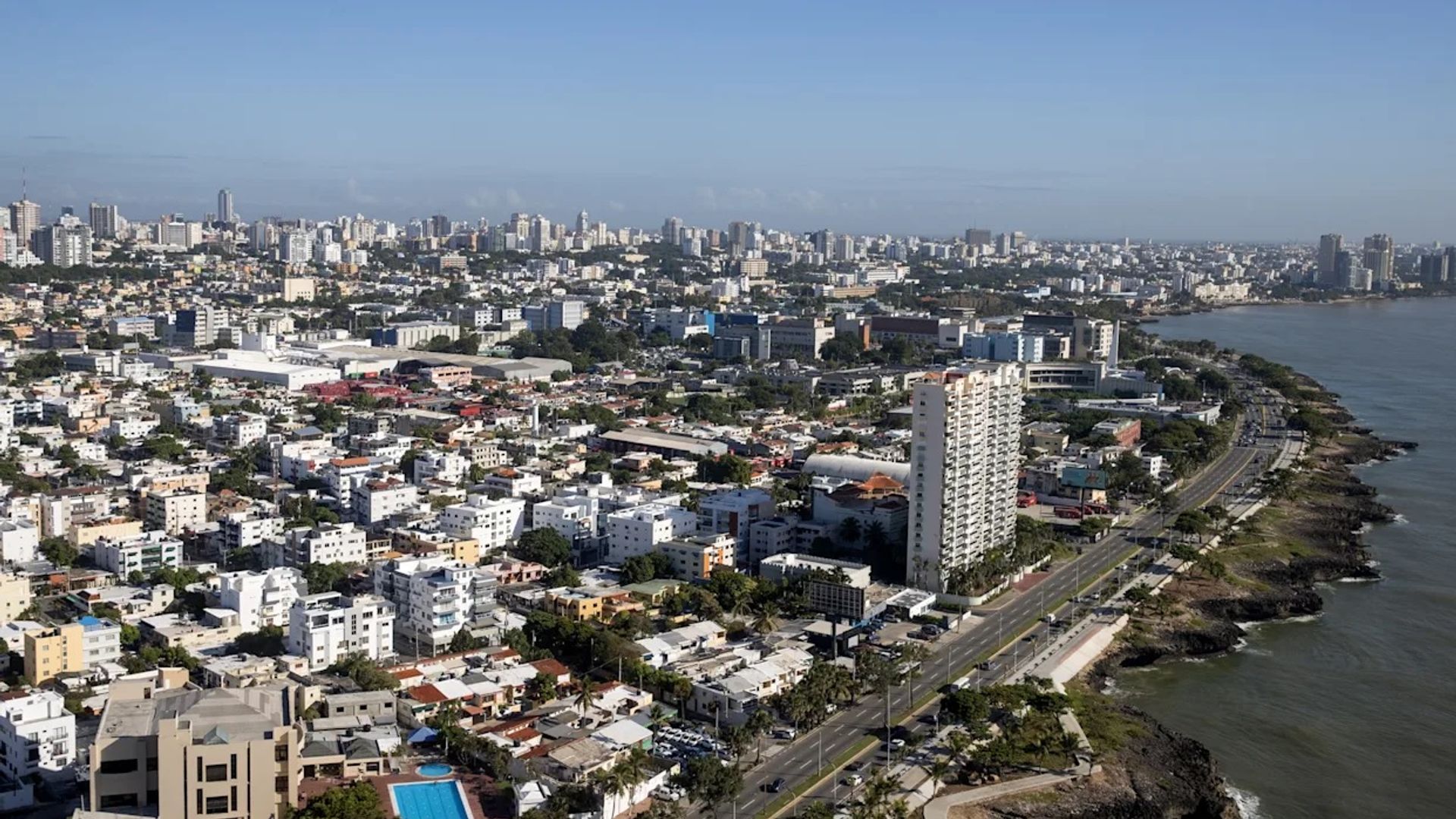
SANTO DOMINGO – The 7.4 magnitude earthquake that struck Colombia on August 10, leaving more than a hundred dead and causing severe structural damage in cities like Cali, Manizales, Pereira, and Quibdó, has once again raised a question that the Dominican Republic cannot afford to postpone: how prepared are the country's buildings for an event of that magnitude? The short answer, according to the Dominican State's own technical agencies, is unsettling. The vast majority of private buildings in the country, including condominiums where a large portion of the urban middle class lives, have never undergone seismic evaluation.
The Dominican Republic is not a distant observer of the Caribbean's seismic activity. It shares the island of Hispaniola with Haiti, an island traversed from east to west by active fault systems: the Septentrional Fault to the north and the Enriquillo-Plantain Garden Fault to the south, the same fault that in January 2010 caused the earthquake that left more than 200,000 dead in Haiti. The country also has its own seismic history: the 1946 earthquake, with a magnitude of 8.1, generated a tsunami in Samaná Bay; and the 2003 Puerto Plata earthquake, with a magnitude of 6.5, publicly revealed how vulnerable many Dominican structures are to even moderate earthquakes.
This guide is not intended to cause alarm, but rather to provide guidance. It explains what Dominican regulations require regarding seismic design, who oversees compliance, how the vulnerability of an existing building is assessed, what responsibilities fall on the homeowners' association and the condominium administrator, and what any homeowner can do today, without waiting for an earthquake, to determine if their building is truly prepared.
1. How exposed is the Dominican Republic to an earthquake?
The Dominican Republic's seismic risk is not a distant hypothesis; it is a permanent geological condition. The entire island sits on the boundary between the Caribbean and North American plates, a tectonic contact that generates two active fault systems capable of producing large-magnitude earthquakes. The Septentrional Fault runs along the north of the country, near cities like Santiago and Puerto Plata; the Enriquillo-Plantain Garden Fault crosses the south, heading toward Haiti, and is the same fault structure that ruptured with devastating consequences in 2010. Santo Domingo, the country's most populous and economically active city, has much of its infrastructure concentrated in areas of moderate to high seismic risk, a risk that has been worsening over time.
The Regulation for the Seismic Analysis and Design of Structures, known as R-001, formally divides the national territory into two zones according to their reference spectral seismic acceleration level: Zone I, with high seismicity, and Zone II, with medium seismicity. This zoning determines, in practice, how demanding the structural design of any new building must be, depending on the province or municipality where it is constructed. A building erected in a high-seismicity zone must withstand considerably greater lateral forces than one built, theoretically, under more benign conditions.
2. The legal framework: Regulation R-001 and who monitors its compliance
Dominican seismic regulations did not originate with the Colombian earthquake nor are they recent: they have evolved over four decades, and two institutions currently focus their oversight.
- 1979 — first precedent. The Provisional Recommendations for the Seismic Analysis of Structures were the first Dominican document that took into account the effects of earthquakes on buildings.
- 2011 — Regulation R-001 in force. The Ministry of Public Works and Communications (MOPC) issued the Regulation for the Seismic Analysis and Design of Structures, which establishes the minimum requirements that the seismic analysis and design of any structure erected in the national territory must meet, with human safety as the declared objective.
- MOPC, through its General Directorate of Regulations and Systems, is responsible for technical regulations and building permits.
- Onesvie (National Office of Seismic Evaluation and Vulnerability of Infrastructure and Buildings), created in 2001 and formalized by Decree 103-22, is the technical body that evaluates the seismic vulnerability of existing buildings, infrastructure and lifelines, proposes structural reinforcement solutions and advises the public and private sector on civil engineering works.
- More than 3,000 assessments carried out by Onesvie since its creation, concentrated mainly on publicly owned schools, hospitals, bridges and dams.
- The blind spot of the system: R-001 applies in principle to every structure built in the country, but the active surveillance of the State has historically focused on public infrastructure, leaving aside the huge stock of private buildings, including residential and commercial condominiums, which has multiplied in the last two decades in Santo Domingo, Santiago and the tourist areas of the country.
3. How is the seismic vulnerability of an existing building assessed?
For an existing condominium, the relevant question is not so much whether it complied with Regulation R-001 at the time of its construction, but rather whether its current structural condition would be able to withstand the expected earthquake for its area. To answer this question, Onesvie offers two distinct levels of service.
- The Rapid Visual Assessment (RVA) is a preliminary, non-invasive procedure that identifies obvious structural vulnerabilities and prioritizes which buildings require further technical study. In the words of Onesvie's director, it is the natural entry point for any owner or manager who wants to begin learning about their building's seismic condition without incurring significant expenses.
- The Detailed Assessment, on the other hand, is a comprehensive technical study: based on the seismic vulnerability findings in the building, Onesvie presents a structural solution, including plans and a budget, to reinforce the building and bring it up to the necessary standards to withstand the expected earthquake in its area. The process is formally requested from the institution, which responds with a cost estimate, formalizes a contract, and conducts the necessary site visits before delivering the final report.
Until a few weeks ago, this type of assessment was applied almost exclusively to the public sector. That began to change on July 28, 2026, when Onesvie and the Comprehensive Risk Management Commission of the National Council of Private Enterprise (Conep) held their first formal meeting to define joint seismic prevention strategies specifically aimed at extending the Rapid Visual Assessment methodology to private buildings. So far, it is more of an agreement of intent than a generalized legal obligation, but it marks a shift in approach that will likely begin to translate, in the coming months, into concrete programs targeting construction companies, condominium administrators, and individual property owners.
4. The responsibility of the consortium and the administrator in the face of seismic risk
For those who manage or live in a Dominican condominium, seismic safety is not merely a technical matter; it has a direct correlation with Law 5038 on Condominiums. Any structural intervention aimed at reinforcing a building against seismic risk, from re-coating columns to installing energy dissipators, is, by definition, a project that affects common elements of the property and therefore requires prior authorization from the owners' association, just as with any other remodeling that affects the building's structure or facade.
The same principle applies to the expense of requesting a formal seismic assessment from Onesvie or a private structural engineer: if the cost is covered by consortium funds, it should be treated as an extraordinary expense, subject to approval by the assembly and recorded in the corresponding minutes, in the same way as any other disbursement not included in the regular maintenance budget. The administrator, for their part, is responsible for bringing the matter to the table: convening the discussion, presenting quotes, and, if approved by the assembly, monitoring the assessment process and, if necessary, any structural reinforcement.
What no individual owner can do, however, is to intervene on their own in structural elements of their private unit under the argument that it is a safety improvement: as explained in the guide on the Condominium Law, any modification that affects the solidity of the building needs to pass, without exception, through the approval of the assembly.
5. Earthquake insurance: what it covers and why almost no one has it
The other piece of the equation is financial, and the Dominican figures are, to say the least, worrying.
- A large proportion of homes in the Dominican Republic do not have earthquake insurance policies, according to data from the Superintendency of Insurance.
- Seismic coverage is not sold as independent insurance, but as part of the Fire and Allied Lines line of business.
- RD$40,339 million in premiums subscribed in that branch during 2025, of which about RD$29,379 million were transferred to international reinsurers, a mechanism that allows the Dominican market to manage catastrophic risk without assuming it completely with local capital.
- The reason for the low insurance coverage, according to the industry itself, is a well-known pattern of behavior. Most people only come into contact with home insurance as a requirement for a mortgage loan, and stop renewing it once they finish paying off the mortgage, without realizing that the seismic risk does not disappear along with the debt.
- For a condominium, whether or not to contract an earthquake insurance policy individually for each owner, or collectively through the consortium for the common areas, is ultimately a decision of the assembly.
- It is important to distinguish between structural risk management insurance: insurance does not reduce the probability of the building suffering damage, but it does determine whether, when an earthquake occurs, the consortium and the owners will have the financial resources to repair, reinforce or rebuild without assuming the entire loss directly on their assets.
What's happening in 2026?
Regulation R-001 has not been modified this year, and there is no new legal obligation requiring existing condominiums to undergo seismic assessment until August 2026. What has changed, as explained earlier, is the institutional approach. The formal alliance between Onesvie and Conep, announced on July 28, 2026, marks the first time that the state technical agency and the private business sector have come together to discuss expanding rapid visual assessments to private buildings, structurally reinforcing existing buildings, promoting a culture of safety, and building the resilience of critical infrastructure through preventative planning.
6. What should a condominium do in response to this alert?
Faced with news like the earthquake in Colombia, the most useful reaction for a consortium of owners is not panic or inaction, but an orderly review of their own situation:
- Check if the building has original structural plans and certification from the engineer responsible for its construction, documents that are usually filed along with the co-ownership regulations and are essential for any subsequent evaluation.
- Consider requesting a Quick Visual Assessment from Onesvie, a low-cost preliminary step that allows you to know if the building warrants a more in-depth study, subject to assembly approval.
- Review the condominium's insurance situation: whether there is a group policy for common areas, what exactly it covers in case of an earthquake, and whether individual owners have seismic coverage in their own units.
- Draft or update an internal earthquake emergency protocol, with clear evacuation routes, meeting points outside the building, location of power and gas shutoffs, and an updated list of emergency contacts.
- Put the issue on the agenda of the next assembly, instead of leaving it as an informal conversation between neighbors that never translates into a formal decision.
7. The most common mistakes regarding seismic risk in condominiums
Most Dominican condominiums currently lack any kind of plan in the event of an earthquake, and this gap is usually explained by a set of assumptions that should be debunked one by one:
- Assuming a building is safe simply because it has never had visible problems is a mistake. Structural vulnerability to earthquakes doesn't always manifest as cracks or everyday damage; only a technical analysis can confirm or rule it out.
- Believing that seismic assessment is a procedure exclusive to the public sector is a misconception. As explained in the previous section, the recent alliance between Onesvie and Conep aims precisely to close that gap, and nothing currently prevents a private consortium from requesting the service.
- Postponing the decision until after an emergency. Requesting an assessment or purchasing insurance after an earthquake, instead of before, is usually more expensive and, above all, no longer protects what has been lost.
- Do not budget for the evaluation as a formal extraordinary expense. Without the express approval of the assembly and its recording in the minutes, the process may remain an informal intention that never materializes.
- Don't assume that basic fire insurance automatically covers earthquake damage. Seismic coverage usually requires a specific clause or line of coverage within the Fire and Allied Lines policy, and it's best to verify this in writing with the insurer, not to take it for granted.
- Not having an up-to-date evacuation protocol. Many buildings have escape routes that are poorly marked or unknown even to the residents themselves, a problem that can be solved with a simple review and internal communication.
- Leaving the decision in the hands of a single person. Seismic assessment and its potential structural reinforcement costs are, like any extraordinary expense, a collective decision that must be approved by the assembly, not a unilateral decision by the administrator or an individual owner.
Treating seismic risk as an abstract and distant problem is a silent issue, until an event like the one in Colombia makes it, once again, front-page news.
8. Case study: a condominium decides to assess its seismic vulnerability
Let's consider an eight-story condominium in Santo Domingo, built twenty-five years ago, whose owners' association has never formally discussed seismic activity. Following media coverage of the earthquake in Colombia, several owners raise the issue in the building's chat group, and the building manager decides to include the item on the agenda for the next regular meeting.
At the meeting, the administrator presented the available information. The building is located in a moderate to high seismic zone according to the zoning map of Regulation R-001, and there is no record of it having undergone a seismic evaluation since its construction. The assembly discussed two options: directly requesting a Detailed Evaluation, which is more expensive, or starting with the Rapid Visual Assessment offered by Onesvie as a first step. They opted for the latter, approving the corresponding expense as a special item within the annual budget, with due record in the meeting minutes.
Weeks later, with the preliminary assessment results in hand, the assembly meets again. If the report does not detect significant vulnerabilities, the process can end there, reassured by a verified diagnosis; if, however, it recommends a more in-depth study, then a decision must be made, following the same logic of collective approval, on whether to proceed with a Detailed Assessment and, potentially, with a structural reinforcement plan and its corresponding budget.
9. Frequently Asked Questions
Is seismic evaluation mandatory for existing condominiums in the Dominican Republic? As of August 2026, there is no general legal obligation requiring private condominiums to undergo seismic evaluation, although Regulation R-001 is mandatory for new buildings.
How much does a Onesvie Quick Vision Assessment cost? The cost is determined on a case-by-case basis through a price quote from the institution itself, following a formal request from the interested party; it is, in any case, substantially less than a Detailed Assessment.
Who should approve the expense of a seismic assessment in a condominium? The owners' assembly, as with any extraordinary expense, with the corresponding record in the minutes.
Does the condominium's fire insurance cover earthquake damage? Not automatically; seismic coverage usually requires a specific clause within the Fire and Allied Lines policy, and it's advisable to confirm this in writing with the insurer.
What happens if the assessment determines that the building needs structural reinforcement? Onesvie delivers, along with the diagnosis, a proposed structural solution with plans and a budget, which the assembly can approve as a reinforcement project, subject to the same rules as any remodeling of common elements.
Can an individual owner reinforce their own unit without going through the assembly? No, if the intervention affects structural or common elements of the building; such modifications always require prior authorization from the assembly, as established by Law 5038.
10. Final checklist for condominiums
- [✓] We have the original structural plans and the certification from the engineer responsible for the construction.
- [✓] The assembly has formally discussed the issue of the building's seismic vulnerability.
- [✓] We have requested, or are considering requesting, a Rapid Visual Assessment from Onesvie.
- [✓] We check if the condominium's insurance policy includes specific earthquake coverage.
- [✓] We check if individual owners have seismic coverage in their units.
- [✓] We have an updated evacuation protocol, with routes and meeting points known to the residents.
- [✓] We know where the electricity and gas outages are in the building.
- [✓] We have an updated list of emergency contacts.
- [✓] Any expenses related to structural assessment or reinforcement are being treated as extraordinary expenses, with approval and record in the minutes.
Official sources consulted
- Ministry of Public Works and Communications (MOPC) — Regulation for the Seismic Analysis and Design of Structures (R-001), 2011.
- National Office for Seismic Assessment and Vulnerability of Infrastructure and Buildings (Onesvie) — Rapid Visual Assessment and Detailed Seismic Vulnerability Assessment Services — https://onesvie.gob.do
- Superintendency of Insurance of the Dominican Republic (SIS) — Statistics of the Fire and Allied Lines branch, earthquake coverage, 2025-2026.
You might be interested in our "Investor Guides" section:
- Practical guide to the Condominium Law: rights, obligations and how to resolve the most common conflicts
- Law 85-25: Complete guide to the new rental law in the Dominican Republic
- Step-by-step guide to selling a property in the Dominican Republic: documents, taxes and procedures
- A practical guide to getting a loan for your SME without it being rejected
- Guide: How much tax does someone pay when buying, building, or renting a property in the Dominican Republic?