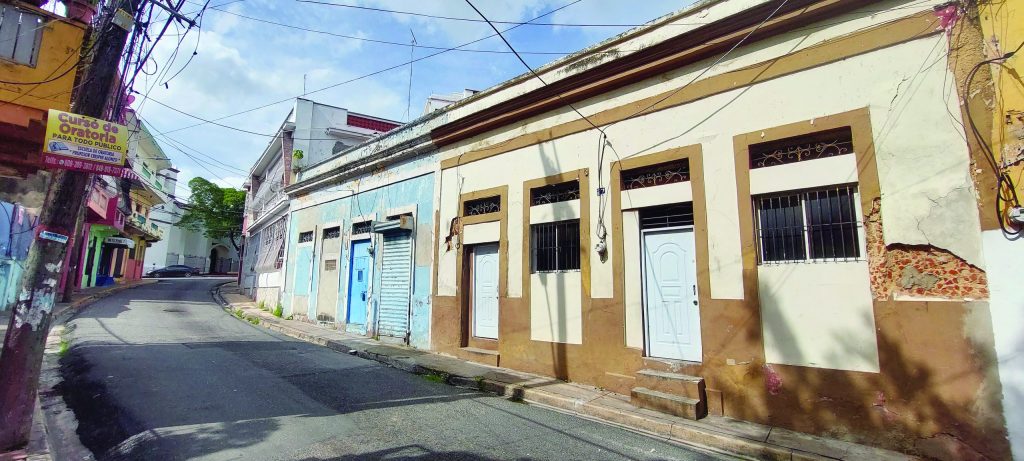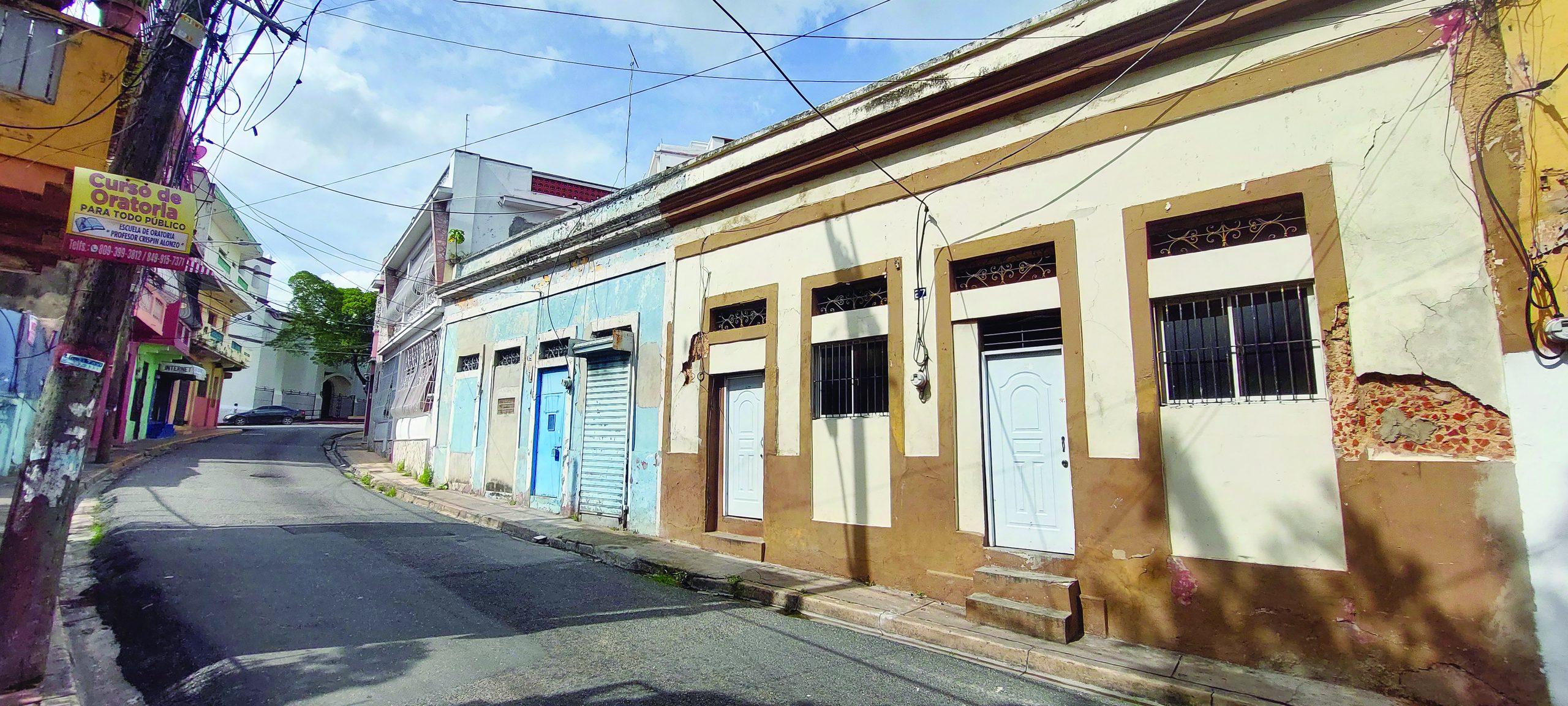
His home, born out of agricultural and community need, marked the beginning of the urban expansion of Santo Domingo.
SANTO DOMINGO- In San Carlos, the city learned to grow beyond its walls, with houses that shaped the White Village, built by families from the Canary Islands, who founded it spontaneously, without an official plan or state project, in 1685.
Back then, it was all wilderness, the outskirts of the walled city, and the houses they built were simple, made of wood, painted in light colors, and erected on the large plots of land dedicated to farming and raising animals. A map of the city from 1785, a hundred years after the first settlement, shows that San Carlos was still just a small field.
The first streets and houses formed organically around the Church of La Candelaria, which served as the spiritual center, and the park, which became the social and community center of the neighborhood. The patron saint festivals were held around the park, where arepas, gofio, and majarete were offered.
Those first houses were made of wood, with palm or Creole tile roofs, open galleries and interior courtyards that guaranteed coolness in the Caribbean climate.
In the 19th century, single-story masonry houses appeared, with zinc or tile roofs and facades painted white, blue, or green. These typologies, with a central courtyard and cross ventilation, reflected the architectural influence of the Canary Islands, adapted to the Caribbean.
Daily life was sustained by popular businesses: general stores, bakeries, carpentry shops, blacksmith shops, shoe stores and informal vendors offering majarete, arepas and gofio, foods that the Canary Islanders brought with them.
Genealogist Antonio Guerra notes that nearly 50% of Dominican surnames originate from Canary Islanders who settled in San Carlos. Among them, he cites the Abad, Larrazábal, Guerra, Perdomo, Hernández, Rodríguez, and Pérez families, whose homes were located around the church and the park.
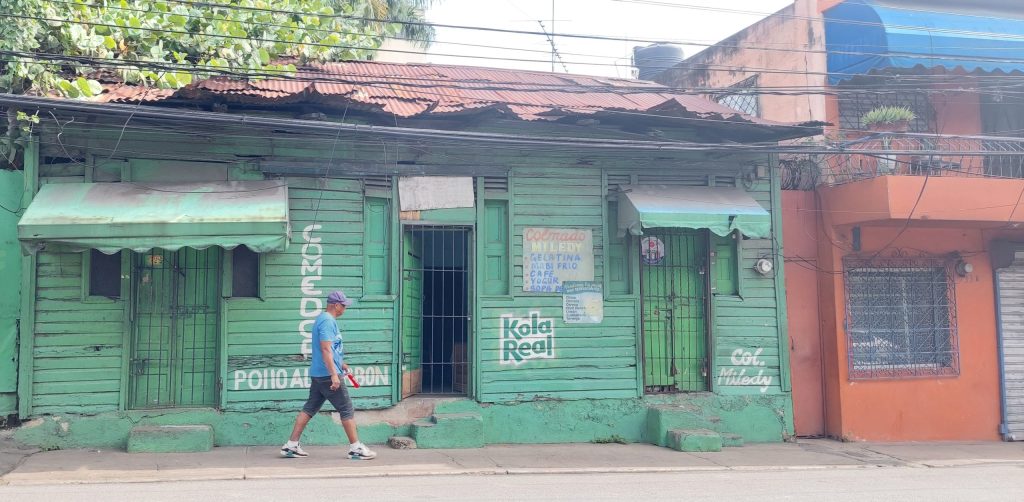
Until the end of the 17th century, houses were built of wood with zinc roofs. (Solangel Valdez/El Inmobiliario).
The Larrazábal family, for example, appears in records of the Dominican Academy of History, linked to plots of land in San Carlos, where they settled as merchants and farmers.
In the mornings, the town criers brought life to the neighborhood, which from then on sealed its brand of fun and sportsmanship, because the Escogido Baseball Club, one of the most emblematic teams of national baseball, was born there.
Its rural courtyards also served to nurture popular boxing, because there first, and then in the clubs, the first improvised gyms were opened, where young people trained with discipline and passion, making boxing a hallmark of San Carlos.
Thus, the neighborhood also became a breeding ground for sports talent, leaving a mark that transcends the history of the housing and is inscribed in the cultural memory of the country.
The evolution of housing in San Carlos reflects the transition of Santo Domingo:
– 17th to 18th centuries: wooden and palm houses, agricultural plots, large courtyards.
– 19th century: single-story masonry houses, zinc and tile roofs, galleries and patios.
– 20th century: progressive densification, with more compact houses and simple multi-family dwellings, but always with a popular character.
Historian Frank Moya Pons said at a conference in 2017 that San Carlos was the oldest extramural settlement, inhabited by Canary Islanders since the 17th century, and its wooden houses with palm thatch roofs marked the beginning of popular housing outside the walls.
Originally published in El Inmobiliario print #13.