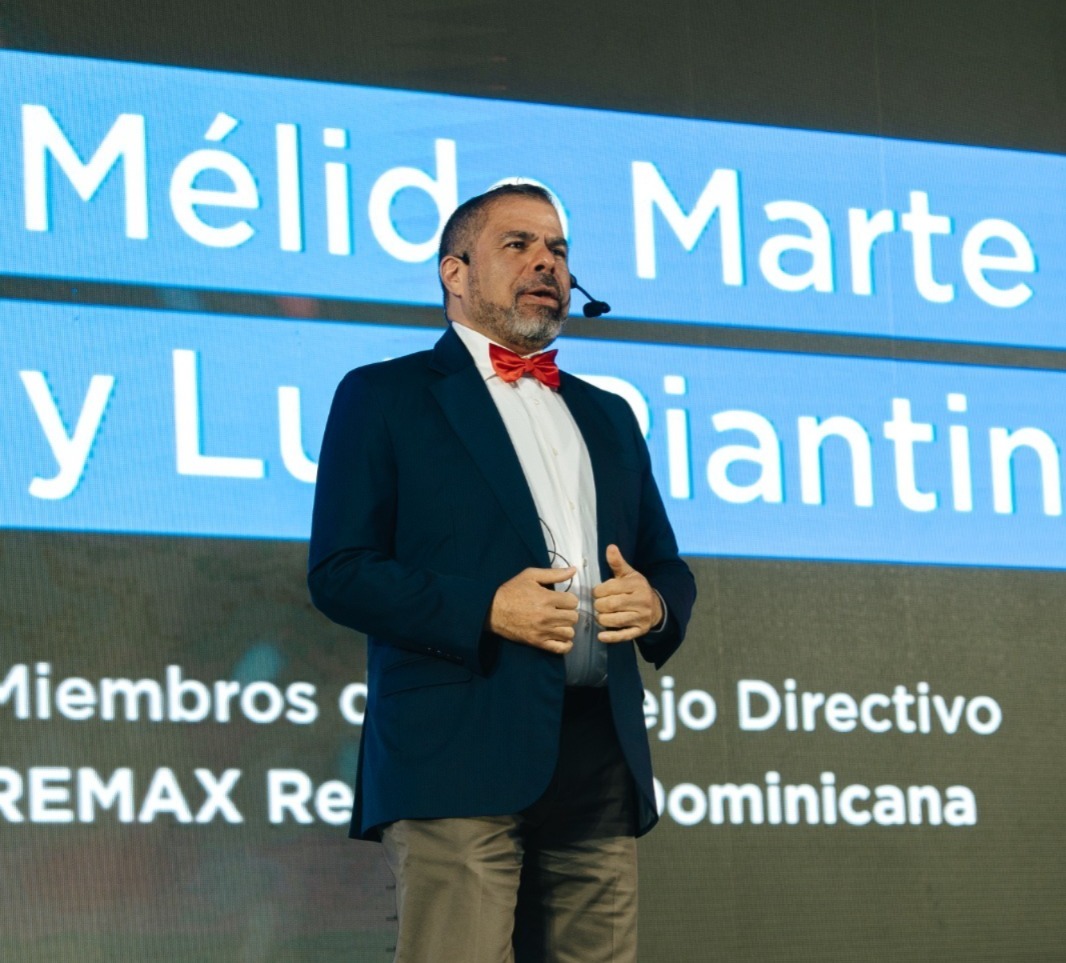
He said that the approval of the real estate brokerage law would push builders and developers to strengthen processes related to legal documentation, property titles, and commercial communication of projects
SANTO DOMINGO.– The new real estate brokerage law is being discussed this time in a different scenario: a market under pressure, more demanding clients, and a public conversation that has gradually begun to push the sector towards regulation.
After several failed attempts in the National Congress, the bill was recently approved in two readings in the Senate and is now preparing to move to the Chamber of Deputies, where stakeholders believe that this time there are more favorable conditions for its progress.
For Melido Marte, regional director of RE/MAX Dominican Republic, the current moment represents precisely that change. During an interview with El Inmobiliario, on the sidelines of the Reunidos 2026 Convention, the real estate entrepreneur asserted that the initiative arrives now on “fertile ground,” driven by the need to establish greater controls within the market.
The executive noted that this is the fifth time the legislation has been considered in Congress, although in previous processes the initiatives ended up losing momentum when passing from one chamber to another.
However, he understands that the context has changed due to the impact that various cases linked to the real estate market have had on public opinion, many of them widely disseminated on social networks and media.
“There are scams, but the vast majority are failed projects,” he pointed out.
Beyond the real estate agent
One of the points Marte emphasizes is that the discussion about regulation should not focus solely on the real estate agent, but on the entire chain of promotion and marketing of projects.
“The real estate agent is nothing more than a messenger. He is not the one who sends the message to the market,” he argued.
In his opinion, the lack of regulation allowed projects to be marketed for years without clear parameters on the information that should be offered to the buyer or the minimum conditions necessary to enter the market.
In that sense, he believes that the new legislation would require increased controls within the sector and a more precise definition of how real estate developments should be promoted.
“I will no longer be able to simply release a rendering,” he stated, referring to projects promoted solely with conceptual images or digital perspectives.
He explained that the measure would also encourage builders and developers to strengthen processes related to legal documentation, property titles, and commercial communication of projects.
The focus now shifts to the Chamber of Deputies
Marte also assured that the legislation this time has broader support from various actors in the real estate sector, who actively participated in its preparation and promotion.
In that process, he mentioned the work of María Cristina Grullón and the support of Senator Rafael Duluc, Cholitín, who submitted the project in the Senate.
“I believe so, that this time we can achieve something,” he concluded.
Recommended readings: