


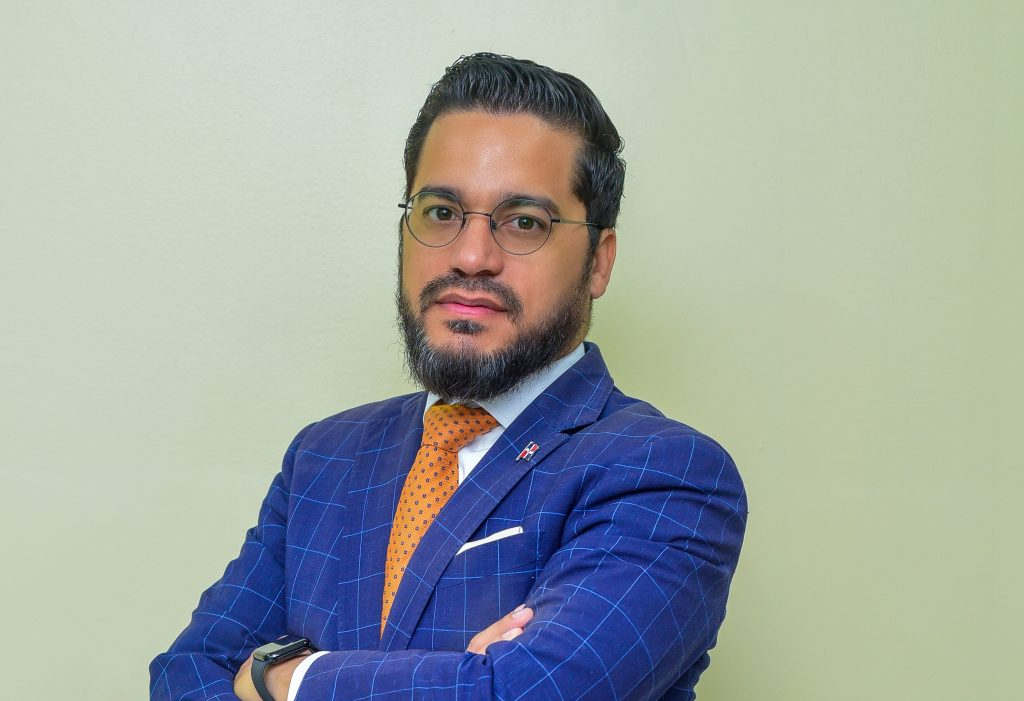
The expert, however, warns that construction material prices could come under pressure if the conflict continues
SANTO DOMINGO – The conflict in the Middle East is not just a distant geopolitical crisis. For the Dominican Republic, it has two sides: a concrete threat to import costs, and an unexpected opportunity to attract high-net-worth private capital seeking safe havens, explained economist Raúl Ovalle, who described the geography of the problem with figures.
The Strait of Hormuz, the bottleneck connecting the Persian Gulf to the Indian Ocean, handles 20% of the world's oil. Last year, 100 ships a day passed through this strait. Today, only 20 to 30 are leaving. The result is predictable: the crude oil market is operating with a nearly 15% undersupply, and the price is rising. WTI closed April above $100 a barrel, according to the Central Bank.
But oil isn't the only commodity at risk. Thirty percent of the world's fertilizers also pass through that region, and for a country that imports a large portion of its fertilizers, like the Dominican Republic, a prolonged conflict could lead to food inflation.
Therefore, Ovalle pointed out, the presidential announcement to subsidize fertilizers was a wise and much-anticipated measure. This is compounded by the increased cost of hiring a 40-foot container and the fact that ships are arriving later and at higher prices.
For the construction sector, in particular, this increase in the cost of imported inputs represents a challenge that was already experienced a few years ago and that could be repeated.
However, Ovalle also sees an opportunity amidst the chaos. For decades, an implicit social contract existed in the region that guaranteed stability: the Gulf monarchies maintained internal peace, contained Iran, and protected Israel.
But that contract was broken. And when stability breaks down in a region that is home to some of the world's largest private fortunes, that capital moves.
The Cibao region could generate more wealth
“Ultra High Net Worth Individuals (those with large private fortunes) in that region are looking for new, safe havens,” the economist explained. “And we have areas in the north of the country that are attractive to that type of investor: legal security, openness to settling down, buying homes, and asset protection.”.
In that context, Ovalle called for viewing the crisis not only as a threat, but as a window of opportunity to position the Dominican Republic, and in particular the north of the country, as an investment destination for one of the most exclusive and affluent markets in the world.
The Cibao region already accounts for one out of every three dollars of the national GDP, houses half of the free trade zones, and its GDP per capita exceeds that of Colombia, and for this reason the economist Raúl Ovalle calls it "the giant that has already awakened".
At the current rate of growth, the Cibao region could surpass Santo Domingo's GDP in less than a decade, Ovalle asserts, insisting that it is not a speculative projection, but an arithmetic one, and presented the numbers that support his projection.
"One out of every three dollars produced in the Dominican Republic is produced in the Cibao region," and he also estimated the GDP of that region at around $41 billion, while the capital exceeds $128 billion.
He asserted that the gap is large, but what matters is the speed: the Cibao region is growing at a rate that, sustained over time, would lead that region to generate more wealth than the entire capital in approximately eight years.
Among other reasons, he cited that the GDP per capita of the Cibao region exceeds that of Colombia; that one out of every three jobs in the country is generated in that region; that 40% of the remittances received by the Dominican Republic are consumed there; and half of the country's free trade zones are located in those two regions, Greater Santo Domingo and the Cibao.
According to Ovalle, Cibao ensured that no one would ever go hungry during the pandemic, and at this point he received a standing ovation from the audience at the RE/MAX Dominican Republic's Reunidos 2026 convention.
"It has size, it has growth, and it has a productive ecosystem with a very significant weight in the national economy," the economist summarized.
Foreign investment
In terms of foreign direct investment, the Cibao region receives hundreds of millions of dollars annually. The sectors attracting this unprecedented investment nationwide are tourism, energy, water, and real estate.
And Ovalle anticipates that, in the medium term, investment pressure on the country will continue to grow: "By simply increasing our market share, we will end up receiving more investment," he stated.
According to the economist, the Cibao region should not be seen merely as a productive hub, but as the axis of a broader regional transformation, since, together with Greater Santo Domingo, it forms an ecosystem of opportunities that few economies of similar size can offer in Latin America: macroeconomic stability, sectoral diversification, growing infrastructure, and an expanding middle class.
"I envision a region that, together with Santo Domingo, will concentrate a huge number of growth opportunities," Ovalle concluded, adding, "The Cibao is not the future. It is already the present.".
Recommended readings:







