


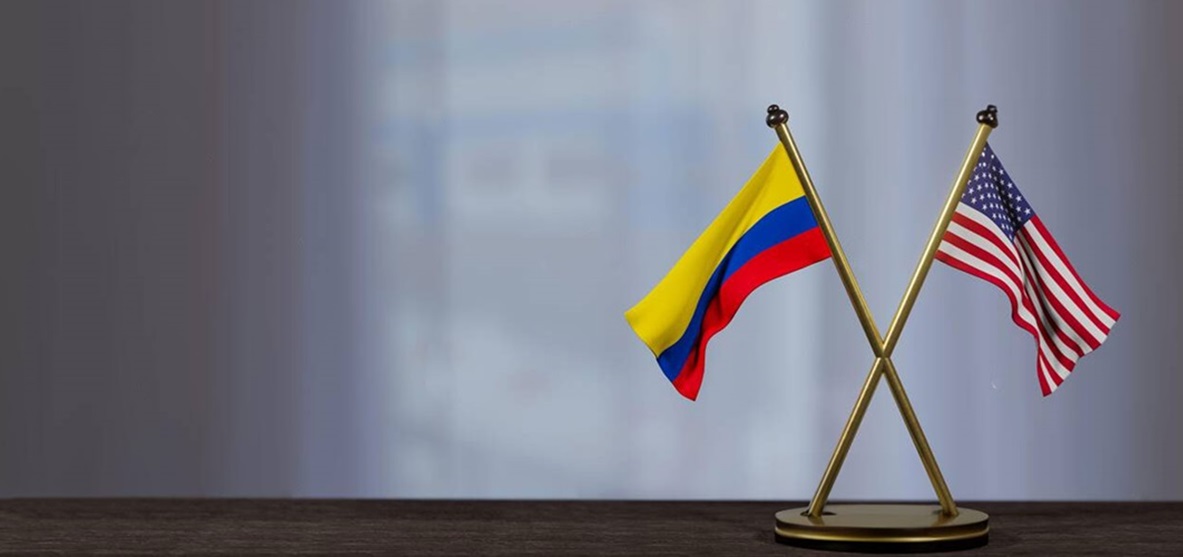
SANTO DOMINGO – For more than two decades, Colombia was considered one of the United States' main allies in Latin America. However, tensions between Gustavo Petro and Donald Trump in recent years have marked a period of diplomatic disagreements and differences over security, migration, and drug policy.
The arrival of Abelardo de la Espriella to the Colombian Presidency seems to open a different scenario.
A BBC News Mundo suggests that the political affinity between the president-elect and Trump could restore a closeness to the bilateral relationship that had weakened in recent years. Reuters and the Associated Press also agree that security and the fight against organized crime will be key issues in this new phase.
Security and a hardline approach return to the center of the debate
De la Espriella, a lawyer and businessman with no prior experience in public office, built his campaign around a hardline stance against drug trafficking and armed groups.
Reuters highlighted during the campaign that the new president promised to strengthen the fight against criminal organizations, reduce taxes and revive traditional economic sectors, while The Guardian compared him to other Latin American leaders who have promoted more aggressive security policies.
BBC News Mundo notes that the president-elect has even spoken of a possible "Plan Colombia 2.0", evoking the cooperation program between Bogotá and Washington that, in the early 2000s, allowed Colombian military capabilities to be strengthened with US support.
A victory that strengthens Trump's influence in the region
The arrival of De la Espriella is also part of a regional trend.
The Associated Press and other international media outlets highlight that several Latin American countries have experienced a shift towards conservative governments with discourses focused on security, immigration control and free markets.
According to Sergio Guzmán, director of Colombia Risk Analysis, quoted by BBC News Mundo, the Colombian president's victory represents "a victory of his own for Trump," at a time when Washington is seeking to regain influence in Latin America.
A divided country welcomes the new president
The electoral victory was one of the closest in Colombia's recent history.
According to data cited by BBC News Mundo, nearly 13 million Colombians supported De la Espriella, while just over 12.7 million voted for Iván Cepeda, the government candidate.
The narrow margin reflects a polarized country and poses challenges for governance.
Furthermore, the new president inherits a nation marked by the expansion of armed groups, the growth of illegal economies, and the difficulties in consolidating the "total peace" strategy promoted by Petro.
China emerges as another strategic front
The relationship with the United States will not be the only international challenge.
Over the past few years, China has increased its economic presence in Colombia and has moved closer to becoming one of its main trading partners.
Analysts consulted by BBC News Mundo believe it is likely that Washington will seek to regain ground and promote greater alignment of Bogotá with its interests, although they warn that China's economic weight will be difficult to replace.
The challenge of balancing security and development
Experts cited by BBC News Mundo and the International Crisis Group agree that the main challenge for the new government will be to ensure that the security agenda is accompanied by investment and development in the regions most affected by violence.
Because, although hardline policies have shown military results at different times in Colombian history, structural problems linked to inequality, drug trafficking and the absence of the State continue to be part of the conflict.
The relationship with Washington appears destined to strengthen. But the real challenge for the new president will be demonstrating that this closeness can translate into results for a country that remains divided and continues to search for a definitive formula for achieving stability.
Recommended readings:







