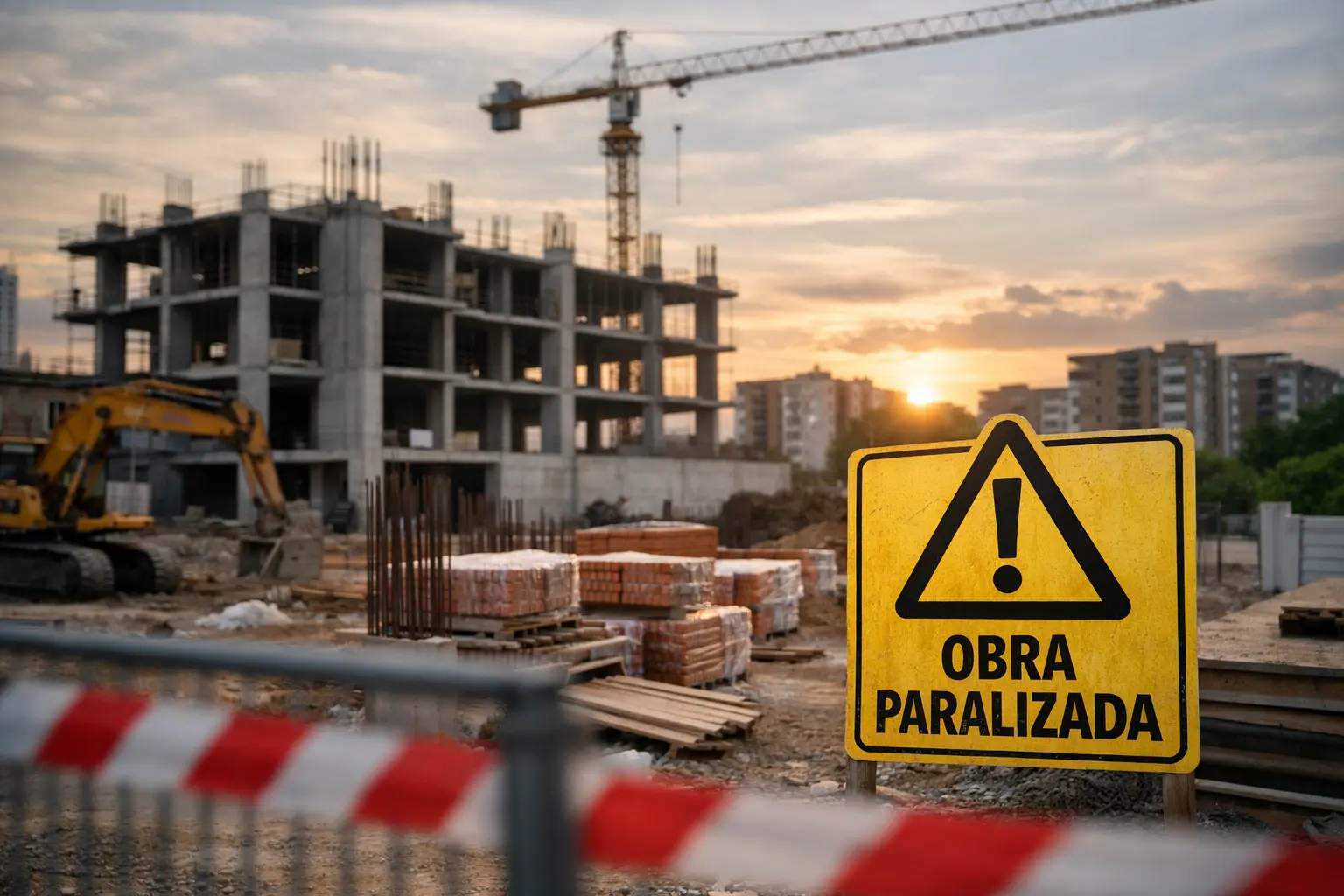
Suspensions usually occur due to non-compliance such as lack of protection for personnel, absence of safety committees, or hazardous conditions on the construction site
SANTO DOMINGO.- The Ministry of Labor's halting of a construction project not only slows down the development of the project, but also raises a key question within the sector: who assumes responsibility?
Who is responsible?
There is no single answer.
According to labor lawyer Darnetty Lugo, liability in these cases can be joint and several and will depend on what is established in the contracts between the developer and the contractor. This means that more than one party may be obligated to answer for the detected defects.
As he explained, these suspensions usually occur due to violations such as a lack of personal protective equipment, the absence of safety committees, or hazardous conditions at the construction site. In this context, companies must guarantee safety and register their workers, even temporarily, with the Social Security Treasury (TSS).

The burden falls on those in control
From a labor perspective, the main burden falls on the companies involved in the project's execution. As the specialist indicated, both the developer and the contractor can face consequences, depending on their role and the level of control they exercise over working conditions.
This approach responds to a clear principle: responsibility is assigned to those who have decision-making power within the project.
What about the workers?
In this scenario, the workers are not responsible for the work stoppage. On the contrary, they are the subjects protected by labor regulations.
A key point, as Lugo specified, is that if the suspension occurs due to causes attributable to the company, employees must receive their pay, even if they are not working during that period.
A responsibility that also extends to the technical aspects
From the real estate sector, lawyer Ana Bello explained that the determination of responsibility is multidimensional and depends both on the contractual chain and the type of breach detected.
In that regard, he pointed out that the developer bears a primary responsibility as they are the ones who must guarantee safe working conditions, which can lead to administrative, civil and even criminal penalties in case of non-compliance.

Ana Bello, a lawyer specializing in real estate law. (Archive/El Inmobiliario).
He also indicated that the contractor is not exempt. When the work is carried out by third parties, there is joint and several liability for the safety of the personnel, regardless of the subcontracting arrangements.
In addition, there is the potential liability of the professionals responsible for technical supervision. Engineers and architects may be held liable if the deficiencies are linked to negligence in their duties.
A measure that goes beyond punishment
The suspension of construction work for safety reasons not only has legal consequences, but also reinforces the need to comply with regulations from the outset. In this scenario, Dominican legislation prioritizes worker protection and distributes responsibility among all stakeholders with decision-making power within the project.
Recommended readings: