


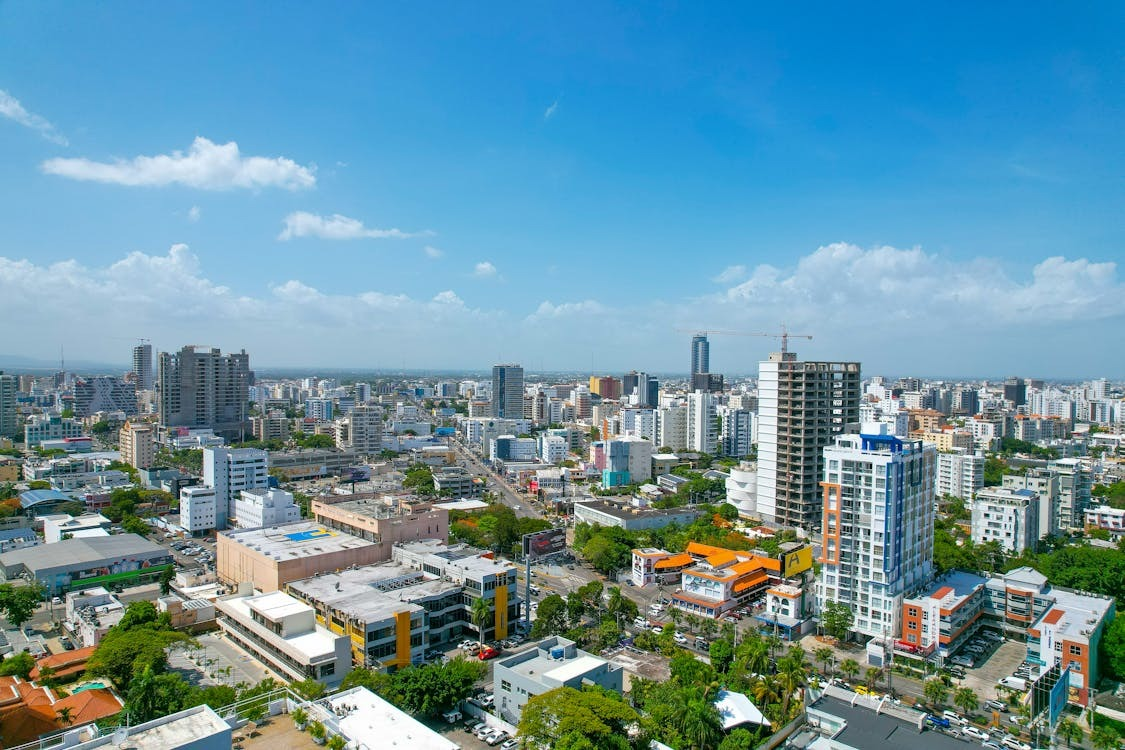
According to the November 2025 report by Global Property Guide, despite the slowdown in the construction sector, the country is the second fastest growing market for residential prices in the entire region.
SANTO DOMINGO. – The Dominican Republic will end 2025leading the Latin American real estate market, with a year-on-year nominal variation of +10.64%, second only to Costa Rica, which stood at 11.86%, according to the Global Property Guide (GPG) report updated to November.
According to GPG, an independent platform specializing in comparative analysis of real estate markets, based in London, the country is listed as the second fastest growing housing price market in all of Latin America, leaving behind Chile, Mexico, Brazil, Argentina and Colombia, which could not keep up with the Dominican pace.
This reality contrasts with the activity of the construction sector, which is going through one of its worst moments in five years, generating an imbalance that, although it seems paradoxical, exposes structural tensions of the Dominican real estate market: a robust demand versus a limited supply, an accelerated revaluation and a macroeconomic environment that has slowed the production of new homes.
Even so, the year-on-year increase of 10.64% reported by Global Property Guide places the Dominican Republic among the markets with the highest appreciation in the region.
The fact that the Dominican Republic is second in the Latin American ranking means that, during the last year, its residential market had greater nominal growth among the countries analyzed by GPG, which reinforces the idea that the country not only maintains dynamism, but grows faster in the sector than many neighbors, and even surpasses most of the larger economies in the region, at a global moment marked by high rates, rising costs and credit moderation.
The result is remarkable: the country has become one of the most attractive residential markets for investment in Latin America.
Zero kills zero
The Central Bank of the Dominican Republic has reported that the value added of the construction sector fell by2.3% in the first half of 2025 and by1.2% in the first quarter. Even with a slight rebound of 3.8% in the first half of the year, activity remains far from the expansion levels of previous years.
So how is it possible that prices continue to rise? The explanation is clear: less construction = less new supply.
The contraction of construction projects restricts the available inventory, and in a market where domestic demand persists, foreign demand grows , and housing remains a safe asset, prices react upwards. This phenomenon makes the country a very attractive scenario for investors and at the same time poses a challenge for local affordability: supply does not grow at the same rate as prices.
The increase in value may be largely due to limited supply: with fewer new construction projects underway, available housing becomes scarcer, raising its value.
Demand for housing (purchase or investment) could remain strong, driven by factors such as remittances, foreign investment, the return of Dominicans from abroad, and investor interest.
But the decline in construction suggests that this interest is not translating into new supply, perhaps due to the high cost of materials, high interest rates, global economic uncertainty, or a wait-and-see strategy by developers.
In the medium term, this lack of supply could exacerbate an affordable housing crisis: low supply, inflated prices, a market geared towards the middle-upper or upper segment, with little room for low-cost housing.
Dominican Republic among the best on the continent
The following table summarizes the country's position in the most recent GPG regional ranking. The values correspond to the update published in November 2025.
Ranking of residential prices in Latin America
| Regional position | Country | Nominal variation 1 year (GPG) |
| 1 | Costa Rica | +11.86 % |
| 2 | Dominican Republic | +10.64 % |
| 3 | Chili | + 8.99 % |
| 4 | Mexico | + 8.73 % |
| 5 | Argentina | + 5.26 % |
| 6 | Brazil | + 5.20 % |
| 7 | Colombia | + 3.90 % |
| 8 | Uruguay | + 3.77 % |
| 9 | Peru | + 2.23 % |
| 10 | Panama | + 1.30 % |
Source: Global Property Guide, updated November 2025.
Impact on investment and confidence
This is positive news for the real estate market, which sees in the 2025 picture a country that, although facing a slowdown in construction, is strengthening and leading in the region, attracting capital and establishing itself as a preferred destination for residential investment.
The GPG update confirms that the Dominican Republic is in a privileged position, and that is a powerful message for both local and international investors.
For real estate investors, the outlook is attractive: appreciation and a shortage of supply combine to create a competitive market - buying now can mean appreciable gains in the medium term.
But for the country as a whole, the divergence between prices and production is a warning: without a sustained reactivation of construction and policies that incentivize affordable housing, the market risks becoming increasingly inaccessible to a large part of the population, especially the middle class, and the housing gap, which is often measured in millions of homes, could widen.
An opportunity for investors, a challenge for housing equity. This contrast deserves serious attention, as it is one of the most significant shifts in the recent history of the Dominican real estate market.
Source: Global Property Guide. (2025). House Price Change 1 Year (Nominal) in Dominican Republic compared to Latin America. https://www.globalpropertyguide.com/latin-america/dominican-republic/price-change-1-year?
Global Property Guide (GPG) is an independent platform based in London, specializing in comparative analysis of real estate markets and produces one of the most consulted indices by international investors.
Its methodology combines official data, private studies and its own historical series, which allows for a homogeneous evaluation of the evolution of residential prices in more than 150 countries.







