


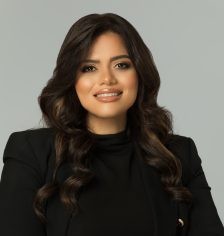
SANTO DOMINGO – The United States Earthquake Engineering Research Institute (EERI) elected engineer Ashley Morales-Cartagena as the organization's vice president for 2026. The board of directors unanimously selected Morales after three years of service as a board member, making her the first Dominican to hold this position at the institute.
With this new appointment, Morales has a greater opportunity to continue strengthening the participation of the Dominican Republic and Latin America in decision-making that contributes to safer cities.
During the assembly meeting, the engineer expressed her goal of continuing to promote initiatives for conducting seismic risk studies in her country, and her aspiration to “foster a broader conversation about structural safety and resilience. We need to prioritize safe buildings and infrastructure and adopt a multi-hazard approach to risk management, as we have been encouraging at EERI.”.
In addition to her duties at the institute, which she carries out from the Dominican Republic, Morales is a professor and researcher, current director of the Center for Research on Resilience and Multi-Hazard Risks (Cirrma-PUCMM) and president of GeoRisk Consulting.
She is the founder and president of Mujeres en la Ingeniería RD (MIRD), a community of women engineers that promotes the empowerment and professional development of Dominican women in all areas of engineering. Former director of the School of Civil and Environmental Engineering at the Pontificia Universidad Católica Madre y Maestra (PUCMM), she holds a master's degree in geotechnical engineering with a focus on seismic engineering from the University of Illinois at Urbana-Champaign, where she attended as a Fulbright scholar from the U.S. Department of State. She was recognized by the American Society of Civil Engineers as a New Face of Civil Engineering (2019) and received the EERI Younger Member Award (2018).
About the Earthquake Engineering Research Institute (EERI)
The EERI is the leading international organization dedicated to understanding earthquake risk and building resilience in communities worldwide. It has thousands of members in various countries, including researchers and professionals in engineering, geosciences, architecture, planning, government, emergency management, public health, and policymaking.
Recommended readings:







