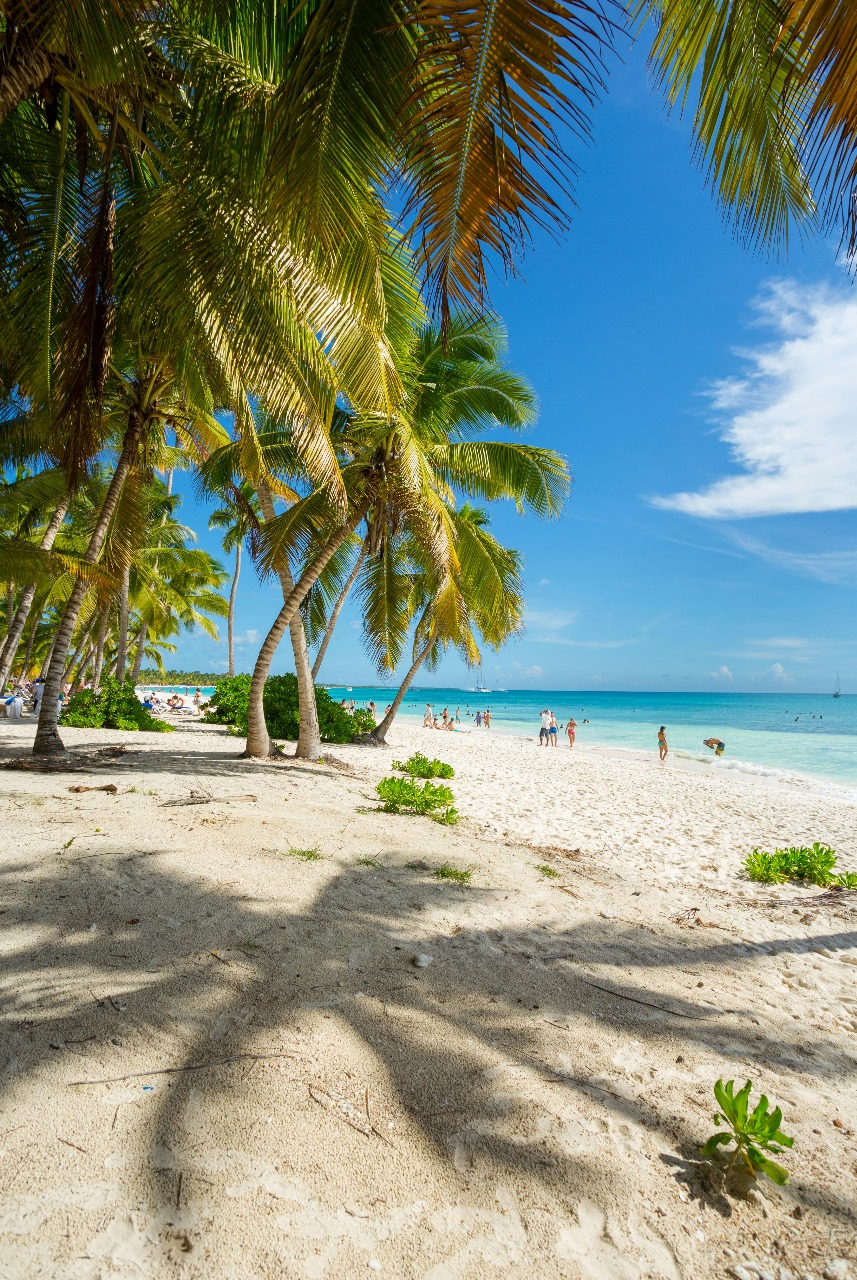
The Dominican Republic is now betting on sustainability, with the diversification of its offerings, providing more culture and regional identity, in addition to its tropical landscapes.
SANTO DOMINGO.-Although the country's first all-inclusive was Puerto Plata, with its Golden Beach back in the 1980s, the investment of private capital and state promotion in the eastern region, especially the Punta Cana and Bávaro area, starting in the 1990s, transformed this enclave into a global benchmark, to the point that it has become a brand in itself.
In Spain, travel agencies are constantly promoting tickets to Ecuador, Colombia, Bolivia, Punta Cana, and the Dominican Republic, as if they were brand new destinations. The branding is so strong that for many years, "Dominican tourism" was practically synonymous with Punta Cana, with its picture-perfect white-sand beaches, increasingly exclusive all-inclusive resorts, and direct flights from Europe and North America packed with travelers whose greatest dream is to vacation in the Caribbean, and especially in Punta Cana.
This destination marked the growth of the sector in the country at such a dizzying pace that it overshadowed the exhausted Puerto Plata, momentarily slowed the growth of Samaná and buried the beginnings of Barahona.
However, the successful exploitation model began to suffer limitations due to excessive dependence on a single destination, saturation of services, and a tourist narrative that reduced the country to the cliché of sun and beach, an offering that visitors found in Mexico, Cuba, and even the Bahamas.
Today, efforts in the Dominican Republic are focused on correcting that course, as reported by the Spanish newspaper El País in an article published on January 24: “Dominican Republic: the vacation destination that reinvents itself,” in which the media outlet highlights that the country “is launching to diversify its tourism brand, betting on sustainability, culture and regional identity.”
At the International Tourism Fair in Madrid (Fitur 2025), David Collado, the Minister of Tourism, made it clear: “The Dominican Republic is not just Punta Cana. We are determined to create a safer, friendlier, more sustainable destination that is in line with the times,” reported El País, and his message was emphatic: the future of Dominican tourism depends on expanding its reach to new destinations and new narratives.
Developing a Different Model
The El País article cited local destinations working to offer visitors different, more intimate and personal experiences, with less overcrowding and a focus on sustainability, such as Miches and Samaná.
The text states that Miches, in the east, is "a natural strip that aspires to become an emblem of sustainable luxury," and specifically cited the Tropicalia project, with an investment of US$310 million, the projection of high-end hotels and community development programs, in an environment with virgin beaches, lagoons and mangroves.
The report also cited the Samaná Peninsula, with its focus on ecotourism, idyllic landscapes, whale watching, and lack of overcrowding, as an ideal setting to demonstrate that the country can grow without depleting its resources. Collado summarized this in Madrid: “Samaná will be our calling card to the world, showing that the Dominican Republic knows how to grow without losing its essence.”
The Spanish newspaper also reflected that diversification is also internal, identifying Santiago de los Caballeros, the country's second city, as a cultural, sporting and meetings (MICE) destination.
They also cited the rebirth of the Amber Coast, Puerto Plata, Sosúa and Cabarete, as a hub of history, water sports and sustainability, recalling that it was precisely there where modern Dominican tourism was born in the 1980s.
Astronomical figures
The shift that the tourism industry is taking is verified in the results communicated by both the private sector and the government, to endorse the momentum: more than 11 million visitors in 2024 and 7.1 million in the first seven months of 2025 and contributions to GDP of more than 15%.
And so the Dominican Republic is a regional leader, however, the critical question arises: who really benefits?
Urban planner Juan Miguel Pérez warned in El País that “Diversification will only be sustainable if it is guaranteed that natural and cultural resources are protected and that the benefits reach the people who live in those destinations.” He said this because for years, entire communities around tourist hotspots have been left out of development, limited to precarious jobs or forced to bear the environmental costs of rampant and voracious development.
Identity is also
a factor. Due to generational differences, today's travelers are different; they crave distinct experiences and are not satisfied with just sun, sand, and beach. The tourism industry in the Dominican Republic has understood these interests and embraced the new path, the one tourists want to take: to learn about the culture, talk to the people, and perhaps ride a motoconcho (motorcycle taxi).
The contemporary traveler wants more than turquoise sea, and El País sums it up like this: “The tourist no longer just wants to rest; he wants to feel part of a larger story.”
Minister Collado, a contemporary of many of the foreign visitors, never tires of repeating it: “We are much more than beaches and paradisiacal landscapes; we are culture, hospitality and a sustainable future,” he said in Madrid in January 2025, a very beautiful and hopeful speech whose effectiveness depends on that offer being translated into concrete policies: territorial planning, investment in infrastructure, job training and community participation.
The 2024 Tourism Flow Report, prepared by the National Accounts Department of the Central Bank and based on data from the Ministry of Tourism and the General Directorate of Migration, indicates that in that year, 50.7% of non-resident tourists were between 21 and 49 years old, and 30% of the total were over 50. Minister Collado turns 50 next September.
Bigger than a postcard
Although postcards remain as nostalgic mementos of bygone eras, whenever a beautiful scene is seen, it's often described as a postcard, like the breathtaking landscapes offered by the Coconut Coast, as the Punta Cana-Bávaro coastline is also known.
And although, according to the Central Bank's "Dominican Economy Report, January-March 2025 ," 47.5% of tourists chose to vacation in the Dominican Republic because of the quality of its beaches and 18.7% because of the climate, 12.3% did so because of the hospitality. A further 97.5% of them would return to vacation in the country.
A country that has demonstrated resilience (the first to recover and open to tourism after the Covid-19 pandemic), tourism leadership in the Caribbean, and where those involved want to open a new path to guide and offer alternatives to those who say they would return.
The true reinvention lies in building a new narrative so that travelers can tell stories about the mountains of Jarabacoa or Padre Las Casas, the music, art, and carnival of Santiago and La Vega, the gastronomy of Puerto Plata, the lagoons of Miches, the living culture, whales, and jungles of Samaná, the coffee-growing mountains, the magnetic pole, and the Larimar mines of Barahona. And the gastronomy and charm of every province.
The Dominican Republic is more than just a beach postcard, and if growth can be balanced with sustainability and social inclusion, the promise of a multifaceted and authentic destination will cease to be just a slogan and become a reality that benefits everyone.