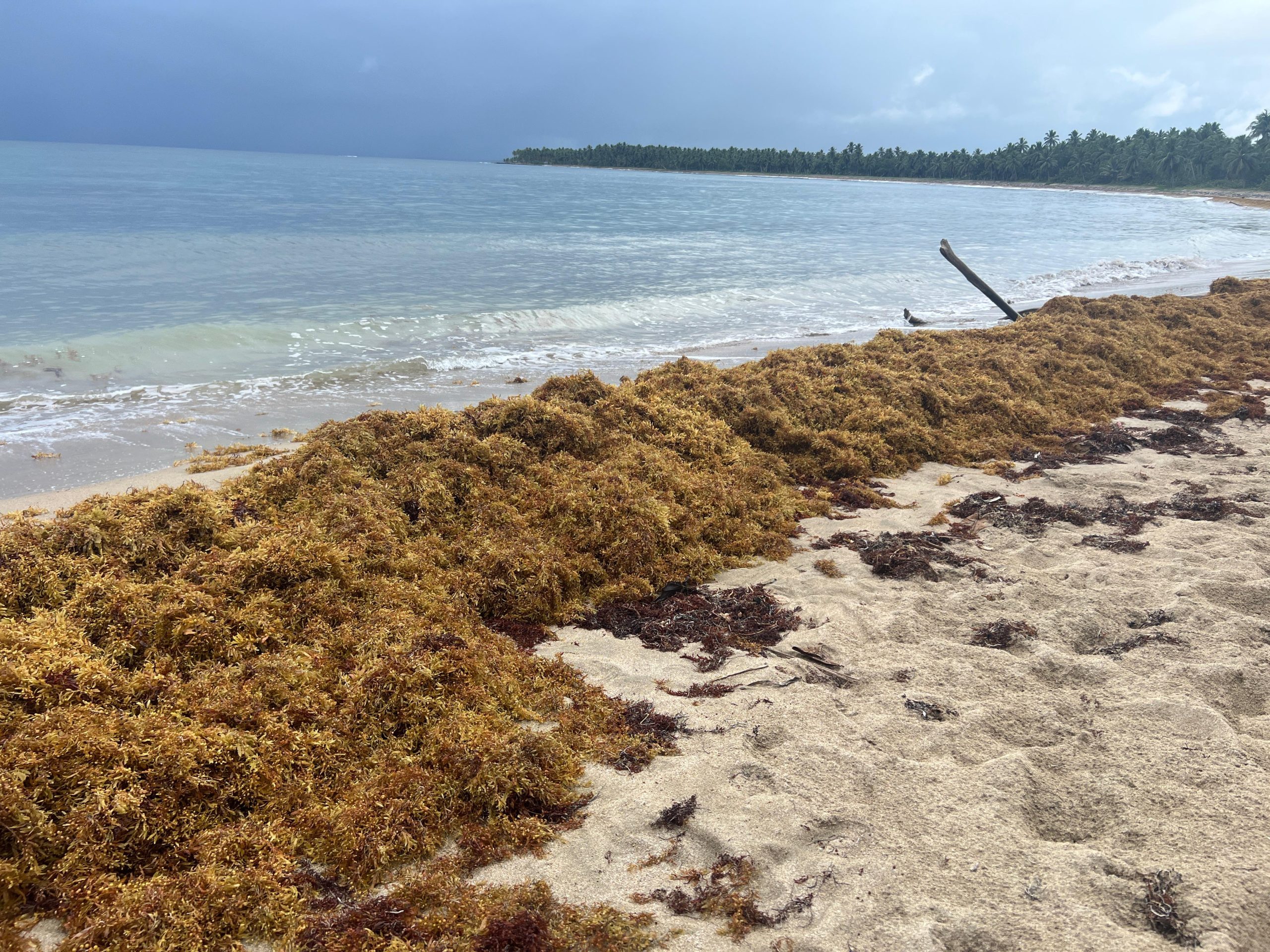
Deputy Minister José Ramón Reyes warns about the environmental, economic and regional impact of the seaweed.
SANTO DOMINGO. The Dominican Republic has received nearly 900,000 tons of sargassum seaweed so far in 2025, an unprecedented figure that is severely impacting the country's coastlines. This was stated by the Vice Minister of Coastal and Marine Resources, José Ramón Reyes. "The period has doubled, it has lengthened... before it was a couple of months, now it's almost year-round."
Reyes explained that sargassum, a type of seaweed that originates in the sea , has been redirected toward the Caribbean due to climate change and pollution from large rivers like the Mississippi and the Congo. “The mass of sargassum doubles every 20 days,” he noted, attributing the phenomenon to altered ocean currents and excess nutrients in the ocean.
The expert explained that this year the sargassum began arriving in February and has impacted areas that had never been affected before, such as Puerto Plata and Bahía de las Águilas. “It’s reaching all parts of the country,” he said, and warned that its decomposition on land generates toxic gases and a foul odor that affects tourism and public health: “In 48 hours it smells like rotten eggs or dead fish.”
In addition to the environmental impact, Reyes emphasized the economic damage it represents for the tourism sector. “Hoteliers invest heavily in barriers and cleanup, but it’s not enough,” the official stated during an interview on the program “El Día”on Telesistema, where he warned about the accelerated growth of the phenomenon and its consequences.
He specified that the State has also deployed brigades to contain the sargassum, although he understands that the installation of barriers must be done carefully so as not to damage the coral reefs.
The problem worsens when the sargassum reaches the coast. Improper disposal can contaminate aquifers and cause ecological disasters, he pointed out. Reyes recalled a case in Barahona where, due to a lack of experience, the accumulation of sargassum on the seabed consumed all the oxygen and caused the death of thousands of fish.
Despite the challenges, the deputy minister highlighted initiatives seeking to utilize sargassum as a resource. He mentioned the case of SOS Carbon, a local company that has developed liquid fertilizers from the seaweed, successfully tested on banana plantations in Montecristi. Uses in construction and cosmetics have also been explored, although these projects are still limited.
Mexico has begun research to convert sargassum into biofuel, and the Dominican Republic has sought to collaborate in these efforts. “We are finding a use for it,” Reyes said, but clarified that the process requires collecting it at sea before it reaches land and decomposes.
The deputy minister emphasized that sargassum is not a problem exclusive to the country, but rather affects the entire region. “We are working with the Caribbean countries and with Mexico. It is already reaching the Florida coast,” he warned, underscoring the need for a regional strategy to address the phenomenon.
From an environmental perspective, sargassum poses a direct threat to marine ecosystems. Its accumulation can suffocate corals and mangroves, which are natural barriers against coastal erosion. “The warming is killing them, it’s dehydrating them,” Reyes lamented.
Foundations like Fundamar and Magua are working on the restoration of resilient corals, but they require greater institutional support. “Corals are extremely important. They are a refuge for species and a barrier against the advance of the sea,” explained the deputy minister.
Finally, Reyes called on the international community to get involved in the search for sustainable solutions. “This is not a problem for the Dominican Republic alone. It is a problem for the entire region. And we are very concerned,” he concluded.