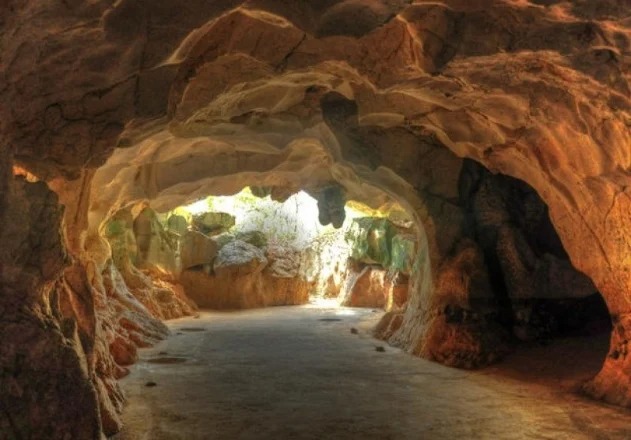
SANTO DOMINGO – President Luis Abinader announced in an official statement that the Pomier Caves in San Cristóbal will be ready to receive visitors by August 2026 , marking a milestone in the recovery and transformation of this emblematic natural and cultural heritage site. The announcement was made during his State of the Nation address to the National Assembly , where he highlighted the significant progress made in the restoration of this unique cave system.
Located in the province of San Cristóbal, this site is one of the most important archaeological sites in the Dominican Republic. Comprising more than 55 caves, it houses hundreds of pre-Columbian petroglyphs and pictographs, testament to the legacy of the indigenous peoples who inhabited the island. This heritage not only has historical and cultural value, but also significant potential for ecotourism and local investment, generating opportunities for economic development in the region.
Protection and sustainable development
In July 2025, President Abinader issued Decree 403-25, marking a new phase in the protection and sustainable use of the Cuevas de Borbón Anthropological Reserve, also known as the Pomier Caves. The decree mandates the coordination of infrastructure and services to facilitate public access, always prioritizing the conservation of the site's natural and cultural characteristics.
Subsequently, through Decree 457-25, the governance structure was strengthened with the expansion of the Presidential Commission for the Pomier Caves. It now includes a new commission responsible for overseeing the recovery, planning, and implementation of sustainable tourism projects, ensuring that economic development goes hand in hand with heritage preservation.
Tourism, investment and the local community
The transformation of the Pomier Caves not only has historical value but also direct economic potential. The implementation of trails, signage, interpretive areas, and ecotourism services will attract national and international visitors, strengthening cultural tourism and generating employment and investment opportunities in the region.
Tourism development experts believe that integrating environmental management and private investment will be key to maximizing the benefits of this project. The visitor experience, combined with the preservation of the petroglyphs and the surrounding biodiversity, could position the Dominican Republic as a leader in archaeological and ecotourism in the Caribbean.
Commitment to conservation
The project also emphasizes environmental and cultural education, promoting responsible tourism that connects visitors with pre-Columbian history and the importance of protecting local ecosystems. Coordination between the Ministries of Environment, Culture, and Tourism, and the Dominican Hydroelectric Generation Company, ensures a comprehensive approach where sustainability and heritage protection are as high a priority as infrastructure and tourism services.
A future open to the public
With the goal of opening the Pomier Caves to the public by August 2026, the government aims to do so safely and in an organized manner, offering an educational, cultural, and tourist experience that will boost the economic development of San Cristóbal and the southern region of the country. This initiative also reflects a heritage management model that combines innovation, investment, and environmental responsibility, ensuring that this national treasure can be enjoyed by present and future generations.
The reopening of the Pomier Caves symbolizes the recovery of an invaluable historical heritage, while generating opportunities for sustainable tourism, investment and local employment, consolidating the Dominican Republic as a destination that combines cultural richness, nature and a vision of sustainable development.
Recommended readings: