


SANTO DOMINGO.-The Codiano Institutional Committee (CIC) denounced yesterday that government officials continue to orchestrate "tricks" to delay and prevent the payment of a debt of 385 million pesos that the State maintains with 107 contractors grouped in that entity.
The entity stated that in light of the serious allegations, the current president of the Dominican College of Engineers, Architects and Surveyors (CODIA), Carlos Eligio Mendoza Diaz, requested a meeting with President Luis Abinader to inform him of the difficulties affecting CIC contractors in the collection process.
He announced that the president had tasked the former Minister of Public Works, engineer Deligne Ascención, with presenting a solution, given that some eight high-ranking officials have not contributed any during the time the president has been in power.
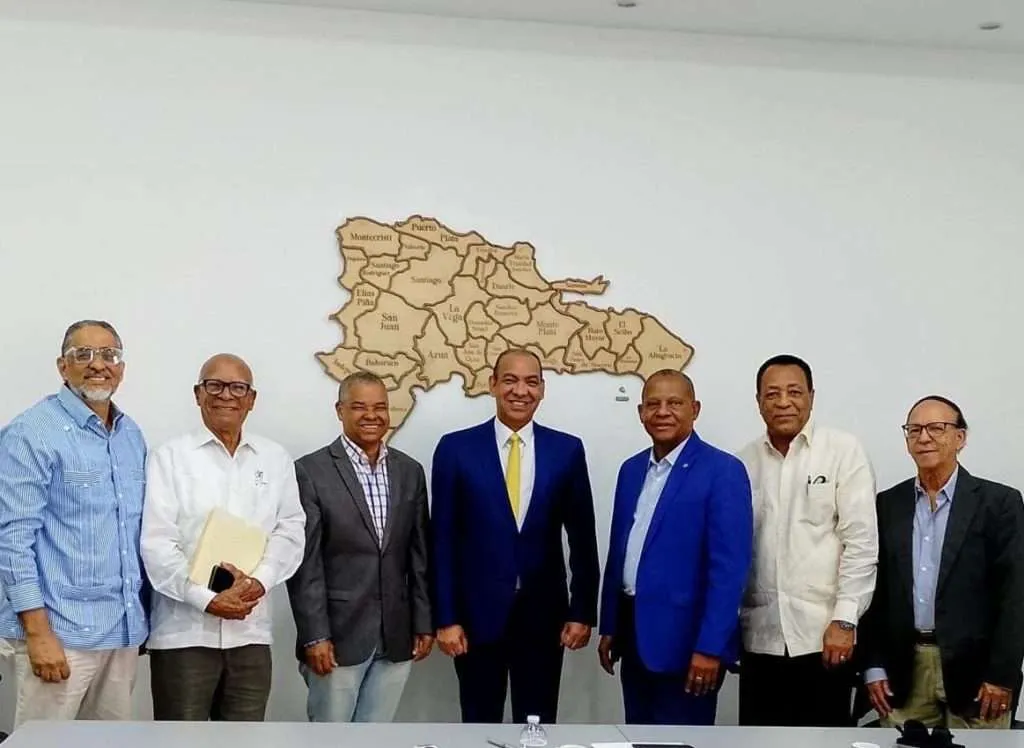
The contractors met with Deligne Ascención to coordinate a solution to the non-payment. (EXTERNAL SOURCE).
The 107 affected contractors are involved in some 143 projects that were completed and delivered to 14 contracting institutions, and the State has been using these works for many years without having settled the costs of the work performed.
“Engineer Ascención should pay attention to the fact that the builders grouped in the CIC have denounced several maneuvers by the contracting institutions, which seek to justify the non-payment of the aforementioned debt, arguing that the creditors do not comply with the current legal requirements,” the CIC states in a document sent to El Inmobiliario.
The contractors claim that other actions against them refer to sending payment requests to the Ministry of Finance without certain documents that the contracting institutions must attach for the correct processing.
The builders of the CIC have also complained that the contracting institutions, in some cases, argue the disappearance of documents that should be in their archives, but that they also do not make the slightest coordination with the Treasury to remedy their own failures.
“The builders have been accused of not having their contracts registered with the Comptroller General of the Republic, an argument that lacks veracity, since that registration has always been the responsibility of the governing body of the National System of Internal Control,” they explain.
They explain that from August 1954 until 2007, Law 3894 was in force, which in its article 27 ordered that "every contract that requires the disbursement of public funds must be registered in the books that the Comptroller's Office has for such purposes.".
They add that in 2007 Law 10-07 was enacted, "which in paragraph 3 of article 27 states that the responsibility for registering construction contracts lies with a Technical Administrative Unit of the Comptroller's Office that operates in each contracting institution.".
“It is concluded that all contractors of state works must have their contracts registered, unless the Comptroller's Office has not complied with the law when ordering the payment of initial advance and/or volume, for which the creditors should not bear any responsibility.”.
They also point out that another legal aspect to consider is that Law 340-06 on Public Purchases and Contracts cannot be applied to most works with old debts to be collected, since they were contracted before the enactment of that legislation.
CIC executives expressed their hope that with Ascención's empowerment, "the Gordian knot that the contracting institutions have tied to hinder the payment of old debts to state works contractors will be broken.".







