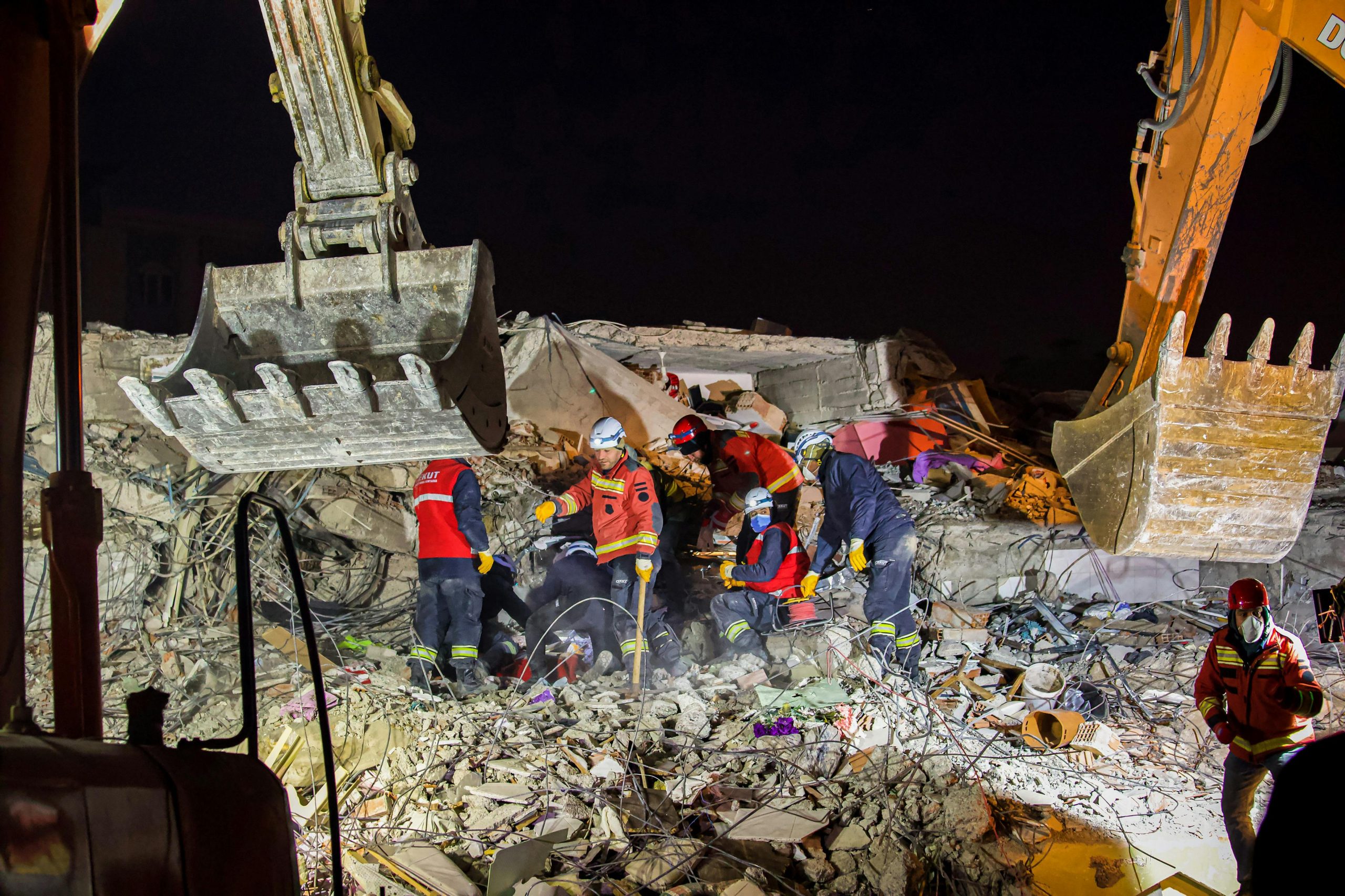
Onesvie said that technical teams have conducted tours in different parts of Greater Santo Domingo, with the aim of identifying suitable land to integrate into a national logistics system
SANTO DOMINGO.- While the recent memory still weighs heavily on public discourse, following the collapse of the roof of the Jet nightclub last year, which left 236 dead, several state institutions are moving forward with the creation of a national protocol for the management of debris in the event of structural collapse, a critical phase in emergency response that until now has lacked an articulated system.
The initiative, coordinated by the National Office of Seismic Evaluation and Vulnerability of Infrastructure and Buildings (Onesvie) together with the United Nations Development Programme (UNDP), marks the beginning of a technical process that seeks to organize what happens after the impact: when the structure has already given way and an equally complex stage begins, the recovery.
Organize what comes next
The project, according to a press release from Onesvie, includes the formation of a specialized committee and the creation of a national protocol for the management, transport, and final disposal of debris. The Emergency Operations Center (COE), the Ministry of Public Works and Communications (MOPC), the Ministry of the Environment, and the Ministry of Housing, Habitat, and Buildings (MIVHED) are also participating in this effort.
Although this is a line of work that the State has been developing for some time, its consolidation aims to fill an operational gap: what to do immediately, in a coordinated and safe manner with the remains of a collapsed structure, especially when it comes to large-scale events, explains the statement from the entity.
Territories under evaluation
According to Onesvie, in recent weeks technical teams have conducted tours in various locations in Greater Santo Domingo, including Santo Domingo North, West and Boca Chica, with the aim of identifying suitable land to integrate a national logistics system that allows handling large volumes of debris in critical scenarios.
He said that these assessments not only take into account the availability of space, but also factors such as accessibility, environmental impact and proximity to potentially affected urban areas, key elements to avoid delays or improvised decisions in the midst of an emergency.
Prevention is also planning
The entity states that beyond the evaluation of spaces, the focus is on anticipating: defining routes, transfer conditions and disposal points that avoid improvisations in high-risk situations.
The institutions involved maintain that they seek to strengthen preventive planning, understanding that debris management has not only operational implications, but also environmental and health implications, especially when it is not handled properly.
The weight of context
The impetus for these actions coincides with a time when the conversation about structural safety and response capacity is once again taking center stage in public opinion, following the collapse at the Jet Set nightclub on April 8 of last year, in which more than 200 people died and around 200 were injured.
Recommended readings: