


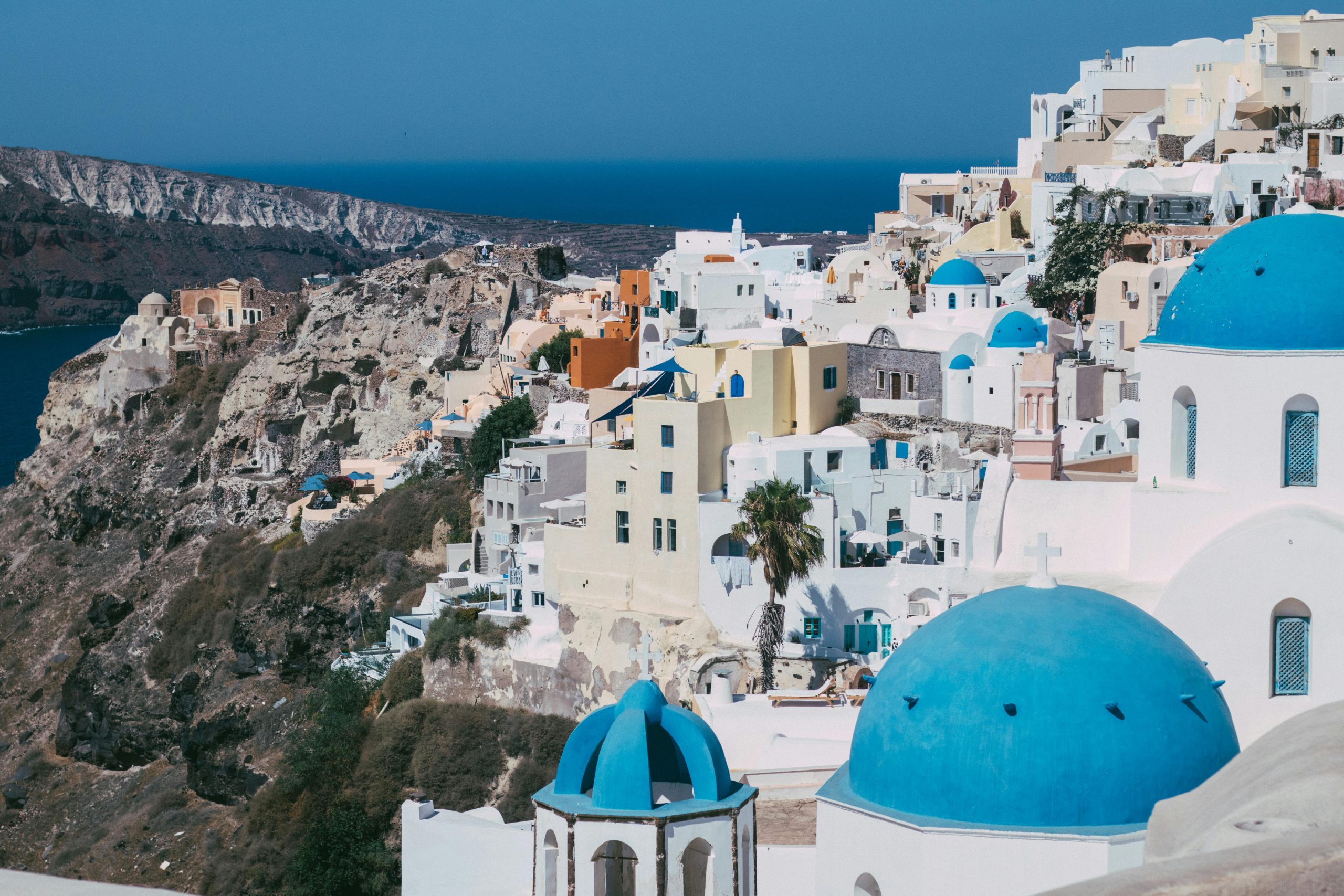
SANTO DOMINGO – At first glance, Santorini looks like something out of a postcard: immaculate white houses, blue doors and domes, and a perfect contrast with the sea. But what many don't know is that these colors weren't chosen for aesthetic reasons, but out of necessity.
According to the newspaper Clarín, many of the houses on Greek islands like Santorini and Mykonos were originally built with dark stone due to a scarcity of wood in the region. The problem was the heat: these stones absorbed sunlight, making the interiors of the houses stifling during the summer.
To solve this problem, the inhabitants began painting the walls white. This color reflects sunlight and helps keep interior spaces cooler. What started as a practical solution ended up defining the visual identity of the entire island.
More than aesthetics: health, economy and politics
The choice of white wasn't solely a matter of climate. According to Ana Buzzalino, Greece once faced a cholera outbreak, and authorities ordered houses to be whitewashed. The lime used had disinfectant properties, thus helping to curb the spread of disease.
And the blue? That wasn't accidental either. This color was the most accessible to the inhabitants, since the fishermen used the leftover paint from painting their boats. It was inexpensive, easy to obtain, and ended up becoming the perfect complement to white.
Furthermore, during a political period in Greece, the use of white and blue was promoted to reinforce national identity, as these are the colors of its flag.
Recommended readings:







