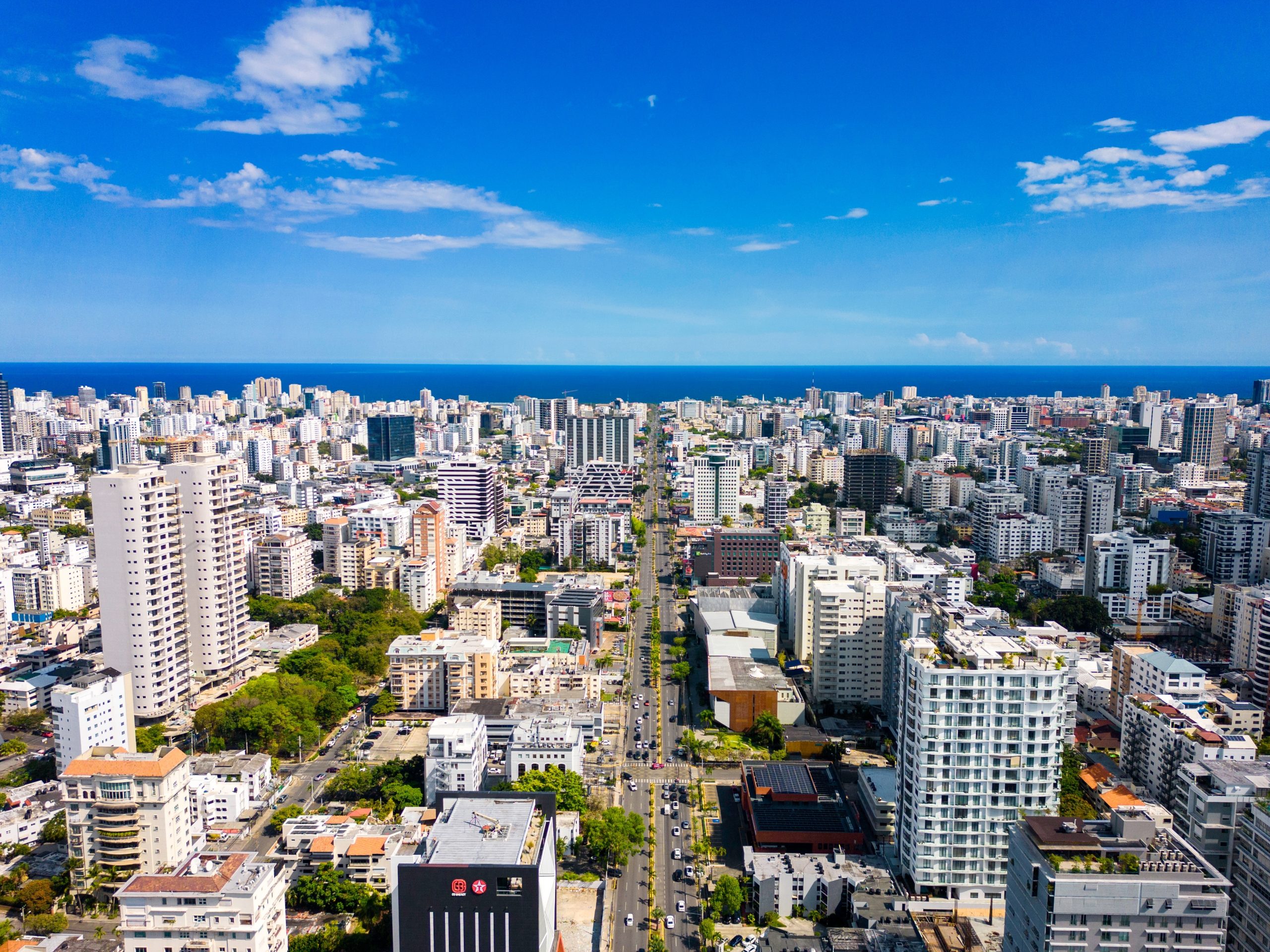
The country is betting on legal reforms, tax incentives and institutional stability as the basis of its competitiveness in the international real estate market.
SANTO DOMINGO. -The Dominican Republic, a country bathed by the waters of the Caribbean Sea and the Atlantic Ocean, possesses many more than its paradisiacal beaches, its cultural richness, and the hospitality of its people.
Those who arrive on Dominican soil, in search of opportunities, find a legal framework that, in recent years, has been strengthened as a guarantee to protect the capital of those seeking to invest in one of the country's most dynamic sectors: el inmobiliario.
According to Biviana Riveiro Disla, executive director of the Dominican Republic's Export and Investment Center (ProDominicana), legal security has become a decisive factor in attracting foreign direct investment.
He pointed out that, in the face of global competition, investors seek jurisdictions with stable legal frameworks and guarantees on their property rights, which has led the country to make legal security a strategic asset.
“The Dominican Republic stands out in the region for its climate of political, economic and institutional stability, which has been key to consolidating its position as one of the main destinations for foreign investment in Latin America and the Caribbean,” Riveiro pointed out.
He stated that the nation has a “clear, predictable and investor-friendly legal framework”, supported by laws and a solid real estate jurisdiction that has been strengthened with legislative reforms and the modernization of title registries.
This position was shared by Guzmán Ariza's partner, Alfredo Guzmán Saladín, who emphasized that the current legal framework offers protection for both domestic and foreign investors.
“Law 108-05 on Real Estate Registration establishes a registration system that ensures that registered rights are protected and have full public faith, that is, that their legality is guaranteed,” he specified.
Guzmán, who is the director of the offices in Bávaro-Punta Cana, Cap Cana, Casa de Campo and La Romana, added that Law 16-95 on Foreign Investment guarantees equal treatment and allows the repatriation of capital without restrictions, reinforced by the Constitution, which recognizes the same rights to foreign individuals and companies.

Alfredo Guzmán Saladín, partner at the law firm Guzmán Ariza. (External source).
He also indicated that tax incentives make the country a competitive destination. The main one is Law 158-01 on the Promotion of Tourism Development (Confotur), which grants significant exemptions to the first purchasers of properties in projects classified under this regime.
Among the benefits, Guzmán detailed that it includes the 3% exemption from the Real Estate Transfer Tax, as well as the exemption from the Real Estate Property Tax (IPI) for 15 years and reductions in taxes on mortgages, dividends and capital gains.
“In the past, there were areas of the country that were perceived as 'Apaches' in terms of legal security. Today, that situation is behind us. We have evolved towards a much more solid and reliable system,” he said.
On another note, the director of ProDominicana, an institution that was a global finalist for the WTPO awards in the category of “Best use of technology in investment services”, with the ProInteligencia platform, spoke about the mechanisms that strengthen international confidence in the country.

Biviana Riveiro Disla, director of Pro Dominicana. (External source).
He reported that the Dominican Republic has signed more than 20 Reciprocal Investment Promotion and Protection Agreements (RIPAs). In addition, he affirmed that the country is a member of organizations such as the International Centre for Settlement of Investment Disputes (ICSID), which strengthens international investor confidence in the event of potential disputes.
Regarding modernization, Riveiro emphasized that digital advances have transformed the perception of trust in the country.
“The strengthening of legal certainty has been evidenced in the digitization of registry services, the promotion of the Single Investment Window and the inter-institutional efforts to improve regulatory compliance, transparency and traceability of processes,” he highlighted.
Accordingly, Guzmán pointed out that the last 10 years have marked a turning point: the processes of title registration and the courts were digitized, electronic procedures and signatures were incorporated, and the structure of the specialized courts was modernized.
“This progress has strengthened investor confidence and has helped the country climb in the world rankings for ease of doing business,” he said.
How to avoid risks
For Guzmán, a lawyer specializing in the tourism and real estate industries, trust must be put into practice. Based on this premise, he advises those wishing to invest to conduct due diligence: reviewing property titles, verifying that the seller is the legitimate owner, and considering trusts that mitigate the risk of broken promises.
“Most importantly, they should be accompanied by a lawyer specializing in real estate matters from the very beginning of the transaction, before signing the preliminary contract or any similar agreement, so that they can be warned in time about the obvious risks and those verified after the initial due diligence has been completed,” he stressed.
He also suggested using certified surveyors to avoid overlapping land claims and ensuring that contracts include clear clauses that protect against breaches.
Biviana Riveiro, known for being an institutional leader, indicated that, in recent years, the real estate sector linked to residential tourism has led the attraction of foreign investment, especially in destinations such as Punta Cana and Samaná.
Along those lines, he noted that another growing segment is urban developments geared towards corporate rentals and real estate investment for fixed or temporary rental purposes.
According to both experts, the combination of a solid legal framework, tax incentives, digitalization, and macroeconomic stability has made the country an increasingly attractive destination for investment, both for Dominicans and foreigners.
Content originally published in the print edition of El Inmobiliario (Issue #12).