José Arias
El Inmobiliario
SANTO DOMINGO - Gascue, the old "garden city", whose name is due to the owner of those lands west of the city of Santo Domingo, Don Francisco Gascue y Olaiz, a Spanish landowner, was in its beginnings a foundational urbanization of Santo Domingo intended for the commercial elite of the city in the second half of the 19th century.
Gascue is inspired by similar Caribbean urban models in Puerto Rico (Miramar) and Cuba (El Vedado), according to the study “History and Transformation of Gascue. The Gascue Paradox” released in 2019 by the dean of the Faculty of Architecture and Urbanism, architect and professor Omar Rancier.
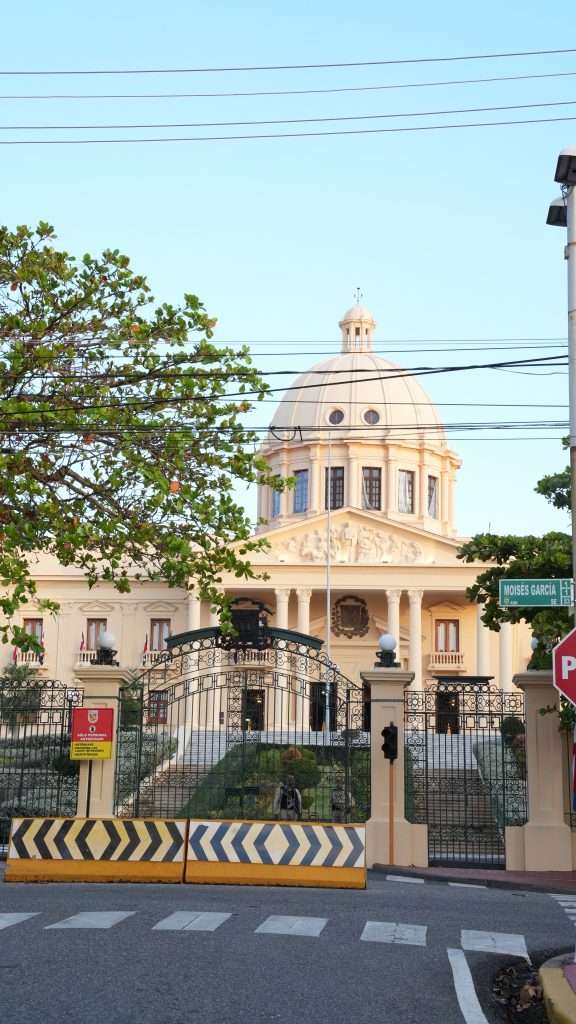
The National Palace, the great work of architect Guido D'Alessandro. Solangel Valdez/El Inmobiliario.
According to the professional's document, the houses in the garden city are inspired by Art Deco, an architectural style based on elegance and glamour.
Initially, their manor houses possessed one thousand square meters (1000m2), a sufficient extension of land that also contained a garden and tree-lined streets and was a model to take for the promulgation of Law 675-44 of Urbanization, Public Ornamentation and Construction, which established in its Article 4 that the minimum width of the street should be 14 meters, with sidewalks of almost 3 meters, according to the book “Gascue, Urban Garden”, by Marcelle Pérez de Brown.
The prestigious architect Gustavo Luis Moré (Cuquito) provides another piece of information: the architectural styles were several and diverse, most of them disappeared due to the “brutal transformation of Gascue over the years.
Despite the passage of time and its transformations, Gascue remains a symbol of elegance and exclusivity, with its wide, tree-lined streets and houses with gardens. However, after the assassination of dictator Rafael Leónidas Trujillo, this once privileged neighborhood began to change drastically.
From isolated, single-family homes, romantic and bucolic because they had large patios and gardens planted with fruit trees and a variety of ornamental plants, it became, in its three kilometers of extension, high-rise buildings and state infrastructures (Central Bank and the series of institutions on Mexico and Pedro Henríquez Ureña avenues, not counting the massage centers, grocery stores and large grocery stores).
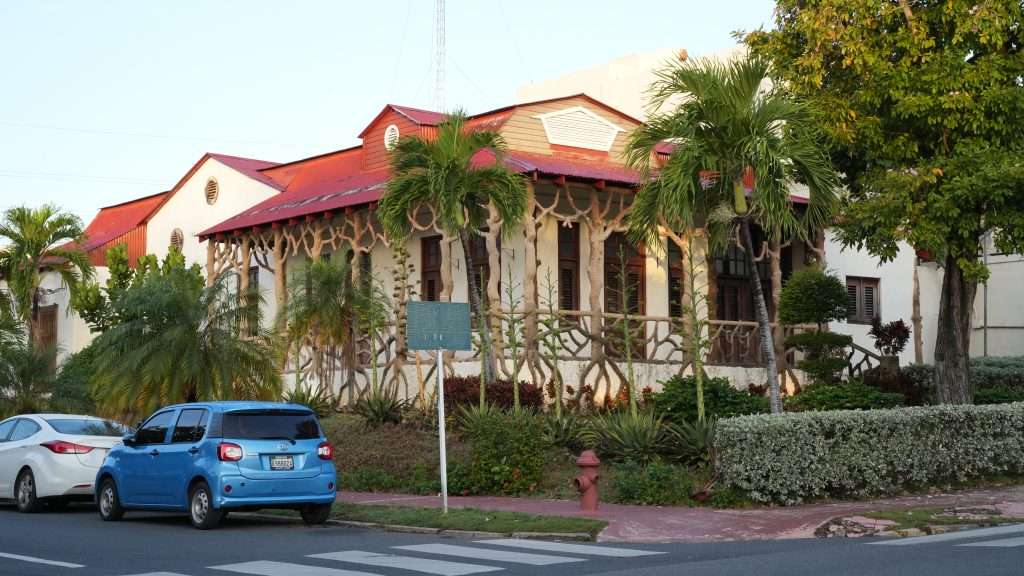
The House of Roots, built by engineer Zoilo Hermógenes García Peña. Solangel Valdez/El Inmobiliario.
Rancier comments that the transition from the autocratic regime to the democracy we know today not only altered the aesthetics of the neighborhood, but also increased housing density, bringing with it traffic problems and slum conditions.
Gascue survivor
Among the surviving houses are the Peña-Defilló residence, now home to the Ibero-American University (Unibe), built by architect Amable Frómeta and engineer Virgilio Pérez Bernal. Also included are the National Palace, the great masterpiece of Italian architect Guido D'Alessandro; the Munné residence (behind the Central Bank), designed by architect Margarita Taulé; and Villa Hena (La Casa de las Raíces), built by engineer Zoilo Hermógenes García Peña.