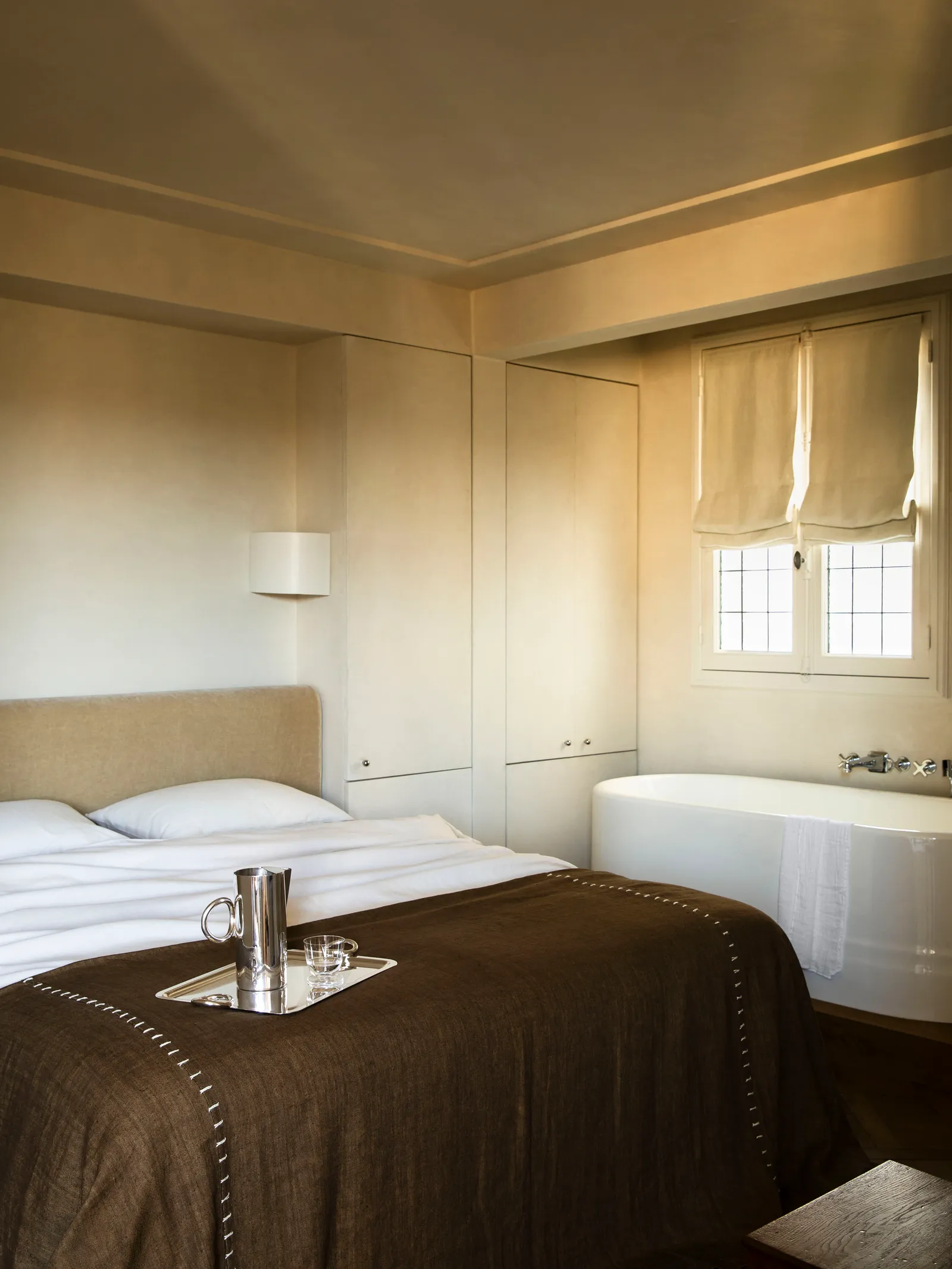
Sand, terracotta, and soft green tones replace absolute white.
Interior design begins 2026 with proposals that transform the way we inhabit spaces. Bedrooms, traditionally associated only with rest, are becoming settings for well-being and sensory experiences. The incorporation of bathtubs within the bedroom and the use of warm palettes like sand, terracotta, and soft greens are the most striking trends of the year, capable of redefining the aesthetics and functionality of the home.
These colors are replacing the stark white that dominated for years, bringing serenity, depth, and personality to spaces. At the same time, the integrated bathtub is proving to be a versatile feature: in small homes, it allows for better use of space, while in larger projects, it becomes a centerpiece that adds drama to the room.
AD Magazine highlights that bathtubs in the bedroom are no longer an exclusive luxury of hotels, but have become a real alternative in contemporary homes. The publication emphasizes that this feature introduces an emotional and decorative element that enhances the feeling of well-being.
The bathtub as the focal point of the bedroom
The trade magazine explains that the first key to this trend is functionality. In small spaces, the integrated bathtub is presented as a practical solution to overly compact bathrooms. In larger rooms, it transforms into a theatrical element that adds drama and style.
The medium also emphasizes intimacy as a central theme. Bathing in the bedroom amplifies the feeling of refuge and transforms the bathing ritual into a contemplative moment, enhanced by natural light and proximity to the most personal space in the house.
The publication emphasizes that aesthetics are another key aspect. The bathtub is conceived as a piece of furniture with its own identity. Classic, minimalist, or contemporary designs are integrated as central elements of the decor, adding personality and character.
AD Magazine also points out that the bathtub has a historical background. In the 19th century, its use was reserved for the wealthy classes, and later the Art Deco movement transformed it into a symbol of luxury and style. Today, contemporary interior design is reclaiming that aesthetic value and adapting it to new lifestyles.
Other trends
Beyond bathtubs, the magazine identifies other trends that will define the year. One of them is the prominence of natural materials, such as wood, stone, and handcrafted ceramics, which bring authenticity and warmth to spaces.
Layered lighting is equally essential. The specialist publication explains that ambient, task, and decorative lighting are combined to create versatile and inviting atmospheres, adapted to different times of day.
Discreet technology is seamlessly integrated into the design. The publication highlights that homes are incorporating smart systems that improve energy efficiency and comfort without altering the aesthetics of the space.
Finally, emotional personalization is emerging as a cross-cutting trend. AD Magazine concludes that each project seeks to evoke feelings of calm, inspiration, or joy, incorporating handcrafted pieces and objects with a history that reinforce the home's cultural identity.
Ultimately, interior design in 2026 favors spaces that are lived in and felt. Bathtubs in the bedroom and warm color palettes are firmly established as key elements, while natural materials, versatile lighting, and discreet technology complete a landscape where functionality and emotion meet.