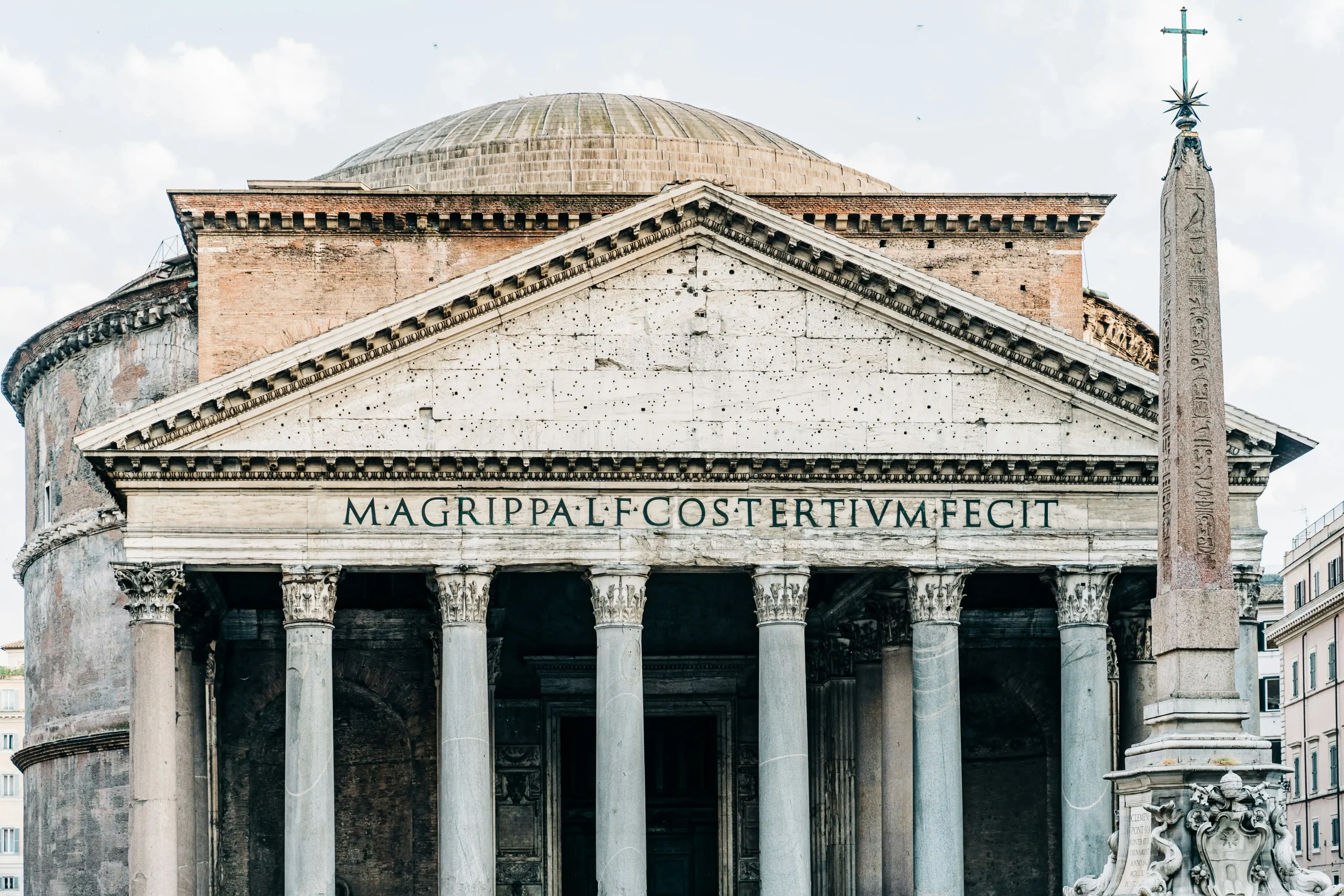
SANTO DOMINGO.- Although today concrete, also known as cement, is the most widely used material in modern construction, an ancient technique developed more than 2,000 years ago continues to surprise scientists and architects: Roman concrete had the ability to self-repair.
Structures like the Pantheon in Rome or ancient aqueducts have withstood centuries of wear and tear, earthquakes, and even constant contact with water. Meanwhile, many modern buildings show signs of failure within a few decades. This difference has piqued the curiosity of researchers worldwide for years.
According to an analysis published by the specialized platform ArchDaily, a group of scientists led by the Massachusetts Institute of Technology discovered that the key lies in small fragments present in the mixture, known as “lime clasts.” Although long thought to be imperfections, they actually serve an essential function.
When concrete cracks and comes into contact with water, these fragments trigger a chemical reaction that produces calcium carbonate, a material that automatically fills the cracks. In other words, the material has an internal mechanism that allows it to "heal" itself.
According to a report by Infobae, this ability is also due to a technique known as hot mixing, used by the Romans, in which quicklime was combined with volcanic ash and other materials before adding water. This process not only made the material more resistant but also activated its self-healing properties.
For their part, experts quoted in The Conversation explain that, although modern concrete can also exhibit some self-healing capacity, this process is much slower and more limited. Therefore, research is currently underway to replicate or improve Roman techniques in order to develop more durable materials.
The interest is not only historical. Researchers believe this type of technology could revolutionize current construction, as it would allow for the creation of more resilient and sustainable infrastructure, reducing the need for constant repairs.
Thus, an ancient technique not only remains valid, but could be key to the future of engineering and architecture.
Recommended readings: