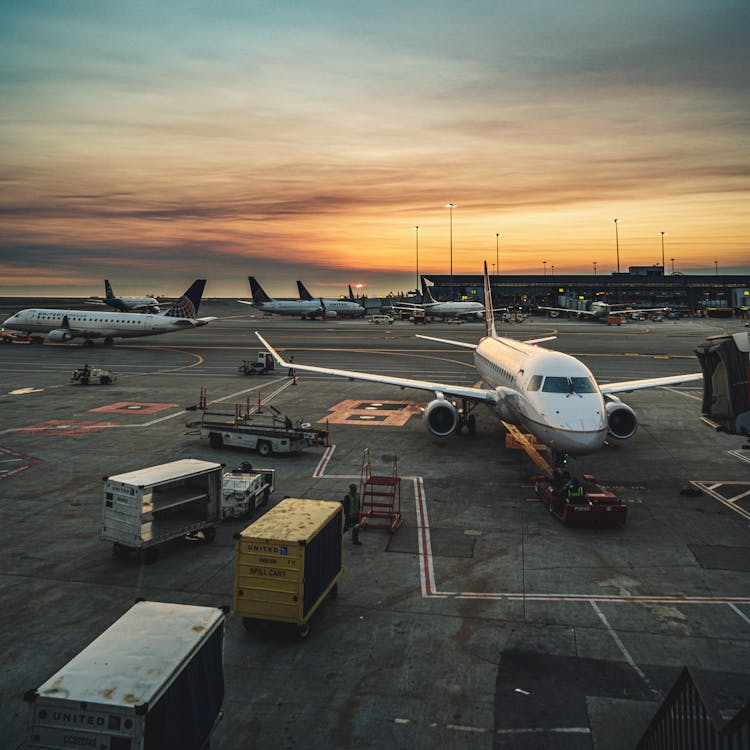
This is not an airspace closure or a ban, but an operational warning that guides airlines' decisions in the face of specific risks.
SANTO DOMINGO. – Air traffic restrictions imposed in the Caribbean following the escalation of tensions in Venezuela have generated a domino effect on regional aviation, with cancellations, diversions, and flight reschedulings already being felt in several countries in the area, including the Dominican Republic.
Although the country has not ordered the closure of national airspace and the terminals of Punta Cana, Las Américas and Santiago continue to operate normally, the regional situation has begun to indirectly impact air connectivity.
Airlines flying to and from the Dominican Republic, many of them American, are reconfiguring routes to avoid areas considered high-risk, which may result in delays, itinerary changes, and operational adjustments, especially on connecting flights to other destinations in the Caribbean or South America.
During the early hours of Saturday, US aviation authorities issued safety notices, known as NOTAMs, prohibiting or advising US airlines against operating over Venezuelan airspace and recommending they avoid nearby corridors, due to instability caused by military operations in that country.
The measure, of a preventive nature, has forced the modification of usual routes in the Caribbean and northern South America.
What is a NOTAM?
A NOTAM is an air safety notice issued by civil aviation authorities to alert pilots and airlines about temporary conditions that may affect flights. It is not a formal airspace closure or a sovereign prohibition, but rather an operational warning of specific risks, such as military activity or instability in a particular area.
In this case, the U.S. Federal Aviation Administration (FAA) issued NOTAMs prohibiting or discouraging airlines under its jurisdiction from flying over Venezuela. While these measures do not legally close Venezuelan airspace, they are mandatory for U.S. carriers, many of which handle a significant portion of air traffic in the Caribbean.
The effect is regional. Airlines must reroute flights, take longer journeys, and reschedule operations, resulting in delays and cancellations. For this reason, a technical decision made outside the Dominican Republic ends up impacting flights departing from or arriving in the country, even though its airports and airspace remain open.
Increased operational pressure
Aviation industry specialists have explained to international agencies and media that when strategic airspace is restricted, aircraft must fly longer routes, consume more fuel, and reorganize crew shifts.
This type of adjustment, although common in crisis scenarios, increases the likelihood of delays and cancellations, especially for airlines with a high density of operations in the region.
Puerto Rico and other islands in the eastern Caribbean have already reported temporary flight suspensions, which also affects indirect connections from the Dominican Republic to the United States and other destinations.
The Dominican Republic faces a relevant precedent in this situation. Direct commercial flights between the Dominican Republic and Venezuela have been suspended since July 31, 2024, for diplomatic and regulatory reasons.
President Luis Abinader has reiterated that the suspension remains unchanged, a stance that, in the current context, limits any direct impact, although it does not avoid the collateral consequences of the regional crisis.
Among the indirect effects that are already emerging are:
- Delays and rescheduling of international flights, especially those with layovers.
- Increased operational congestion at Caribbean airports used as alternate routes.
- Increased costs for airlines, with possible effects on punctuality and flight availability.
- Risk of occasional cancellations, depending on how the security situation evolves.
In the middle of peak tourist season, any prolonged disruption to air connectivity poses a challenge for a country whose economy depends heavily on the constant flow of visitors.
Given this situation, airport authorities and operators recommend that passengers check their flight status directly with the airline, arrive at the terminals earlier than usual, review change or refund policies, and stay tuned to official announcements, as decisions may change from one hour to the next.
The air travel situation in the Caribbean continues to evolve and will depend on the duration and scope of the crisis in Venezuela, as well as the decisions made by international aviation organizations. For now, the Dominican Republic is keeping its airports open, but is cautiously monitoring a regional crisis that underscores how interconnected and vulnerable the Caribbean air system is to geopolitical conflicts.