


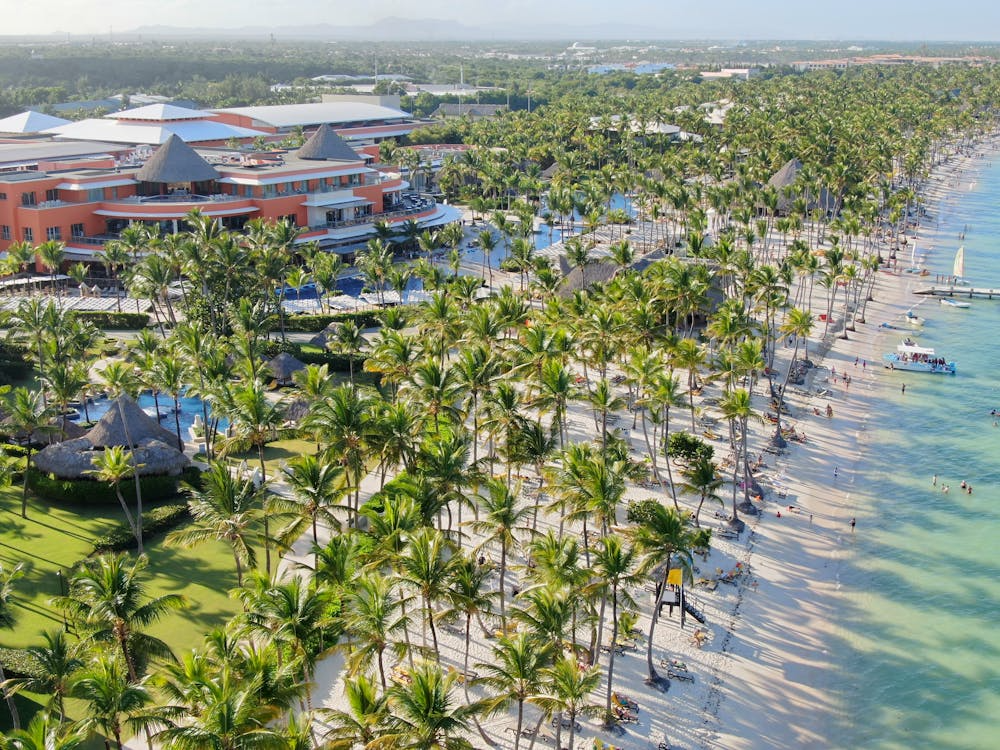
More than US$4 billion in projects under development reflect a fundamental shift in the investment model: local developers, global chains, and international capital are reshaping the territory, expanding new hubs, and strengthening the country as a very active tourist real estate market in the Caribbean
SANTO DOMINGO. – Behind the more than US$4 billion in tourism projects under development, announced by Asonahores at DATE 2026, there is not a homogeneous block of investment, but a network of local and international business groups that are redefining, plot by plot, the country's real estate map.
The data, presented at the forum organized by Asonahores, functions as an aggregate figure that, when broken down, reveals a more complex structure: the Dominican tourism expansion is being led by alliances between developers, global hotel chains and financial capital with long-term horizons.
Who builds, what, and where
The investment cycle follows a model where local developers, international operators and foreign capital converge, in line with the evolution of real estate tourism noted by El Inmobiliario (January 13, 2026), which highlights the growing weight of residential developments linked to tourism within the sector's investment flow.
At the base are the groups that control the land and structure territorial development.
In the East, Grupo Puntacana maintains its leadership with a model that integrates infrastructure, hotels, and residential development into a single ecosystem. Cap Cana , one of the largest real estate complexes in the Caribbean, operates under a similar logic, structured as a comprehensive developer of the territory.
These are joined by hotel-based groups that have evolved towards mixed-use models. Grupo Piñero maintains a strong presence in Bávaro with developments that combine hotels and real estate, while Grupo Martinón is expanding its model by integrating hotel expansion with land development.
Developments that transcend
Noval Properties is another developer in the east, with luxury projects in destinations such as Cap Cana, Cana Bay, Bávaro, and Las Terrenas, and is one of the pioneering groups in the development of that area. Other notable companies include Coral Golf Resort, Grupo Morada, Nivel Broker, Zoemar Group, Grupo Bricket, Civilmek, and Grupo Noriega, among other business groups.
The capital of La Otra Banda
Alongside these established players, international developers of growing importance are emerging, such as Inversiones e Inmobiliaria Huacachina, a Peruvian firm that has consolidated operations in Punta Cana, specifically in La Otra Banda.
The company invests more than US$50 million in projects such as Alta Vista Village, a development that exceeds 2 million square meters and includes thousands of units between villas and lots, executed in stages.
Also in that Municipal District is the developer Cruise On Land, with a macro-project that projects more than 4,000 homes, a theme park with more than 100 amenities and who obtained the license for the construction of the World Trade Center Punta Cana, with investments that so far exceed US$700 million.
Along the same lines is Larimar City & Resort, a project that plans to build more than 20,000 rooms in a comprehensive city that will include a variety of spaces.
This type of initiative, geared towards extensive urbanizations rather than hotels, reflects a parallel dynamic within the boom: the entry of foreign capital into real estate segments indirectly linked to tourism.
Operators diversify
The second group comprises international operators, who have expanded their role to include real estate development. This model, in which hotel chains also participate in real estate developments, has been identified as one of the sector's main transformations by market analyses published in El Inmobiliario.
Meliá Hotels International is promoting projects with branded residences, whileHyatt Hotels Corporation, Marriott International, Hilton Hotels & Resorts and Club Med are participating in new developments, especially in emerging hubs like Miches.
Behind these visible actors operates a third, less exposed but crucial level: financial capital. International funds, family offices, and co-investment vehicles participate in land acquisition, financing, and project structuring.
The Geography of Capital
This network of actors is distributed across different poles, in line with the territorial diversification strategy promoted by the Ministry of Tourism, which promotes destinations such as Miches, Pedernales and Punta Bergantín within its policy of expanding the sector.
Punta Cana and Bávaro function as a consolidated core; Miches advances as a planned development; Pedernales positions itself as a state-led expansion; and Punta Bergantín emerges as a mixed project in the north.
The pattern that defines this cycle is not dominated by traditional construction companies, but by integrated structures where the developer controls large tracts of land, international chains provide demand and positioning, and global capital provides liquidity.
Together, they form a tourism-real estate investment model that explains the scale and speed of the current expansion.
Economic logic and the blind spot
The macroeconomic context reinforces this dynamic. The Central Bank has indicated that tourism remains one of the country's main generators of foreign exchange and a pillar of external stability.
Meanwhile, official data show sustained growth in visitor arrivals, with year-on-year increases of around 8.7% in non-resident passengers in 2026 and projecting growth of around 4% in 2027, while tourism remains the main generator of foreign exchange
For investors, this translates into predictable cash flow, high occupancy, and competitive returns compared to other markets.
This dynamism is part of a strong capital influx. Tourism Minister David Collado reported in January during FITUR 2026 that the country has attracted investment intentions of over US$13 billion for tourism projects in the coming years.
However, the pace of expansion is also generating tensions. Business leaders in the sector have warned about uncontrolled real estate development, pressure on basic infrastructure, and environmental risks in coastal areas.
Business leaders have acknowledged that the challenge is no longer growth, but growth with better planning, a sign that the current model could face limitations if it is not regulated more precisely.
A silent change
The US$4 billion figure reflects a structural transformation. The sector has moved from a model focused on hotel operations to an ecosystem where developers, global operators, and financial capital converge.
In this process, the investment focus shifts towards territorial control and development. Areas such as Miches, Pedernales, Punta Cana, and Bergantín are home to a significant portion of the projects underway, solidifying their position as key drivers of Dominican tourism expansion.
One of the most relevant changes in this cycle is the entry of institutional capital, through investment funds and international vehicles that are actively participating in shaping the country's new real estate cycle.
In a context where foreign direct investment in tourism exceeds US$4 billion annually, according to balance of payments statistics from the Central Bank.
Recommended readings:







