


Restoring Water and Light is about reconnecting with Dominican cultural memory, giving back to the people a space that was once theirs and that could once again become a stage for inclusion, art, and reconciliation.
SANTO DOMINGO. –Daniela and her grandmother Nelly were strolling along the Malecón, near the Heroes' Center, and, as they turned streets and straightened corners, they came face to face with a colossal structure, gray, dusty on the outside and filled with trees on the inside, as if hope had been sown in that place that was once the epicenter of art and popular culture in Santo Domingo.
– And what's going on here, Grandma? – Daniela asked, her eyes shining with curiosity.
Nelly stopped, as if time or memory had pulled hard on her arm.
– That, my love, is theAgua y Luz Theater. Although it may seem like a sleeping giant now, part of our history was written there. I danced there, I sang there, I cried there. I saw Celia Cruz in her flamenco dress, Raphael with his thunderous voice, and Johnny Ventura making the floor tremble with his merengue, and the “penguin dance.” Libertad Lamarque, José Manuel Calderón, Wilfrido Vargas, Fefita la Grande, Fernando Villalona, Los Hermanos Rosario, Charytín… all performed there! It was always packed!
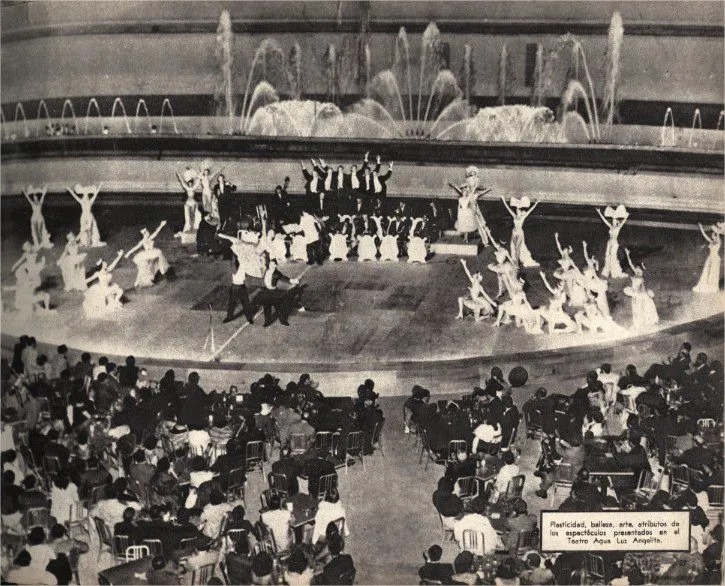
Great artists shone at the Agua y Luz Theater. (Photo: General Archive of the Nation).
– Really? And what was it like?
"It was magical. The water flowed from the fountains as if dancing to the music, and the lights changed color. It was designed by a Catalan architect, Carles Buïgas, the same one who designed the Magic Fountain of Montjuïc in Barcelona. I remember it was inaugurated in 1955, when Trujillo held the Peace Fair. He wanted to show that we here, too, knew how to dazzle. And boy, did he succeed! They said it could hold more than 50,000 people, although I always thought that was an exaggeration. But I'll tell you one thing: there wasn't a single night there without people.".
– And what was it like inside, Grandma? – asked Daniela, as she looked at the trees growing where there had once been a dance floor.
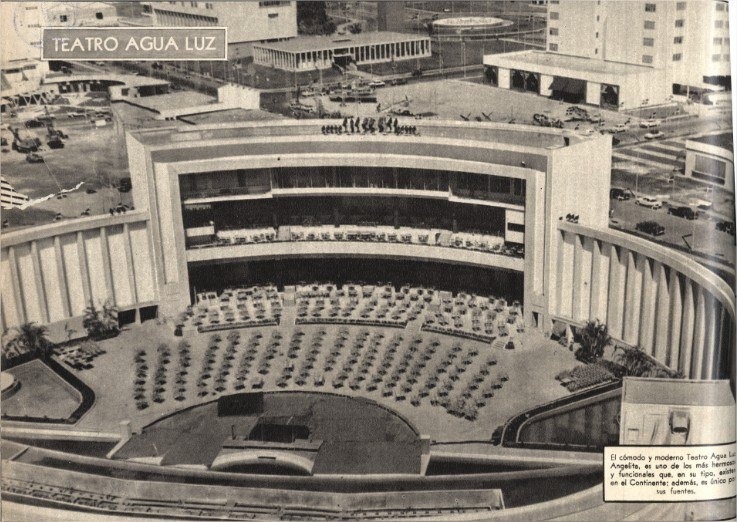
The work was inaugurated in 1955. (Photo: General Archive of the Nation).
"Oh, my love... it was like being in another world. There was no roof, it was all open. The stands rose in a semicircle, as if embracing the arena. And in the center, the water danced. There were canals surrounding the stage, and the fountains jumped to the rhythm of the music. The lights changed color, and people applauded as if they were seeing magic.".
"Grandma, did you know that this place looks like the Colosseum in Rome?" said Daniela, pointing at the structure from the sidewalk of Heroes de Luperón Street.
Nelly smiled tenderly.
– Of course, my love. I always said it was our Caribbean coliseum. An amphitheater right between the sea and the heart of the city. Look, there's the Congress building, the Attorney General's office, and up there you could see the old Hotel El Embajador. This was the center of everything. People came from Villa Mella, San Cristóbal, from the Cibao region, just to see a show. And it wasn't just any show; the biggest names of the time performed here.
Daniela looked inward and saw nature trying to reclaim what humans had abandoned. She closed her eyes, trying to imagine her grandmother in a beautiful taffeta dress with a pleated skirt, dancing to a song by Celia Cruz.
– And why is it like that?
“Oh, my child… that’s what hurts. It was declared a national heritage site in 1988, but then they let it fall into disrepair. In 2004, they started rebuilding it, but in 2007 everything stopped. Then came the mess: a company called Consultora Astur, linked to a son of Miguel Vargas Maldonado, leased it for 25 years. The Directorate of Public Procurement said that was illegal, and the Superior Administrative Court annulled the contract. But in 2024, the Supreme Court overturned that decision and sent the case back to the lower court. Meanwhile, the theater is still here… without water, without electricity, without music.”.
– And nobody has fixed it? I looked at satellite images and saw all those bushes, I couldn't believe it, and now I believe it even less!
"Just promises and plans, my love. But it seems good intentions aren't enough. In April 2024, Diario Libre published photos of the interior with leaks, green stagnant water, and broken structures. A theater that was once a symbol of culture is now completely abandoned. And it cost more than two million pesos back in the day, a fortune. The thing is, time waits for no one, and neither do governments.".
It's a sad sight now, my child. The track is overgrown with trees, as if nature were trying to cover up the neglect. The fountains are overgrown with weeds, the bleachers are broken, the concrete is cracked. What was once light is now shadow.
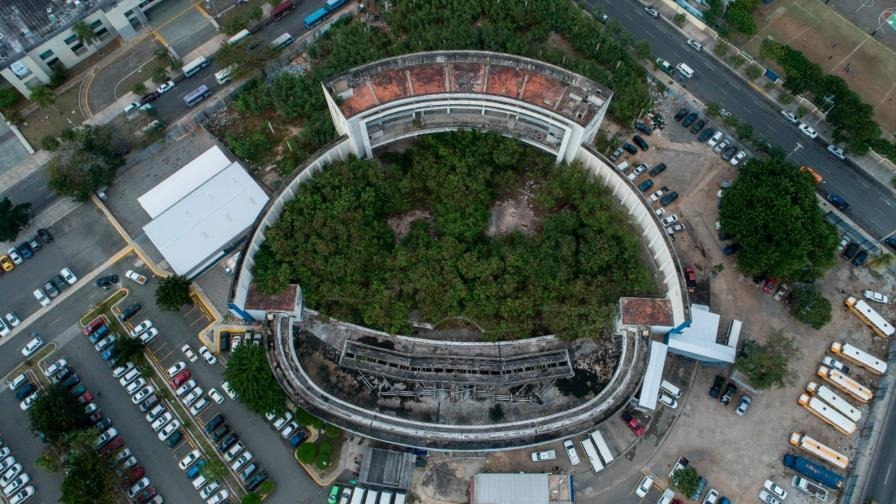
In 2024, Diario Libre published images of the abandonment.
"And do you think they'll reopen it? They say the Mayor's office is going to rebuild it, Grandma. With the Santo Domingo del Mar project, and they're talking about restoring it to its former glory.".
– I would like to believe so. The government recognized its value as “one of the most prestigious venues for national art and entertainment.” That theater isn't just concrete. It's memory. It's where the people encountered art. Where the poor and the rich sat together to watch Fefita, Wilfrido, Charytín. Where politics mingled with poetry. If they restore it, we won't just recover a space: we'll recover a part of who we are.
Daniela stared in silence. The sun was setting behind the theater, and for a moment, the shadows seemed to play with the structure, whose style combines elements of monumental modernism with Mediterranean influences.
He thought about what he had read: “The government seeks to rescue the space as a modern cultural heritage site, restoring its function as a public amphitheater and revitalizing its surroundings.” But, although that was in 2024, to date no plans or official timelines have been published. Nothing more has been said.
– Then I'm going to write about him, Grandma. So that they don't forget him.
– That's right, my dear. Because the mess is still there, and so is the reconstruction proposal, driven by cultural actors and local authorities who defend its heritage value and its potential as a space for citizen encounters.
I hope, my love, that they rescue it. Because that theater doesn't deserve to be forgotten. It deserves to shine again. Let the water dance once more and the light sing. Write it down, so that it's known that here, in this corner of the boardwalk, there was life.
– Grandma, I understand that the abandonment of the Agua y Luz Theatre is due to a combination of factors:
• Institutional negligence: no government has assumed its restoration as a cultural priority.
• Legal conflicts: the concession to Astur has paralyzed any public or private intervention.
• Uncomfortable symbol: some sectors reject its restoration because they associate it with the Trujillo era.
Restoring it is not just about repairing a structure: it's about reconnecting with Dominican cultural memory. It's about returning to the people a space that was once theirs, and that could once again become a stage for inclusion, art, and reconciliation. The restoration proposal remains active, as does the legal dispute, while cultural sectors and citizens continue to demand its restoration.
| Timeline of the Water and Light Theatre |
| 1955 Inauguration during the Free World Peace and Fraternity Fair. Designed by Catalan architect Carles Buïgas, creator of the Magic Fountain of Montjuïc. Estimated capacity: over 50,000 people. |
| 1988 Declared a national heritage site for its cultural and architectural value. |
| 2004 Start of reconstruction works under state management. |
| 2007 Work stoppage due to lack of institutional continuity. |
| 2020 Concession for 25 years to the company Consultora Astur, linked to a son of Miguel Vargas Maldonado. |
| 2021–2023 Legal disputes: the General Directorate of Public Procurement (DGCP) declares the contract illegal; the Superior Administrative Court (TSA) annuls it. |
| April 2024 The Supreme Court of Justice revokes the annulment and returns the case to the TSA for further review. |
| April 2024 Diario Libre publishes images of the abandonment: leaks, weeds, deteriorated structures. |
| 2024 The National District Mayor's Office announced its intention to include the theater in a cultural and urban reconstruction project. The plan seeks to rescue the space as a modern heritage site and restore its function as a public amphitheater. And that's where the announcement ended. |
| 2025 The theater remains in litigation, with no clarity on its future or active parties responsible for its recovery. |







