


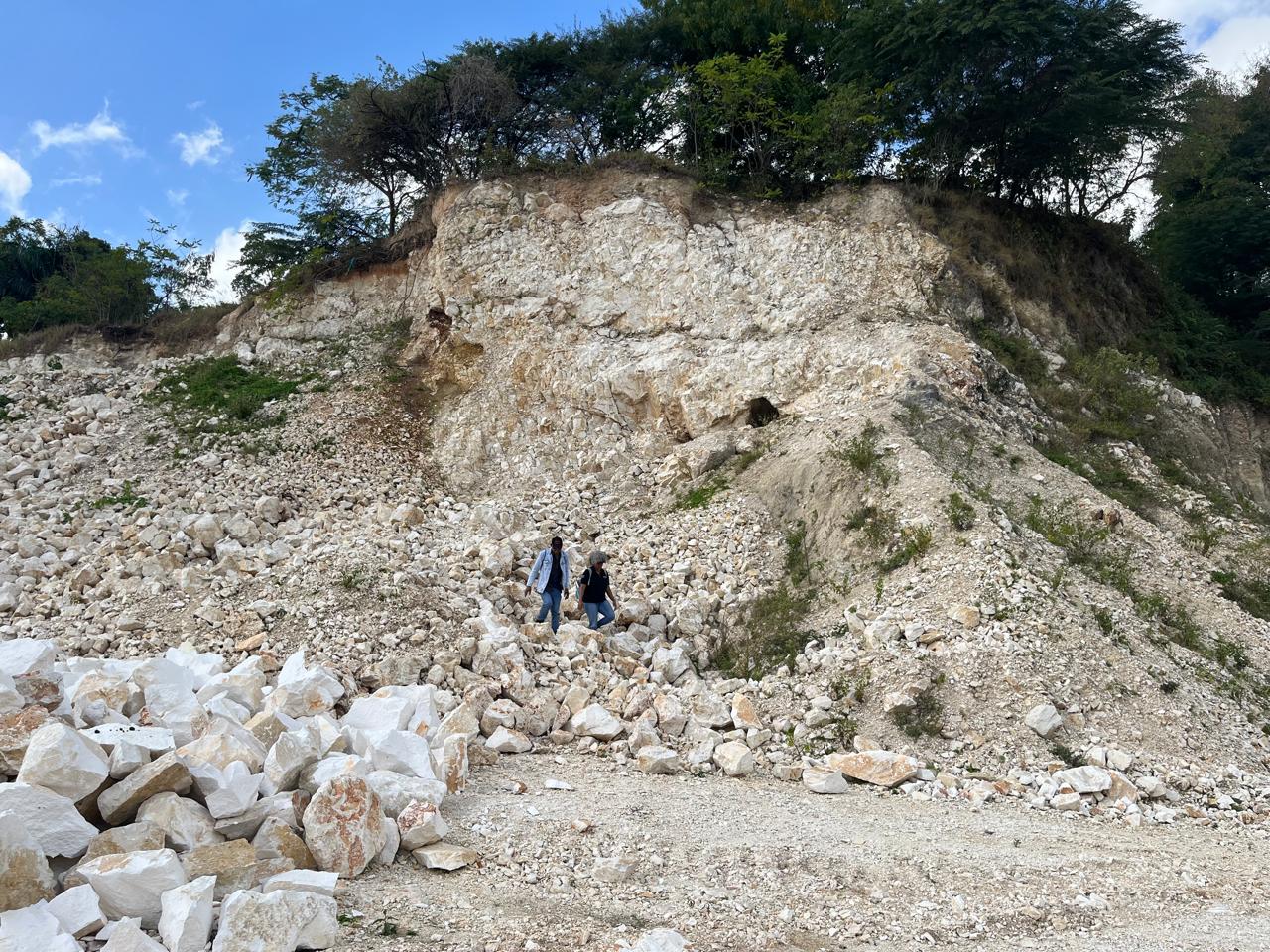
NAJAYO ARRIBA, SAN CRISTÓBAL. – The community of Najayo Arriba, where the Pommier Caves are located, rejects the entry of the mining company Dominicana de Cales, SA (Docalsa), based on the negative history left by its operation in the Borbón section, also located in the province of San Cristóbal, according to the San Cristóbal Platform, which accuses the company of causing environmental destruction, diseases and social conflicts.
In a press release, the organization reported that “in a resounding display of organization and environmental awareness,” the community of Najayo Arriba thwarted Docalsa’s attempt this week to install “a so-called Development Council that would have served as a platform to justify its entry into the mountainous area where the emblematic Pommier Caves are located.”
The document states that the suspended meeting, organized by representatives of the mining company with the apparent backing of some state figures, was disrupted by hundreds of local residents who stormed the venue after discovering that it was, according to reports, a staged event involving people "bought off" to feign community support.
This strategy, according to local organizations, is not new. "In different parts of the country, extractive companies have managed to establish themselves by forming 'representative' community groups, offering them individual benefits in exchange for publicly supporting mining projects. These groups are then presented as legitimate spokespeople for the community before state institutions and the media."
Plataforma San Cristóbal is one of the main organizations monitoring the environmental situation in the province, and one of its sources stated that "Mining companies seek social legitimacy by building artificial consensus. They bring in representatives from the Ministry of Energy and Mines to give the impression of legality and commitment, but in the end, the damage is irreversible, and the true feelings of the community are marginalized."
The community of Najayo Arriba states in its press release that it needs no further proof to reject Docalsa than what happened in the Borbón section, also in San Cristóbal, where the mining company has left what they describe as a “desolate landscape”: destruction of caves, deterioration of water sources, constant dust, respiratory illnesses, and social fragmentation among neighbors.
“We know what happened in Borbón, and we are not going to allow that to happen here,” the press release quotes a resident as saying during the protest, which was one of many aimed at halting the company’s attempts to replicate its operating model.
A natural and archaeological treasure under threat
The Pommier Caves, located in the same area where Docalsa sought to establish itself, are considered one of the most important natural and cultural heritage sites in the insular Caribbean. This cave complex holds archaeological evidence and is home to protected species, leading researchers and environmentalists to call it the Prehistoric Capital of the Caribbean.
“The development of a sustainable ecotourism model in San Cristóbal is incompatible with any form of destructive mining. We either preserve our rivers, mountains, and caves, or we allow them to be erased by extractive greed,” stated a spokesperson for the local environmental organization.
What happened in Najayo Arriba is not an isolated incident, says Plataforma San Cristóbal, which cites that in other parts of the province, whether in limestone extraction projects, river dredging, or gold prospecting, public rejection of mining is growing. The organization asserts that “The voices that previously called for stricter regulations are now clamoring for the definitive departure of these companies.”
According to environmentalists, “San Cristóbal cannot develop while any mining activity undermines its main natural and cultural attributes: its rivers, forests, mountains, caves, and archaeological sites. The future is not for sale here. We don't want crumbs; we want living mountains,” states the document from the leading social and environmental organization in the province.




