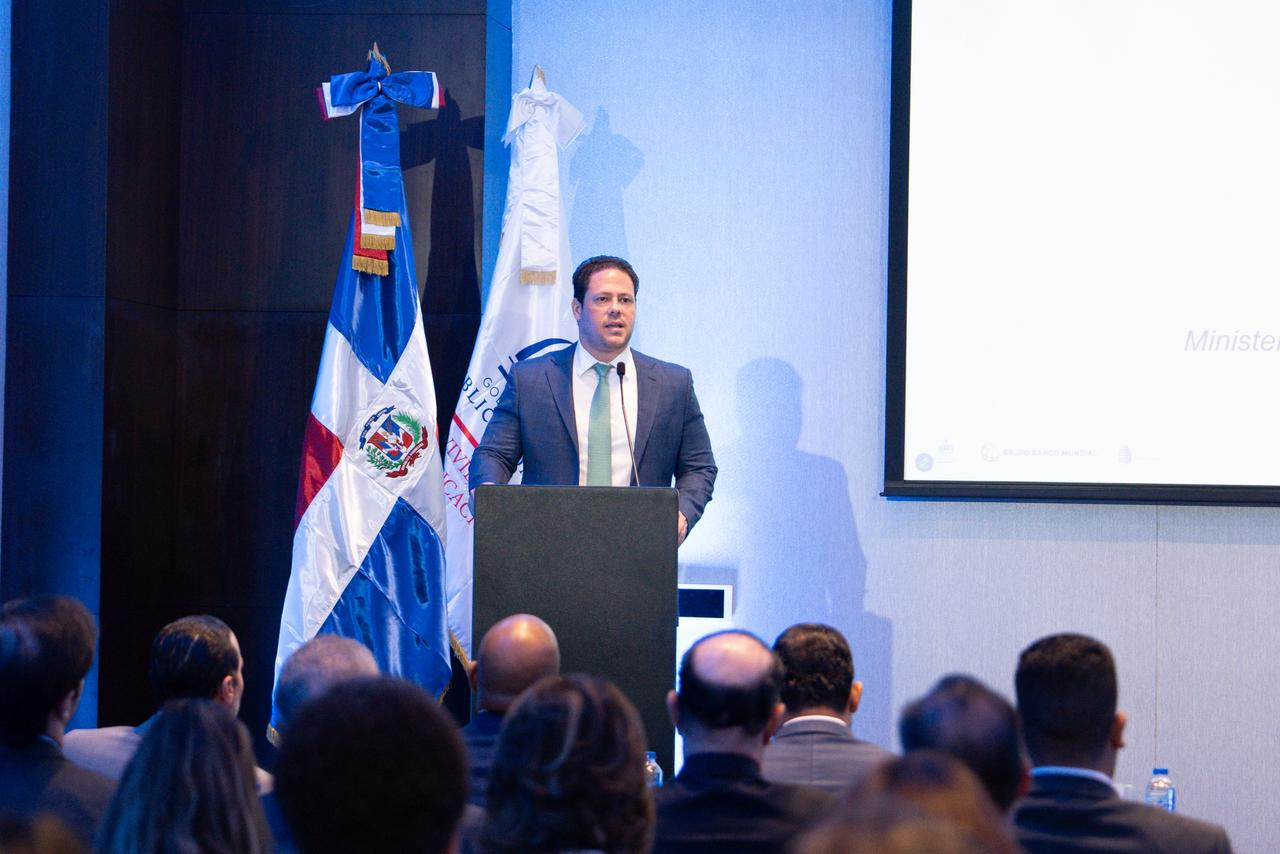
SANTO DOMINGO – The Ministry of Housing, Habitat and Buildings (MIVHED) and the World Bank held a regional seminar in Santo Domingo to analyze the progress and challenges of housing policies in the Dominican Republic and Latin America, with a view to strengthening the financial and social sustainability of the sector.
Minister Carlos Bonilla highlighted that the country has shown significant progress in social housing through the Mi Vivienda and Familia Feliz programs, initiatives that have allowed thousands of families to access a decent and safe roof over their heads.
“From the Government we reaffirm our commitment to continue innovating and collaborating with all sectors to consolidate sustainable, equitable and environmentally responsible housing policies,” said Bonilla.
Bonilla explained that the development of decent housing not only improves the quality of life for families, but also boosts the economy and strengthens the social fabric of communities.
The seminar covered topics such as sustainable financing, urban planning, construction innovation, and resilience to the effects of climate change.
Federica Ranghieri, World Bank practice manager, stressed that the region faces the challenge of building nearly 100,000 homes per day until 2030 to meet housing demand and mitigate environmental impacts.
“Climate change is forcing us to rethink how we build. We must commit to innovative construction models, sustainable materials, and financial mechanisms that expand access to formal housing,” Ranghieri stated.
The World Bank representative praised the Dominican government's efforts in creating inclusive public policies and reiterated the organization's support for national housing and urban development programs.
Ranghieri added that the institution will continue to support projects that promote energy efficiency, responsible land management, and the reduction of risks from natural disasters.
Private sector supports dialogue on sustainable housing
Eliseo Cristopher, president of the Dominican Confederation of Micro, Small and Medium Construction Companies (Copymecon), considered that the coordination between the State, international organizations and MSMEs is key to strengthening the sector.
“This type of inter-institutional dialogue guarantees the continuity of housing programs, beyond changes in government, and allows micro, small, and medium-sized enterprises (MSMEs) to actively participate in the development of low-cost housing,” Cristopher stated.
Cristopher emphasized that small and medium-sized construction companies represent a vital force in job creation and in the execution of social projects at the national level.
The seminar included the participation of the Dominican Association of Housing Builders and Developers (Acoprovi), the Association of Multiple Banks (ABA), World Bank technicians and specialists from MIVHED, who agreed on the need to continue strengthening housing policies with a focus on equity and sustainability.