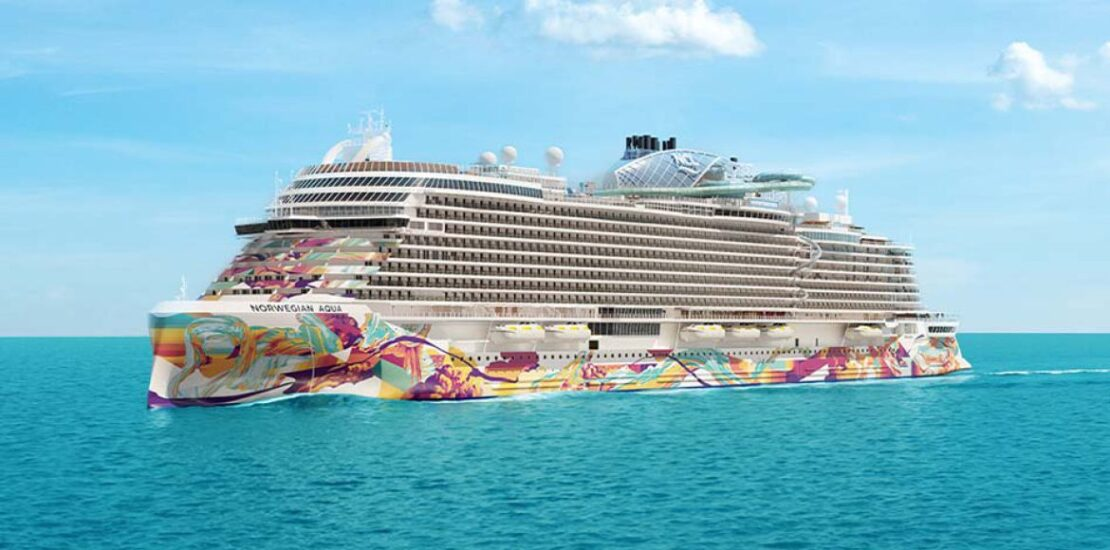
The flow of cruise ships in 2025 is 166% higher than in 2019, and everything indicates that the country will close the year above three million passengers.
SANTO DOMINGO. – Little by little, the country is making its way in the Caribbean and is establishing itself as a top player in cruise tourism, having doubled the number of maritime passengers in less than a decade.
The Dominican Republic is on track to close 2025 with more than three million cruise passengers , according to projections from the Ministry of Tourism and specialized publications such as Travel and Tour World, leaving behind the image of a sun and beach .
The expansion in this market segment, thanks to the new port infrastructure, has led the country to occupy third place among the most important cruise destinations in the Caribbean, only behind the Bahamas and Cozumel (Mexico).
The growth, sustained even after the post-pandemic boom, not only marks a historic record, but also confirms the strengthening of a new pillar for the Dominican tourism economy .
The key to the country's regional positioning as a benchmark lies in the modern terminals in Puerto Plata (Amber Cove and Taíno Bay) and the opening of Cabo Rojo in Pedernales, along with the diversification of routes and public-private collaboration.
The challenge now is to capitalize on that volume of visitors for local development, sustainability, and added value for the communities that receive them.
Not just numbers
The numbers illustrate the magnitude of the change: in 2019, the country received around 1.1 million cruise ship passengers, according to data from the Central Bank. The pandemic reduced that figure to almost zero in 2020, but the recovery was rapid.
In 2024 2,656,305 cruise passengers were reached , a growth of 141% compared to 2019 , as published by Dominican Today in January 2025. And up to August 2025, the Ministry of Tourism registered 1,920,204 passengers , 5% more than in the same period of 2024.
With the arrivals in September (98,511 additional cruise passengers), the total from January to September exceeds 2 million maritime visitors.
In comparative terms, the flow of cruise ships in 2025 is 166% higher than in 2019 , and everything indicates that the country will close the year above three million passengers, which would mark a new record and consolidate the country's position in the coming years.
The ports
Puerto Plata leads the segment with its two modern terminals, Amber Cove (Carnival) and Taíno Bay , which together handle around 80% of national traffic, according to the Caribbean Journal of August 2025.
Cabo Rojo, in Pedernales, the new tourist port in the south, went from receiving just 11,000 passengers in 2024 to more than 50,000 in the first half of 2025 alone , according to figures from the Ministry of Tourism.
La Romana remains a key port for embarkation and stopover for European lines such as MSC and Norwegian, while Santo Domingo and Samaná maintain lower volume operations, but high strategic relevance.
Economic engine and challenges
Cruise tourism generates a growing economic impact, as each cruiser spends an average of $75 to $120 per visit, according to estimates from the Florida-Caribbean Cruise Association (FCCA), and Caribbean Journal notes that day-trippers directly benefit tour operators, transportation, artisans, merchants, and local restaurants.
That's almost two million dollars in direct spending per stop in the province, according to Jean Luis Rodríguez, executive director of the Dominican Port Authority (APORDOM).
However, the challenge is to transform that volume into added value.
Caring for the hen and the environment
To sustain this growth rate and keep the goose laying the golden eggs, it is necessary to increase spending per visitor, improve port logistics, guarantee quality services, and prevent environmental saturation in small destinations like Puerto Plata and Samaná.
An August 2025 report from the Florida-Caribbean Cruise Association (FCCA) indicates that one of the lines of action for Caribbean destinations is to “increase economic benefits for local communities, improve the visitor experience and strengthen port infrastructure.”
Similarly, the World Bank study of coastal zones, “Coastal Zone Management and Tourism in the Dominican Republic”, warns that tourism growth in areas such as Puerto Plata and Samaná generates “ threats to the sustainability of the coastal resource ” and that “the density of rooms per km²” is already a high-pressure factor in those areas.
The whys
The rise of Dominican maritime tourism is due to several factors:
- Investment in infrastructure . New terminals and improvements to land access have made it possible to receive large-capacity ships.
- Strategic alliances . Agreements between the Dominican Government and the Florida-Caribbean Cruise Association – FCCA – have strengthened the promotion of the country in Caribbean itineraries.
- Trend shift. Following the pandemic, cruise lines prioritized nearby, safe destinations with modern ports, a category in which the Dominican Republic excels.
- Diversification of tourism. The country is expanding its offerings beyond the classic "all-inclusive" package, integrating cultural excursions, nature tours, and local experiences for cruise passengers.
Staying in the top 3 in the Caribbean
“The cruise segment is no longer a complement, but a pillar of Dominican tourism ,” Tourism Minister David Collado recently emphasized. If official projections are met, the country will close 2025 with between 3.0 and 3.1 million cruise passengers, a figure that would confirm its leading position in the region.
With new ports under development and a sustainability-oriented strategy, the country seeks to maintain a balance between growth and conservation, ensuring that maritime tourism remains a source of income and national pride, and both the government and the private sector are committed to this.