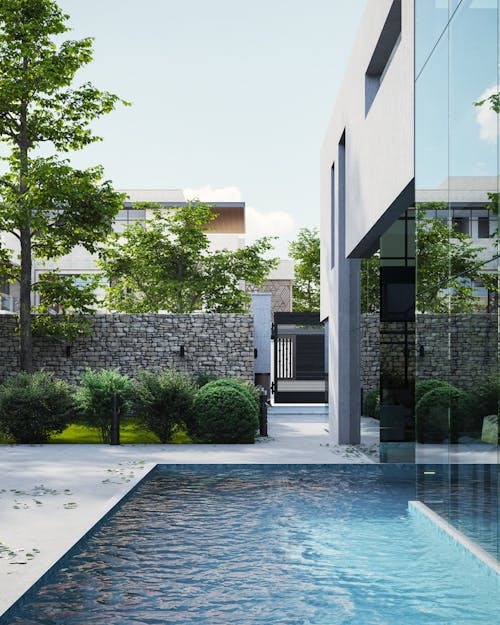
When the reality of the project does not resemble the digital promise.
SANTO DOMINGO – Brenda Rodríguez, our Dominican resident of New Jersey, has spent weeks looking at advertisements and proposals for residential projects in the Dominican Republic. She loves what she sees: modern towers, immaculate gardens, infinity pools, and apartments that look like they belong in a magazine.
Three weeks ago, a developer sent her a render (a digital projection of the project, almost always in 3D). “Look how beautiful, Mecho,” she excitedly wrote to her most trusted relative in the country via WhatsApp.
In the picture, the building looks elegant and immaculate, the sky is a cloudless blue, and even the plants look like they're straight out of a catalog. "I think this is it," she thought excitedly, but before even asking for more information or negotiating, she asked her cousin to visit the project in person and send her photos and videos.
Disenchantment
Yesterday, Brenda's cousin Mecho fulfilled her request and sent her the images with a voice note:
“Look, honey… this doesn’t look anything like what they told you , not at all! Did they tell you it was finished? There’s not even a hole for a pool, the parking lot is full of construction materials, and the model apartment doesn’t have the finishes they showed you. The windows are different, the cabinets are pine, the crown molding looks like the kind you see advertised at a discount store, and the tiles look like bathroom tiles. You know best, but if I were you, I wouldn’t even ask the price!”
Speechless, Brenda listened to the message twice and couldn't believe it.
The building exists, yes, but it's not what they promised in the images. In the renderings everything looked spacious, elegant, and bright , with plenty of greenery. At the construction site, the plot is smaller, the surrounding streets are unpaved, and the finishes aren't what was advertised.
That day, Brenda learned one of the most valuable lessons of the Dominican real estate market: a rendering is not reality, it is an idealized version .
The trick
These digital images that show what a project “will look like” are a legitimate sales tool, but they can also be manipulated to exaggerate or omit important details.
Some developers change the design along the way, adjust materials, or even reduce common areas to cut costs , and many buyers, especially those living abroad, don't find out until they've already signed or paid part of the down payment or deposit.
To Brenda and anyone else who is remote, we offer the following suggestions to help ensure your peace of mind and guide you towards a safe purchase:
1.Never buy based solely on what you see in the render .
The material sent to you by the real estate company or developer is an artistic rendering. It doesn't accurately represent the actual size, materials, or surroundings.
Always ask for the approved plans, descriptive report and materials specified in the contract.
2. Request real photos and updated videos.
If you can't visit, ask someone to film the site, the access roads and perimeter roads, as well as the progress of the construction. Nothing replaces an unfiltered image .
3. Verify that the rendering matches the approved plans.
Some companies publish images of projects that are later modified. Check with the Urban Planning Department or the city council to see if the approved plans match what you're being offered.
4. Demand details in the contract .
Everything promised—finishes, square footage, social areas—must be in writing. If the contract doesn't specify materials or quality, the company can change them without it being considered a breach of contract.
5. Be wary of renders that do not show the environment.
Many renderings show the building floating, without streets or neighboring buildings.
That can hide realities such as vacant lots, ravines, or nearby factories.
6. Ask for references.
Ask questions, verify information, and look for references from the same developer's previous projects. If there are complaints or delays, take them into account.
7. Consult with a local architect or engineer.
With a simple glance at the plans and photos, a professional can tell you if what you see in the rendering is structurally possible or if there is "digital magic" involved.
Brenda's Lesson
Brenda almost signed, but was saved by her intuition and a cousin who told her the truth without sugarcoating it. Today, more cautious, she continues her search, but with new criteria:
“I’ve learned that a rendering can be captivating, but also deceiving. Now I want to see real photos, and if I can, smell the cement.”
You also know how to spot a rendering : Skies that are too perfect, no shadows. Vegetation that doesn't match the local climate. Unrealistic proportions between buildings and people. Facades reflected as if they were made entirely of glass, with no visible structure. Artificial lighting outdoors. Complete absence of the real environment: streets, boundaries, wiring, street vendors, traffic, or simply children playing or people walking.
Brenda was left pondering more than just disappointment. She thought about the number of people who, like her, trust what they see in an image, and how easy it is to deceive someone with a digital projection that doesn't resemble what's actually being built.
Behind this lies an ethical dilemma: when a sanitized idea is sold, people's hopes and savings . It's not just about advertising exaggeration, but a lack of respect for the buyer, who deserves accurate information, not a doctored version of the truth.