SANTO DOMINGO.- The Popular Association of Savings and Loans (APAP) and the Mayor's Office of the National District (ADN) inaugurated yesterday, Sunday, the comprehensive rehabilitation of the intersection formed by John F. Kennedy Avenue and Máximo Gómez Avenue, a road accessibility project that includes the intervention of more than 20 high-traffic corners in the metropolitan area of Santo Domingo, in order to contribute to the safe and inclusive mobility of citizens.
The inauguration ceremony was presided over by the mayor of the National District, Carolina Mejía; the Superintendent of Banks, Alejandro Fernández W; Lawrence Hazoury and Gustavo Ariza, president of the board of directors and executive president of APAP, among other officials of the financial entity and decentralized bodies.
The project includes the intervention of a long stretch of Máximo Gómez Avenue, from Peña Batlle Street, passing through San Martín, Kennedy, 27 de Febrero, México, Pedro Henríquez Ureña, Juan Sánchez Ramírez Avenues, and Correa y Cidrón with Huáscar Tejeda, the latter intersection where the National Patronage for the Blind is located.
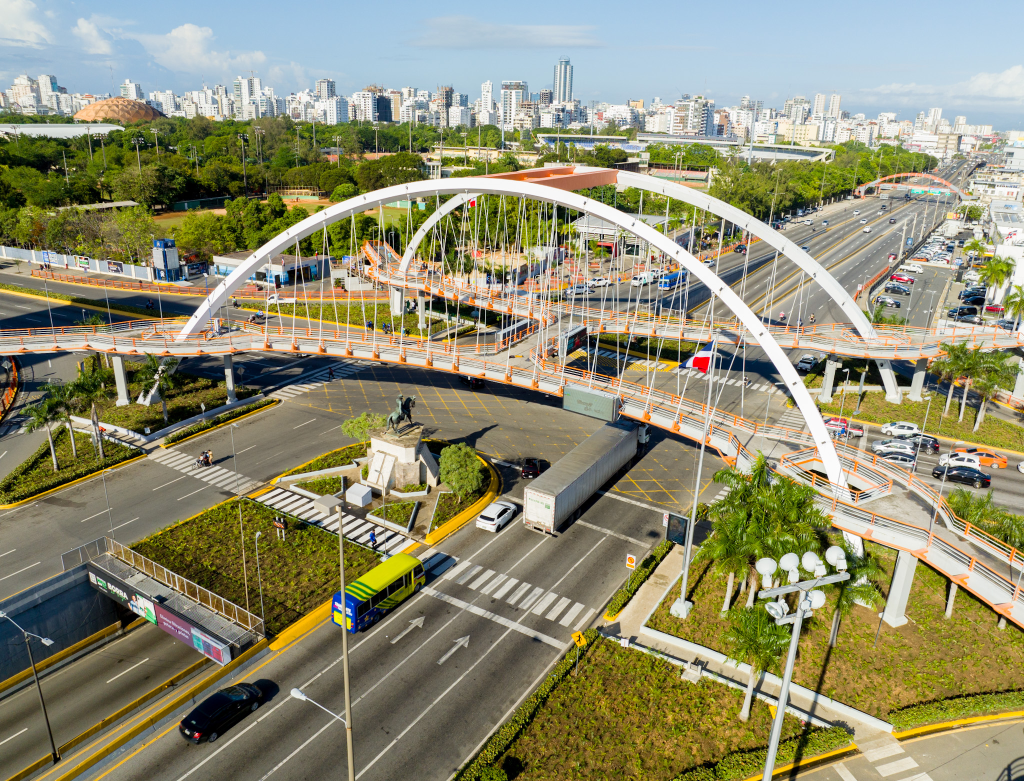
Rehabilitated intersections. (External source).
During the event, the start of the second stage of the project was announced, which includes the renovation of the main intersections of 27 de Febrero Avenue, starting at Winston Churchill, passing through Abraham Lincoln, Tiradentes, Captain Eugenio de Marchena, César Nicolás Penson, Simón Bolívar, Ramón Santana up to Baltasar Brum.
These intersections have been rehabilitated with universal accessibility standards, integrating elements designed to dignify mobility, especially for older adults and people with physical, visual, cognitive or hearing disabilities.
Audible traffic lights, tactile paving, ramps, special signage, safe corner protections, speed bumps, manhole sealing, and the repair of sidewalks and curbs, balanced with landscaping of ornamental plants that reduces the environmental impact and promotes the health and well-being of citizens.
"More than a year ago, APAP started this project as part of its commitment to responsible citizenship, recognizing mobility as a fundamental element to improve the quality of life of those who travel through high-traffic public spaces, particularly the most vulnerable population with the least personal mobility," highlighted Lawrence Hazoury, Chairman of the Board of Directors of APAP.
Cover photo: Alejandro Fernández, Luis López, Gustavo Ariza, Carolina Mejía, Lawrence Hazoury, Yiovany Moya. (External source).