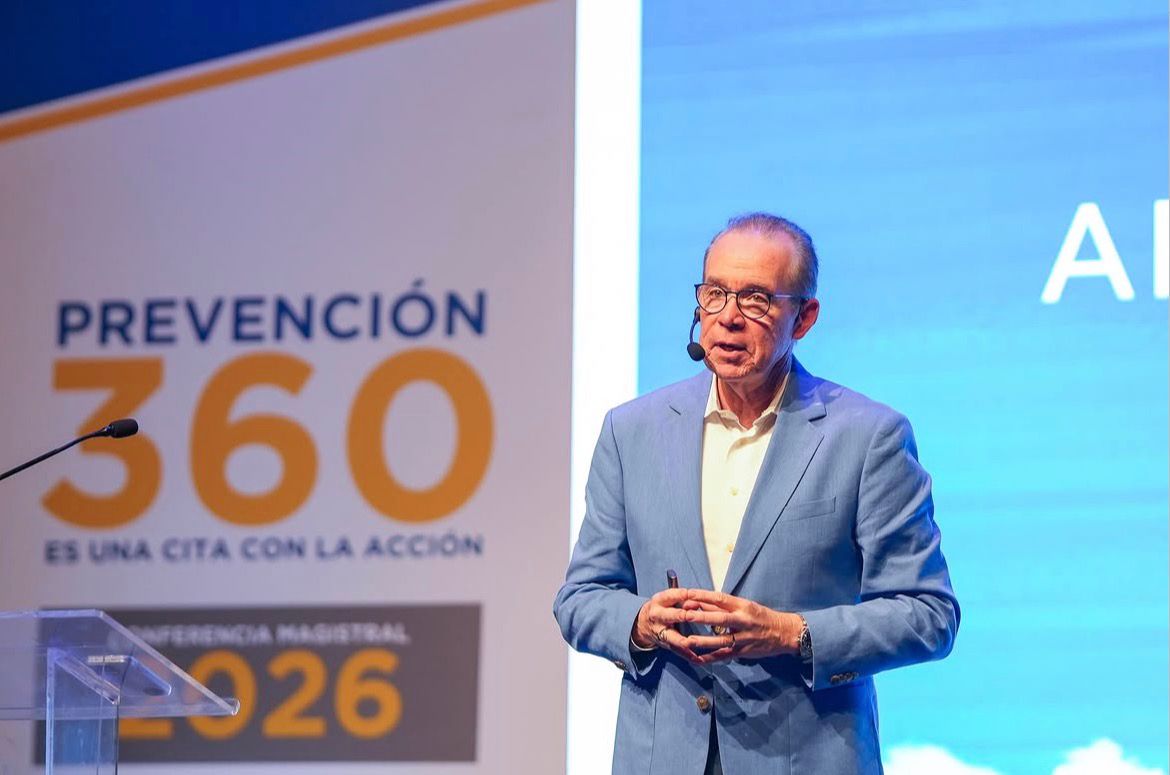
SANTO DOMINGO.– More intense rains, more powerful hurricanes and increasingly higher temperatures were among the warnings issued yesterday, Tuesday, May 19, during the “Prevention 360” conference, a meeting that brought together national and international specialists in Santo Domingo linked to risk management, meteorology, geology and emergency response.
The activity served as a space for discussion on the challenges facing the Dominican Republic in the face of increasingly frequent and complex natural phenomena, in a context marked by climate change and the vulnerability of the Caribbean island territories.
A warning that goes beyond the weather
Meteorologist John Morales opened the day with the presentation "We must learn to expect the unexpected," where he explained how current weather conditions are changing the behavior of storms, rain, and tropical cyclones.
During his speech, Morales highlighted technological tools that have improved monitoring and early response capabilities, including weather radars capable of detecting downpours several hours in advance.
He also raised the possibility of implementing automatic alert systems via mobile phones to warn the population in real time about extreme events.
The specialist also warned about the increase in sea temperature, a phenomenon that favors the rapid intensification of tropical cyclones into higher categories.
Prevention, vulnerability and planning
The conference also brought together experts who analyzed how the impacts of natural disasters depend not only on the magnitude of the phenomena, but also on factors such as urban vulnerability, poverty, inequality, and infrastructure conditions.
Among the participants was Chilean geographer Marcelo Lagos, renowned in Latin America for his studies on earthquakes, tsunamis, and territorial planning focused on risk reduction. Also participating was environmental psychologist Laís Pinto De Carvalho, who addressed human behavior in the face of crises and extreme events.
The event also included speeches by the director of the Emergency Operations Center (COE), Juan Manuel Méndez; geologist Osiris De León, specializing in seismic and geological issues; and the Minister of the Presidency, José Ignacio Paliza.
The presentations addressed topics related to structural resilience, territorial planning, human behavior in the face of emergencies, and citizen response capacity.
A debate that seeks to go beyond a conference
During the day, emphasis was also placed on the need to strengthen the culture of prevention in the Dominican Republic, one of the Caribbean countries with high exposure to hurricanes, floods and seismic activity.
Experts agreed that prevention should no longer be seen solely as a reaction to emergencies and should become part of urban planning, public policies, and sustainable development.
The “Prevention 360” conference was held in the Manuel Rueda Hall in Santo Domingo, with the participation of students, professionals, emergency agencies and representatives of various public and private institutions.
Recommended readings: