


To consolidate the transformation of this part of the city in an orderly and sustainable manner, it is urgent to strengthen services such as education, health, and mobility.
Santo Domingo – The urban growth of Santo Domingo Norte (SDN) is emerging as one of the last frontiers of expansion for the Dominican capital. Spanning almost 389 square kilometers, the municipality still combines large land reserves with areas of urban potential undergoing rapid transformation.
According to data from the National Statistics Office cited by Inmobiliario.do (2024), the area already concentrates 10.7% of the total built in the Metropolitan Region, a figure that grows every year and reflects the real estate pressure on a territory that, until recently, maintained a semi-rural character.
But the reality is that Santo Domingo Norte has ceased to be the periphery and has become the new frontier of urban growth.
A place that until a decade ago was perceived as a transition zone between urban and rural areas, today is the most coherent expansion axis of the capital, driven by its availability of land, its road access and the growing demand from families seeking a balance between city and nature.
In 2023, the Santo Domingo North City Hall announced an inventory of land with "agricultural, tourist, industrial and construction potential" (alcaldiasdn.gob.do, 2023), suggesting a significant percentage of the municipality with potential for controlled urban development.
Although these figures have not been published, it is estimated that a large part of the available space is located in the area between Jacobo Majluta, La Victoria and Los Guaricanos, where connectivity, infrastructure and services are beginning to expand more rapidly and has an optimal road network.
This balance between urbanized areas and open land makes SDN a laboratory for planned growth, if it manages to do so under criteria of sustainability and territorial order.
Those who see in the north
For real estate developers, the northern zone represents a logical opportunity in a capital city that cannot expand towards the sea. “The north and east are the only natural directions for expansion,” says Luis de Jesús Rodríguez, president of Sotavento Capital, emphasizing that the potential of this territory has been undervalued for years.
He cites as an example the area around Jacobo Majluta Avenue and Mirador Norte Park, conceived from their origin in the 1990s as centers of orderly growth.
The businessman points out that the challenge lies not only in building homes, but in generating urban value: spaces that integrate commerce, mobility, and sustainability. “It’s not about selling at higher prices, but about creating projects that raise the quality of life,” he states, and this vision connects with the trend of densifying the city vertically, with mid-rise buildings, to optimize land use, improve the distribution of services, and preserve green areas.
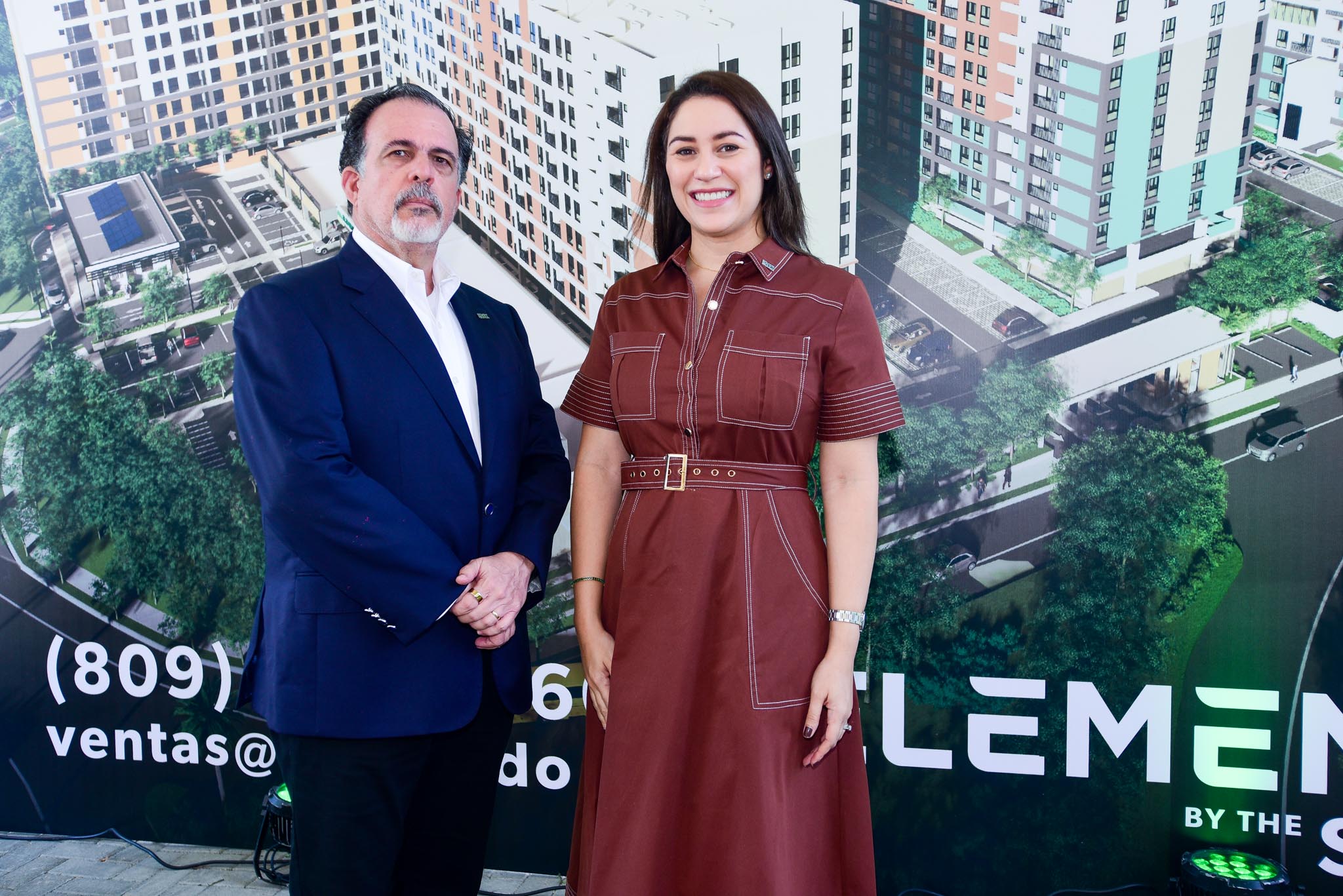
Brenda Guzmán, the company's Project Director, adds that the social and urban change is visible. “There is a market that values proximity to nature and tranquility, without sacrificing access to services. The market response has confirmed that Santo Domingo Norte is no longer just a promise, but a reality,” she notes.
Rodríguez highlighted, in particular and as a challenge, the need to strengthen complementary services such as education, health and mobility, in order to consolidate that growth.
The transformation of the environment is also supported by recent public works, such as the remodeling of República de Colombia Avenue and its interconnections with Jacobo Majluta, which have significantly improved connectivity with the rest of Greater Santo Domingo.
“It’s an investment that should have been made years ago,” commented Rodríguez, who believes that the current moment combines private investment with more favorable public conditions to consolidate a more livable city.
In this context, projects like Elements by The Six, developed by Sotavento Capital, are integrated into the new urban dynamic of the north, focusing on sustainability, energy efficiency and the concept of community.
With 970 units in vertical developments, those responsible for these projects understand that their relevance lies in what they represent: the consolidation of Santo Domingo Norte as the new heart of the country's urban development.







