


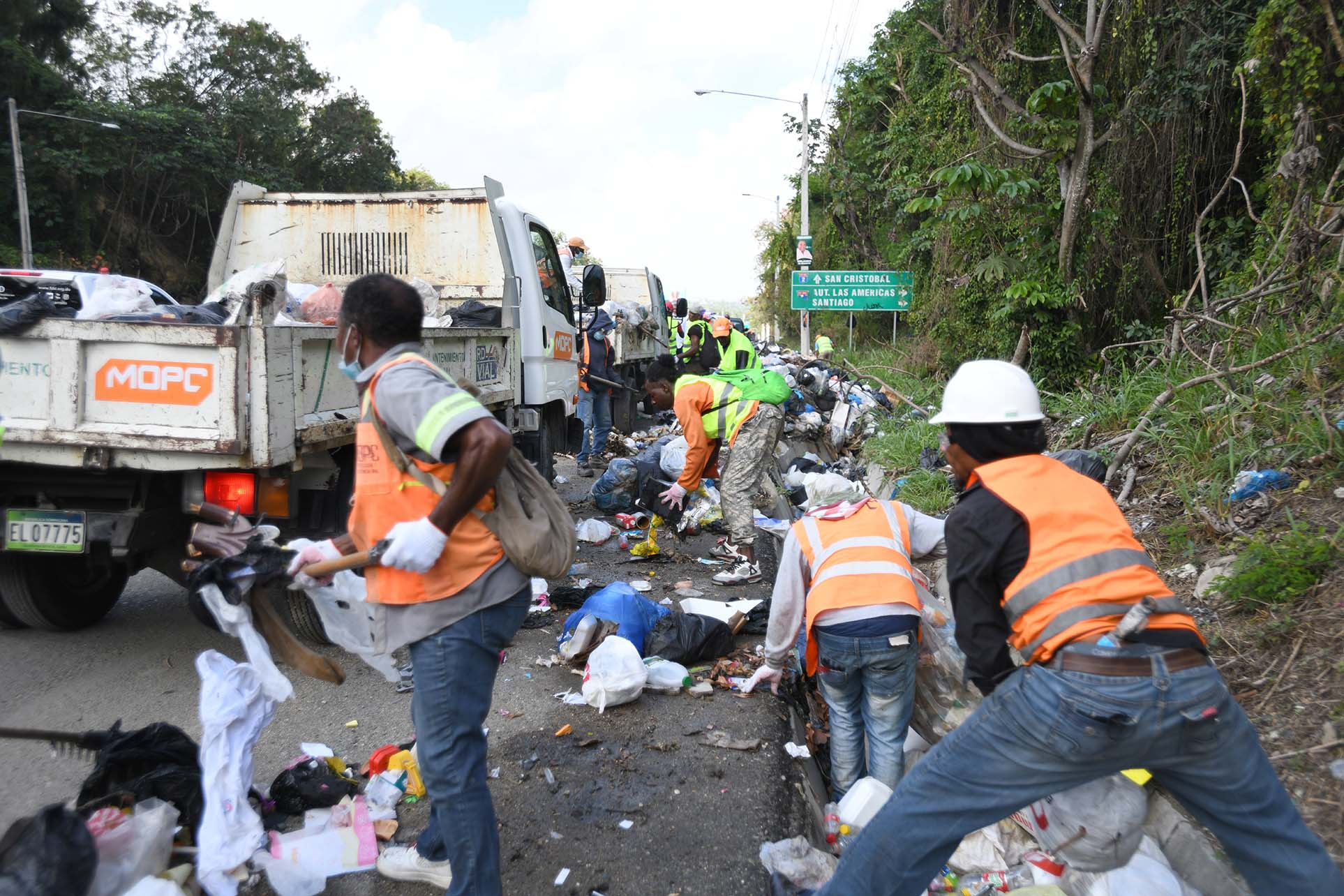
SANTO DOMINGO.-The Ministry of Public Works and Communications (MOPC) reported this Tuesday that, through the Directorate of Main Road Maintenance, it collects 240 tons of solid waste each month on the country's main highways to keep the asphalt pavement in perfect condition, ensuring optimal service levels and a comfortable experience for drivers.
César Ramírez, director of Highway Maintenance, explained that on average eight tons of solid waste are collected every day on the country's roads.
The official said that the most common waste includes disposable plastic bottles, plates and cups, plastic bags, glass bottles, clothing, and tires of different sizes, which are scattered on the main roads and affect the area known as the right-of-way.
“The MOPC has more than 3,000 workers who work on the main trunk roads, which include the Duarte Highway (from Santo Domingo to Montecristi); the Eastern Highways, which include Las Américas, Autovía del Coral, Bulevar Turístico del Este, from Santo Domingo to the entrance of Uvero Alto, reaching as far as Miches,” he said.
He added that the 6 de Noviembre highway, which runs from Pintura to kilometer 5 of the Sánchez highway, in San Cristóbal; the Sánchez highway, from kilometer 12 of Haina to Elías Piña, as well as route 44, from kilometer 15 of Azua to Pedernales, the Northeast highway and the Atlantic Tourist Boulevard.
Also, the Northeast Highway, which runs from Las Américas to the Rincón de Molenillo intersection, and the Atlantic Tourist Boulevard, from the entrance of Nagua, on the way out to Samaná, and towards Las Terrenas, along the Tourist Boulevard.
“The days we collect the most solid waste are Mondays, since after holidays like Saturday and Sunday, people travel more on the roads and those who travel there throw a lot of garbage on the roads,” he said.
He explained that the roads that collect the most solid waste are the 6 de Noviembre, Sánchez road, Duarte highway and the Northeast highway, especially the first section between Las Américas and the Ecological avenue.
He believed this was because these roads have communities very close by, and these communities dump their waste near the roads.
He explained that the solid waste that citizens dump on the roads goes towards the ditches, and from there it goes towards the sewers or drains, and this waste or blockages obstruct the free flow of water, causing it to rise onto the asphalt surface, which creates safety problems for those who drive on the roads.
The Director of Highway Maintenance called on those traveling on the country's various roads to be mindful of not throwing solid waste into the streets, as it greatly affects everything related to stormwater drainage.
“When we throw that waste into places that are meant to channel rainwater, we are giving the water currents a different course, and that uncontrolled water can affect many things, flooding avenues, affecting buildings, vehicles, people, and causing damage that we later regret,” he said.







